1 / 2
01 / ART FROM AROUND THE WORLD
An Egyptian temple, European paintings and a Chinese-style garden court at Fifth Avenue. Choose your rooms first: each could lead to a very different Met visit.
Guided tour with museum entry at Fifth Avenue. Affiliate link. We may earn a commission.
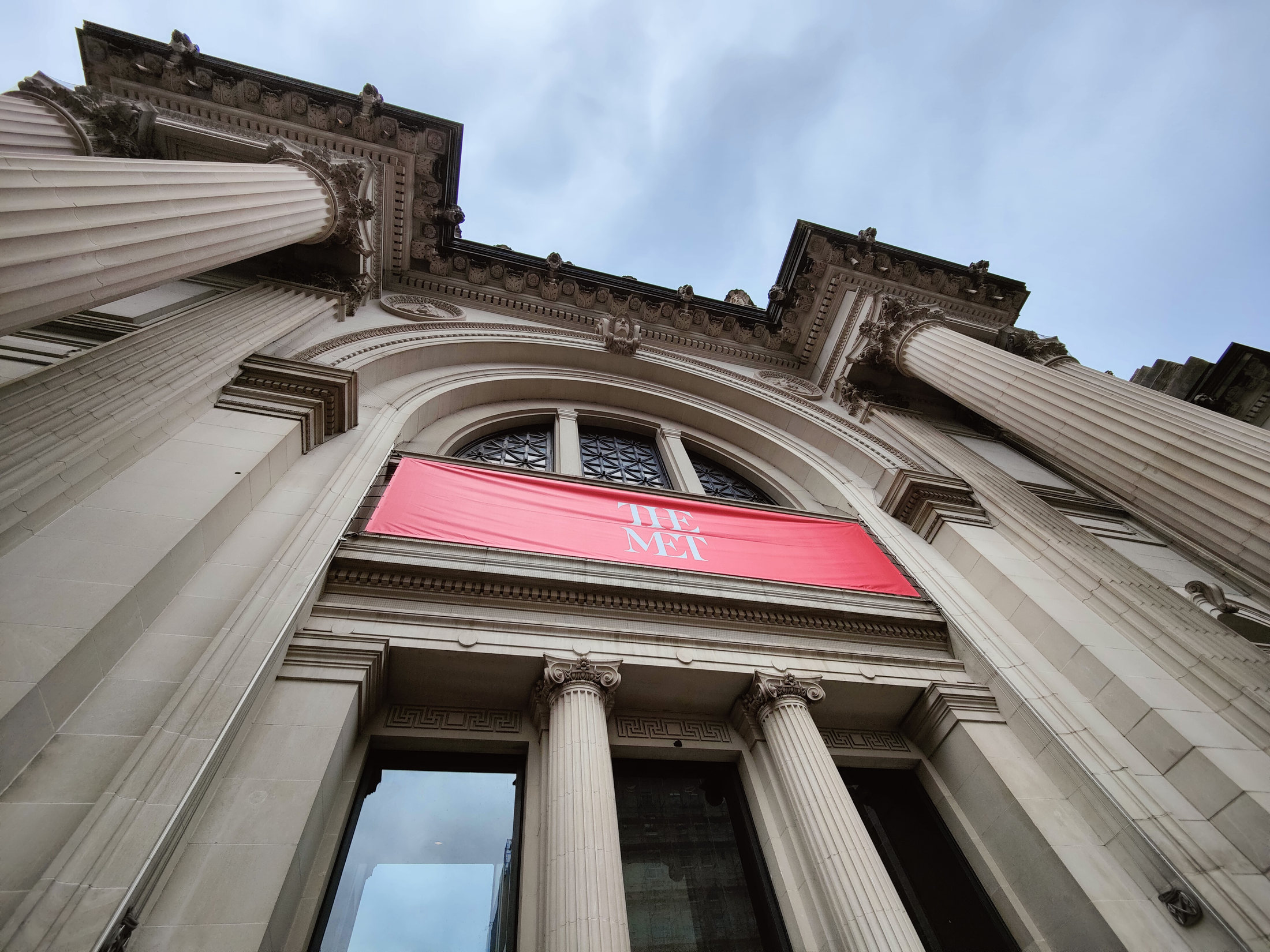
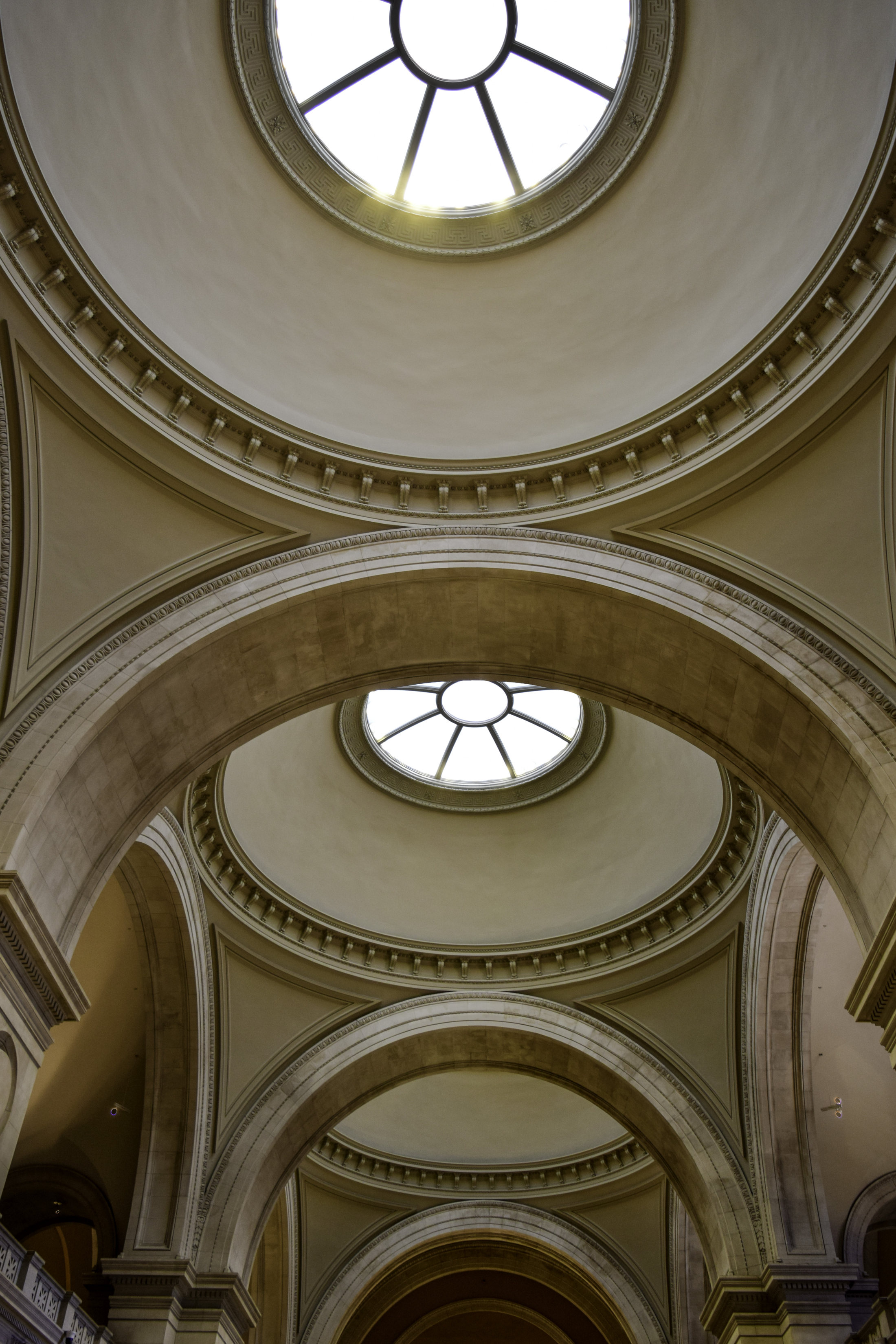
Once you’re through the entrance, give the Great Hall a moment before heading into the galleries. Its domes are part of the visit, too.
A few chosen stops can make a satisfying afternoon here, with room to stay longer when something catches your interest.
Three details below are especially rewarding if you like seeing how things are made: books and shadows assembled from wood in the Gubbio study, a prayer niche built from small pieces of cut tile, and the lost colour of the Temple of Dendur. Each gives you a particular story to follow in this very large museum.
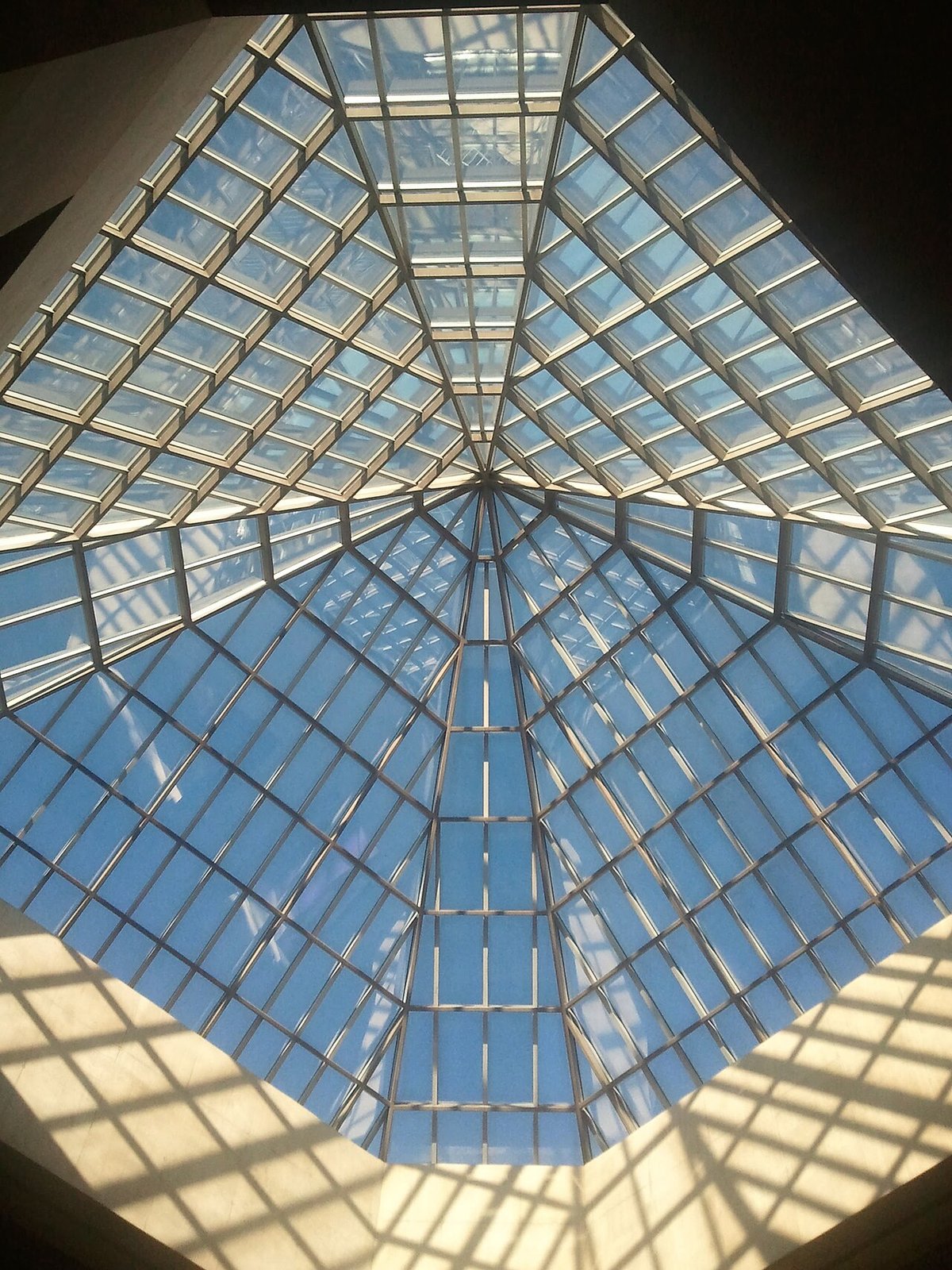
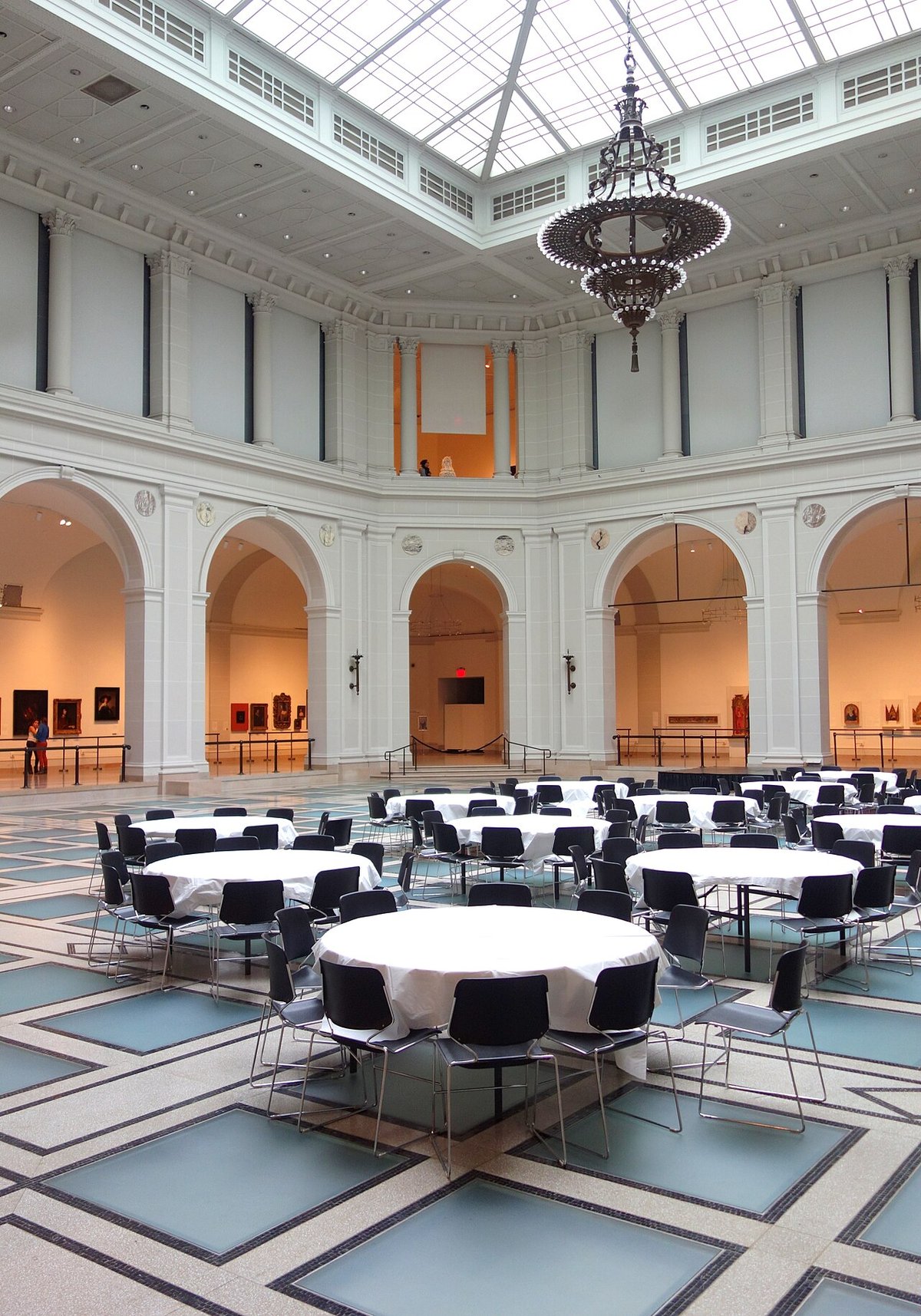
Above the ticket desks and flowers, Richard Morris Hunt’s design rises through eight enormous arches to three shallow domes. It’s a good place to let your eye travel upwards before the smaller details of the galleries take over.
The walls below are limestone. The floor is made from marble chips with yellow-marble borders, a detail that is easy to miss while getting your bearings.
The hall opened in 1902 and remains the museum’s main Fifth Avenue entrance.
Dendur has a whole gallery built around it. Daylight through the glass enclosure and a pool beside the sandstone recall the temple’s former setting near the Nile.
The carving becomes easier to read once you notice how much of it refers to growing things. Plants run along the base of the walls, the columns resemble stems, and winged sun disks appear above the doorways.
The ruler offering gifts to the gods is Augustus, the Roman emperor, dressed as an Egyptian pharaoh. The temple presents Roman power through Egyptian religious imagery.
The separate gateway is worth comparing with the temple itself. Their reliefs make more sense when you see how they relate to the entrances.
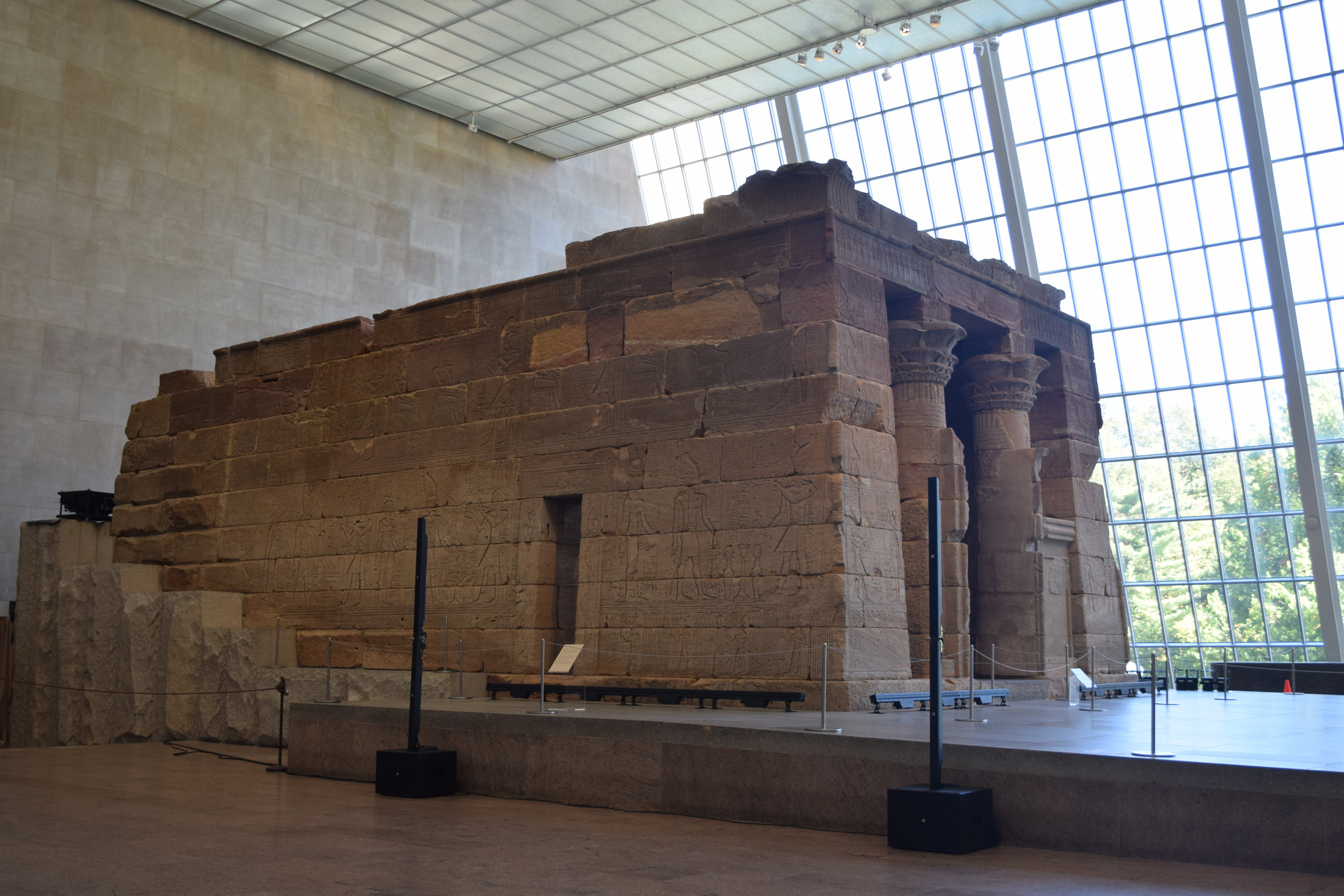
The pale sandstone is only part of Dendur’s story. Its reliefs were originally painted, so the carved edge of a crown or garment once belonged to a coloured surface as well.
In a digital project described in 2015, Met researchers explored how one scene might have looked by projecting colour onto the south wall. Specialised imaging found no surviving paint on that chosen scene.
The team instead drew on early records of Dendur’s interior and comparisons with other temples. Their reconstruction was explicitly hypothetical.
Projected light let them try different possibilities without repainting the stone.
That is a useful detail to have in mind while looking at the crowns and garments. The carving preserves their outlines; the research offers a possible account of the colour that once accompanied them.
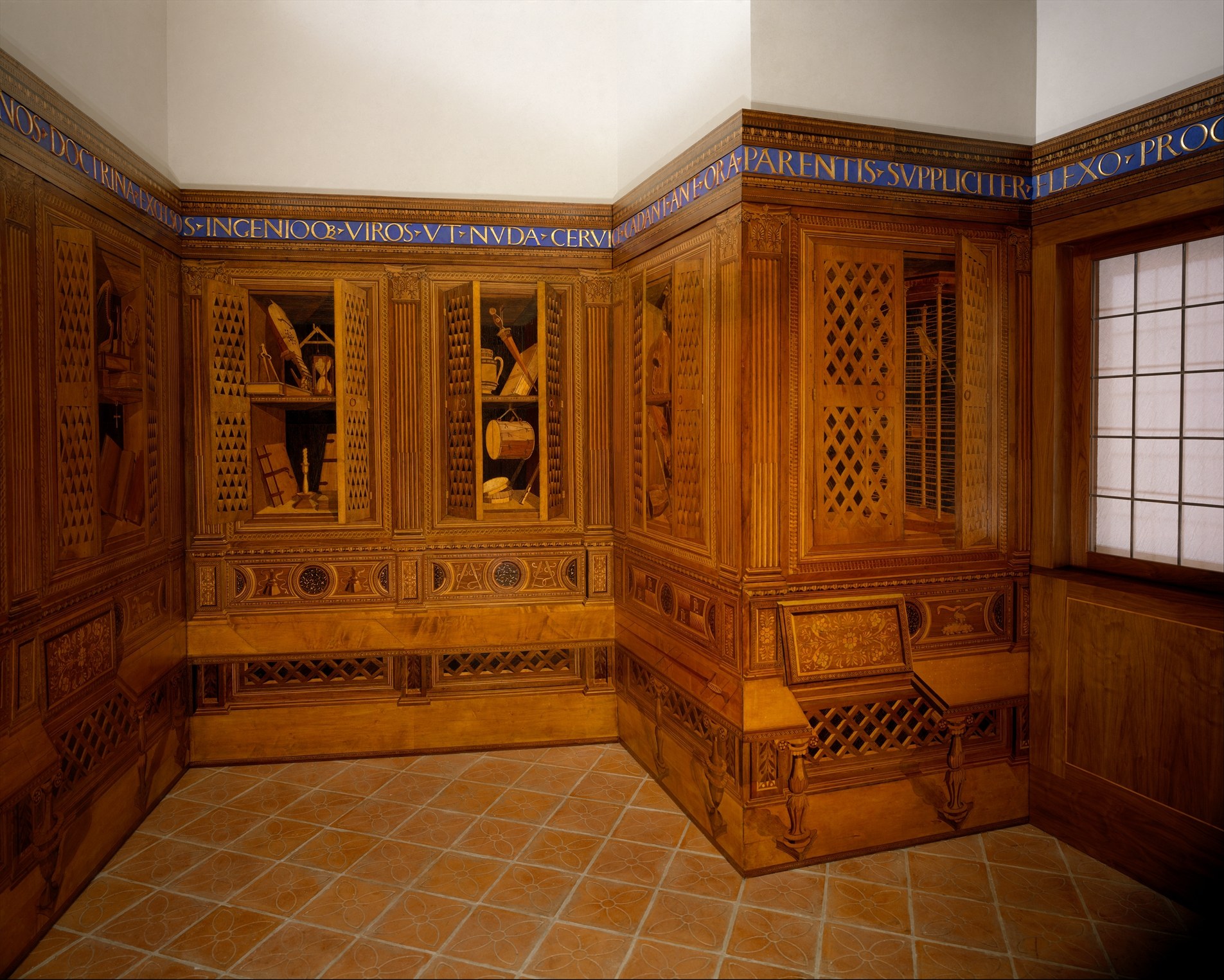
The cabinet doors seem to stand ajar, and books appear to sit on shelves. Then a shadow gives the trick away: the objects and recesses have no real depth.
The Studiolo from the Ducal Palace in Gubbio was made around 1478–82 for Duke Federico da Montefeltro. Its intarsia pictures are assembled from different woods.
Instruments, books and emblems offer a carefully chosen picture of his interests.
A dark patch that looks like a cast shadow is another piece of wood. Met exhibition designer Daniel Kershaw describes fifteen wood types supplying the room’s range of tones, which makes the illusion even more absorbing at close range.
Kershaw also records a small trace of a later craftsman. During an 1877 restoration, woodworker Luigi Rizzo concealed a note containing his bet for an Italian numbers game.
It is a very human detail to sit alongside the duke’s grand display of learning and interests.
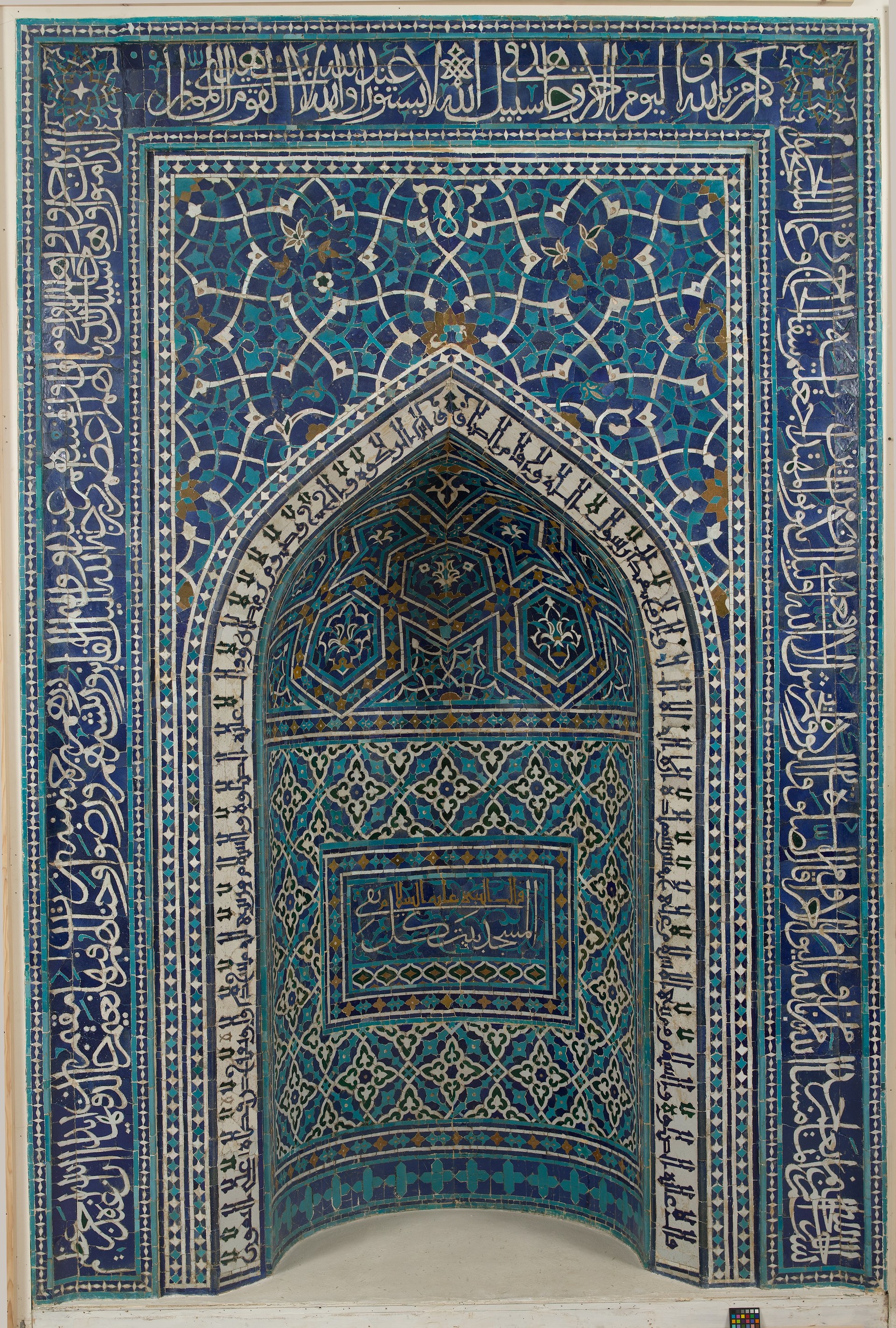
The Mihrab from the Madrasa Imami, in Isfahan, dates to 1354–55. Its flowing surface was made from small glazed pieces cut and fitted together.
It came from a religious school in Iran, and its purpose matters: a mihrab identifies the direction of Mecca for prayer.
The writing offers as much to notice as the blue. Qur’anic verses run around the outer frame, angular Kufic script borders the pointed arch, and another cursive inscription sits within the niche.
Their different shapes and positions are visible even if you do not read Arabic.
One short run of lettering is a manageable place to spend a little time. Where a letter meets another colour, the joins help show how many separate pieces make up the larger design.
If you also spend time with the Gubbio study, the shared care with small pieces becomes easier to appreciate. Here that making serves sacred words and a direction of prayer, giving the niche its own distinct focus.
There is plenty happening in Bruegel’s The Harvesters (1565), even among the workers taking a break. Some rest and eat beneath a tree while others cut wheat and gather apples.
A woman bends so deeply that her shape echoes the crop around her.
The view opens out as your eye moves from the foreground into the distance. It rewards a little time beyond the group under the tree.
The painting belonged to a six-part seasonal cycle commissioned by an Antwerp merchant for his dining room. That setting helps explain its point of view: Bruegel gives his wealthy patron a plentiful harvest and workers in harmony with the landscape, while playing down the hardship of farm work.
The Astor Chinese Garden Court is a good choice when you want to spend time with a room as a whole. A circular moon gate frames a rectangular doorway, giving you one view inside another.
From the covered walkway, the holes and uneven outlines of the scholars’ rocks become part of that view. They were chosen to suggest miniature mountains.
This is a modern installation in the style of a seventeenth-century Chinese garden court. Taihu rocks, a granite terrace, ceramic tiles and several kinds of wood give it different surfaces to notice.
The irregular stones and the straight edges of the timber are a particularly useful comparison.
One main collection area and one contrasting stop is a reasonable plan. For craftsmanship, Gubbio and the mihrab make an interesting pairing: separate pieces become a continuous image in very different settings.
If reconstruction interests you, the Dendur research and the Astor Court offer another pairing. There is room to follow that curiosity without trying to see every work.
These are thematic pairings, not a marked walking route. Use The Met’s current map and check gallery displays and access before settling on your order.
The 2015 Dendur colour projection is research history, not a promised feature of your visit.
Advance tickets are optional, and admission covers exhibitions and both Met locations on the printed date. Buy general admission directly from the museum; a guided tour with admission is a separate product whose inclusions need checking.
Everyone passes through security. Leave luggage and large bags elsewhere, carry small backpacks by hand or in front, and bring water in a secure bottle.
New York State residents and students in New York, New Jersey and Connecticut can pay what they wish, with a minimum payment of US$0.01 per ticket. Online pay-what-you-wish tickets require a New York State billing address; New Jersey and Connecticut students must buy in person with valid student ID.
Bring accepted proof of eligibility.
Last reviewed: . Check the museum’s website for current hours and ticket prices.
Check direct admission and eligibility before choosing a ticket or tour.
Two-hour English-language tour with admission. Check the route and current closures.
See what each option includes, who it suits and how it compares with booking directly.
Wednesday is a closed day.
Who pays what they wish: New York State residents choose the amount, and it cannot be zero. Useful proof is a New York driving licence, a New York identity card, IDNYC, a current bill with a New York address, a student identity card, or a New York library card. Students from New York, New Jersey and Connecticut also pay what they wish. New Jersey and Connecticut students do that in person, with a student identity card. This is separate from the US$17 student price.
Plan around the building hours. Friday and Saturday are the long days, until 21:00. Sunday, Monday, Tuesday and Thursday end at 17:00. Wednesday is not a short day. It is a closed day. The extra dates already printed on this page, Thanksgiving, 25 December, 1 January and the first Monday in May, sit on top of that weekly pattern.
The three cafés inside, the American Wing Café, the Petrie Court Café and the Great Hall Balcony Café, keep a shorter clock than the galleries. They open at 11:00 and close at 16:00 on Sunday, Monday, Tuesday and Thursday, and at 20:00 on Friday and Saturday. They are closed on Wednesday, because the museum is closed. The Met Dining Room is permanently closed. The Cantor Roof Garden Bar is closed for the Tang Wing. Do not plan a meal around either of those.
There is no official one-hour, two-hour or half-day route. The building is too large for any of those to be a tour of the museum. The plans below use the Great Hall, the Temple of Dendur, The Harvesters and the Astor Court. They are a way to spend the time you actually have.
Start in the Great Hall, then choose one reason to come: the Temple of Dendur, or The Harvesters. Not both. The walk between them is part of the building, and an hour that tries to include both becomes a walk with a glance.
Leave the Astor Court out. It is a different wing and a different pace. One hour at the Met is a single destination after the Hall, then the door. Wednesday is not available. On a 17:00 day, do not start this hour at 16:15 and expect the room to feel open.
Two hours is the Great Hall, the Temple of Dendur, and the European paintings stop for The Harvesters. Leave the Astor Court for another visit. You are choosing three stops, not walking the floor plan.
A coffee fits if it is short. The cafés open at 11:00, so a 10:00 arrival does the first room before any of them is serving. On a day that ends at 17:00 the cafés close at 16:00, an hour before the galleries. If food is part of the two hours, go before 16:00, not as you leave.
Friday and Saturday give you until 21:00 in the galleries and until 20:00 in the three main cafés. Two hours is still two hours. The later close is useful because you can start at 16:00 and not be rushed. It does not turn two hours into a survey of the museum.
A half day adds the Astor Court to the three stops of the two-hour plan, and it includes a meal. Friday or Saturday is the day that matches the plan, because the galleries stay open until 21:00 and the three main cafés until 20:00. A 17:00 day can still be a half day if you arrive at 10:00. It cannot be a half day if you arrive at 14:30.
The American Wing Café, the Petrie Court Café in the European Sculpture Court on floor 1, and the Great Hall Balcony Café on floor 2 are the three sit-down options with the same hours. The Eatery, in the Lehman galleries on the ground floor, is shorter: Saturday and Sunday 11:00–16:00, plus 27 November and 28, 29 and 31 December. You need an admission ticket for all of them.
Wednesday stays closed. Do not move a Met half day onto a Wednesday and hope the neighbourhood is a substitute. The building is the visit. If the date is Thanksgiving, 25 December, 1 January or the first Monday in May, use the closure already printed on this page and pick another day.
A Thursday one-hour visit ends at 17:00. Be through the Great Hall and into either Dendur or The Harvesters while the room is still a room, not a route to the exit. The cafés have already closed at 16:00, so eat before that hour or after you have left.
A Sunday two-hour visit has the same 17:00 close. Hall, Dendur, The Harvesters. If you want a table, the three main cafés are open 11:00–16:00. Start at opening if the meal is inside the two hours.
A Friday half day is the one that uses the 21:00 close. Hall, Dendur, The Harvesters, the Astor Court, and one of the three cafés, which serve until 20:00. Saturday matches it. A Tuesday does not. Tuesday ends at 17:00, and Wednesday does not open.
The address on this page is 1000 Fifth Avenue. Arrive from the subway. Take the 4, 5 or 6 train to 86th Street, then walk three blocks west to Fifth Avenue. The museum calls that about half a mile and about ten minutes. The M1, M2, M3 and M4 stop at 82nd Street on Fifth Avenue going uptown, and at 83rd Street on Madison Avenue going downtown.
From the west side, the same page offers the 1 train to 86th Street and then the M86 bus, or the C train to 81st Street and then the M79. The M79 and the M86 also stop nearby. Members use the entrance at 81st Street. That door is the members’ door, not a second general entrance to aim for.
There is a garage at Fifth Avenue and 80th Street. It is open on weekday evenings and on weekends, a space is not guaranteed, and the clearance is 6 feet 6 inches. It is a parking note, not the main way to arrive. The walk from the 86th Street subway is the straightforward way.
Buy the ticket that matches the price on this page. Adults are US$30, seniors 65 and over are US$22, students are US$17, and children 12 and under are free. If you are a New York State resident paying what you wish, bring proof of a New York address, and do not expect the online form to accept a billing address outside the state.
Admission is required at every café. The three with the same hours are the American Wing Café, the Petrie Court Café and the Great Hall Balcony Café: 11:00–16:00 on Sunday, Monday, Tuesday and Thursday, and 11:00–20:00 on Friday and Saturday. The Lehman Café Cart keeps those hours too, on floor 1 of the Robert Lehman Collection. The Eatery is the weekend-only one, 11:00–16:00 on Saturday and Sunday, plus 27 November and 28, 29 and 31 December. All of them are closed on Wednesday.
The Balcony Lounge is for members at Dual level and above. It is not a general café. The Met Dining Room is permanently closed, and the Cantor Roof Garden Bar is closed while the Tang Wing is built. The dining page is about the rooms you can reach with the ticket you already hold.
On a Friday or Saturday the cafés stay open until 20:00, an hour before the galleries close. On the other open days they close at 16:00, an hour before the 17:00 close. Eat inside the visit, not as a plan that begins at closing time. For a luxury hotel near this building, see luxury hotels near the Met.
Use two fingers to move or pinch the map on a touch screen; one finger scrolls the page. In full screen, drag to move. Use plus and minus to zoom. Arrow keys move the map; zero fits all stops. Escape closes the preview or full screen.
An illustrated introduction to a related guide, not a depiction of this museum.
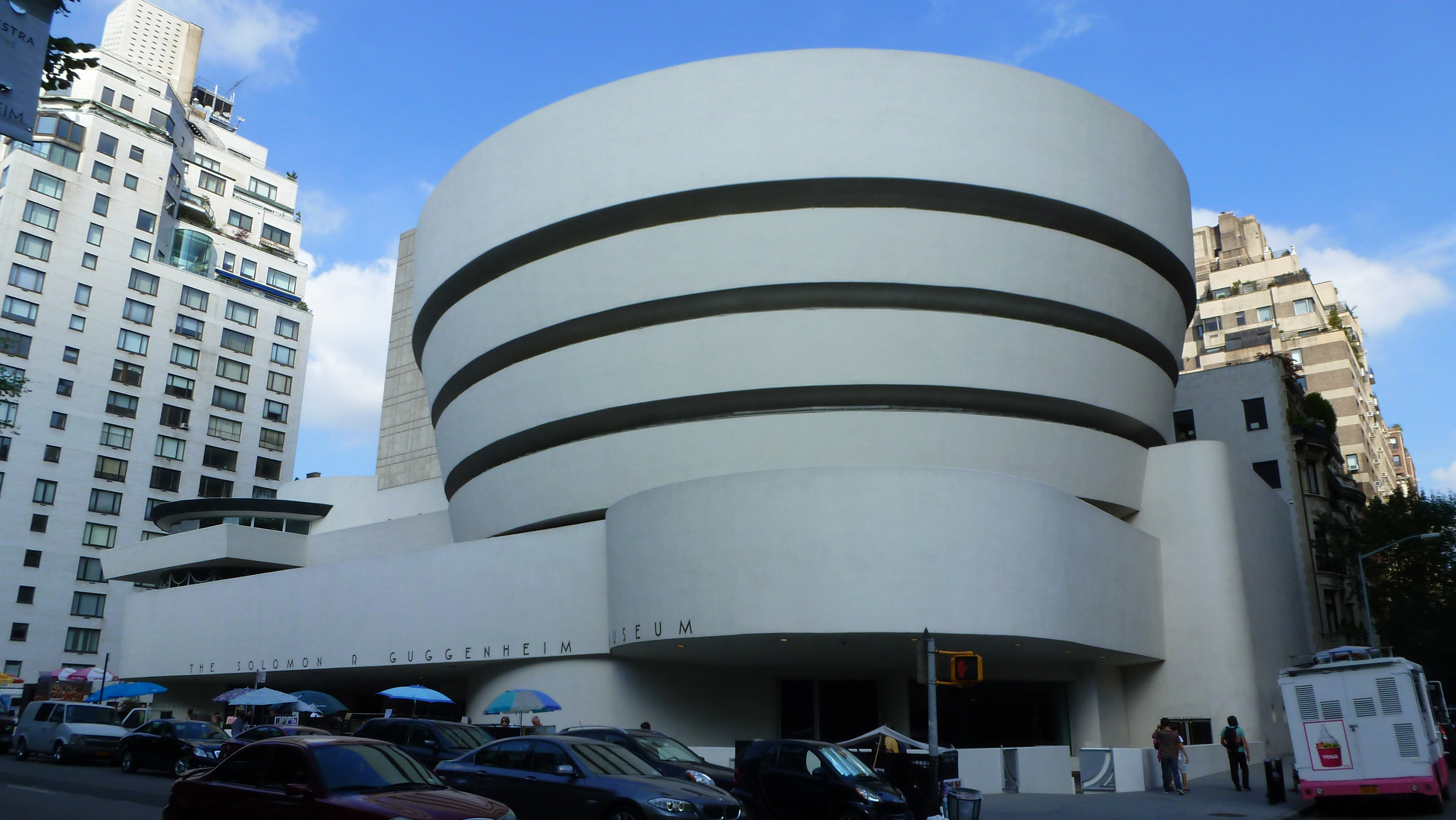
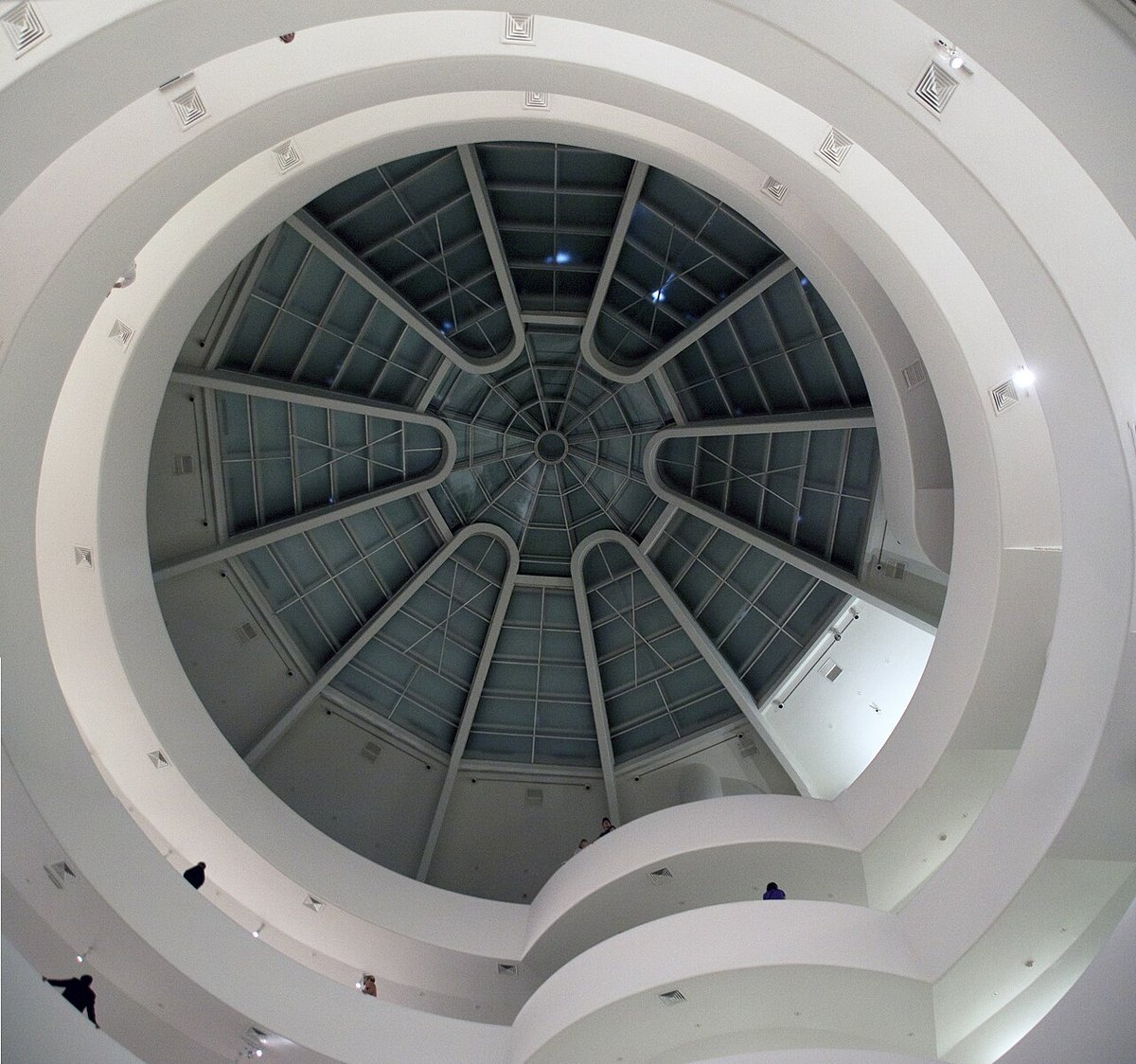
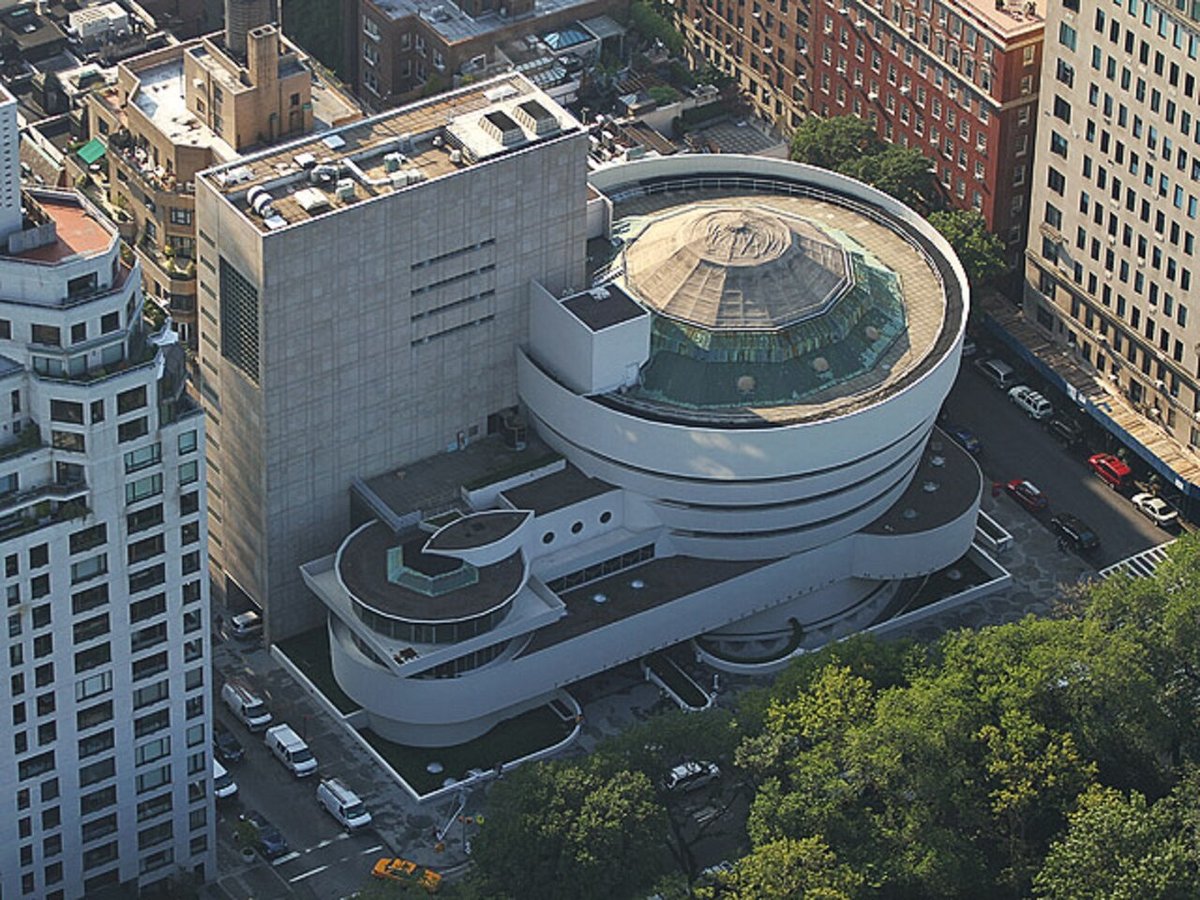
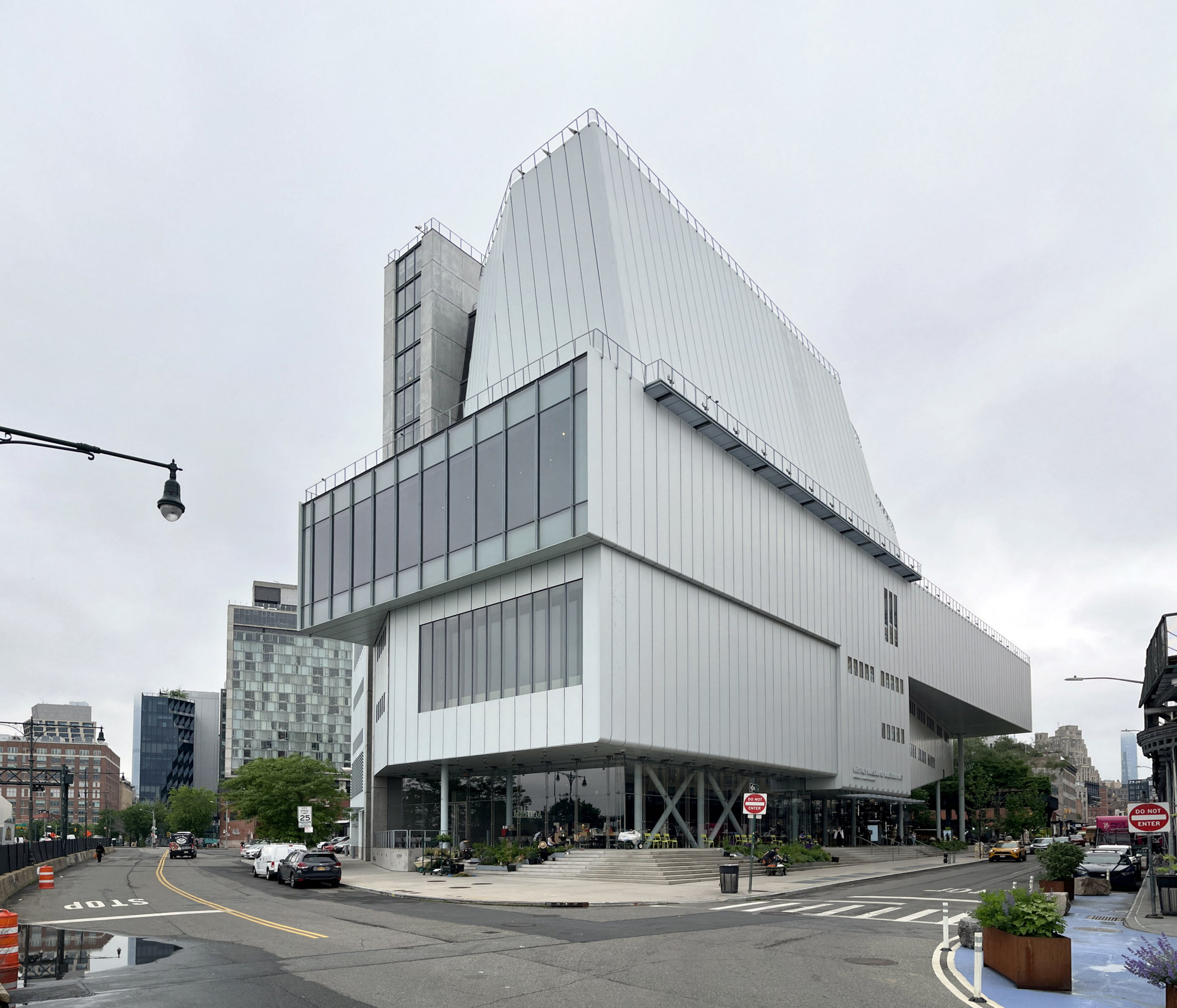
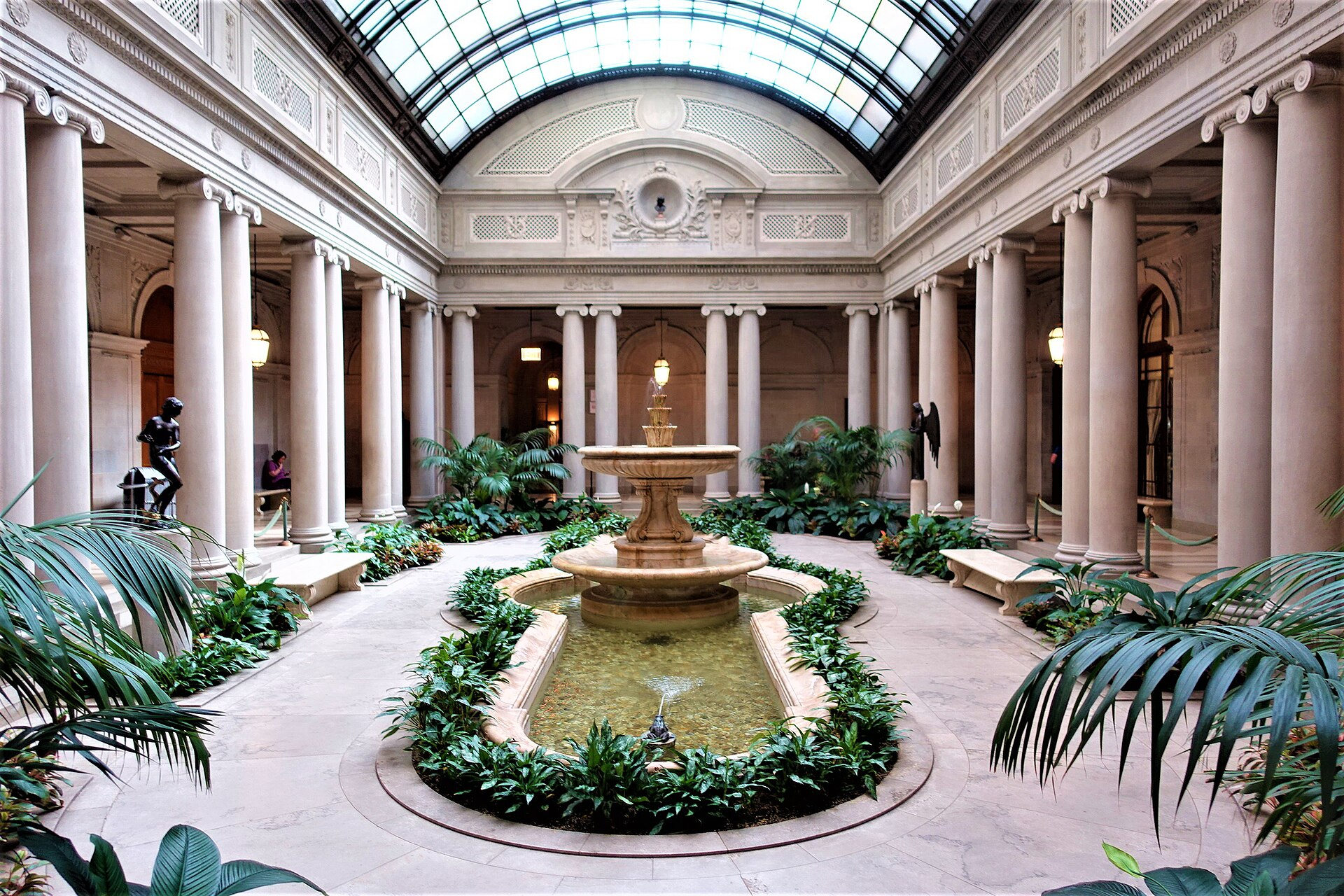
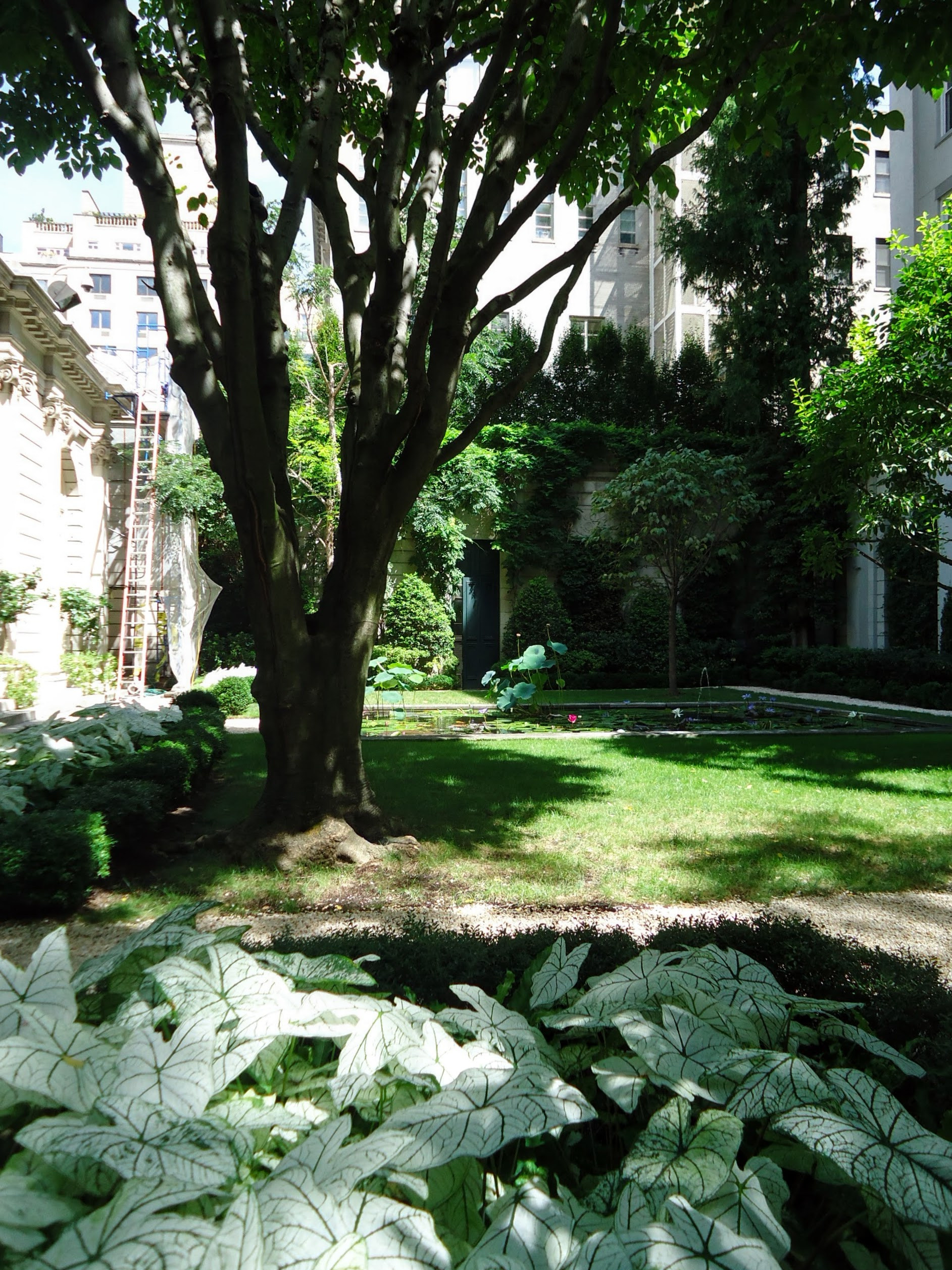
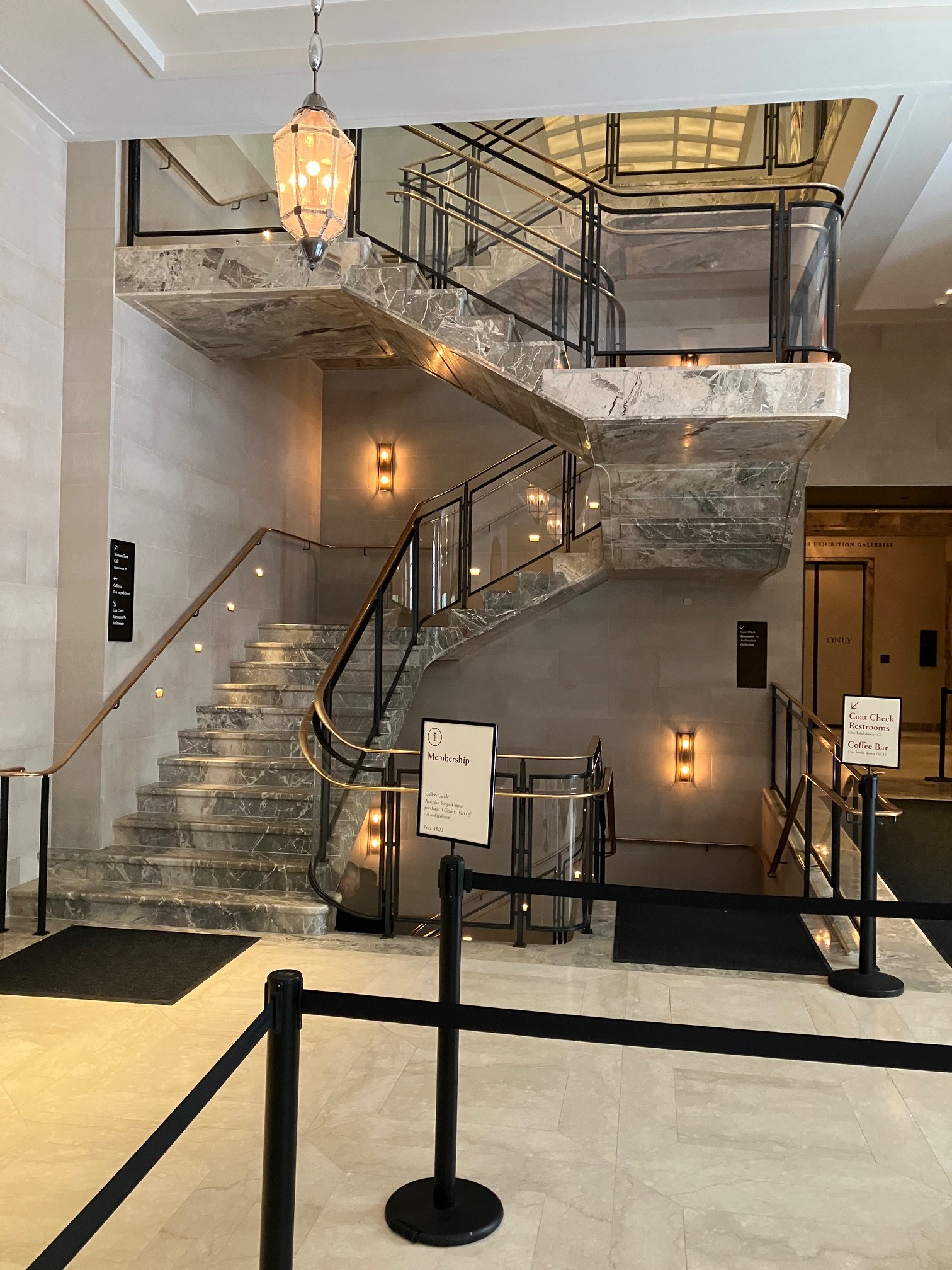
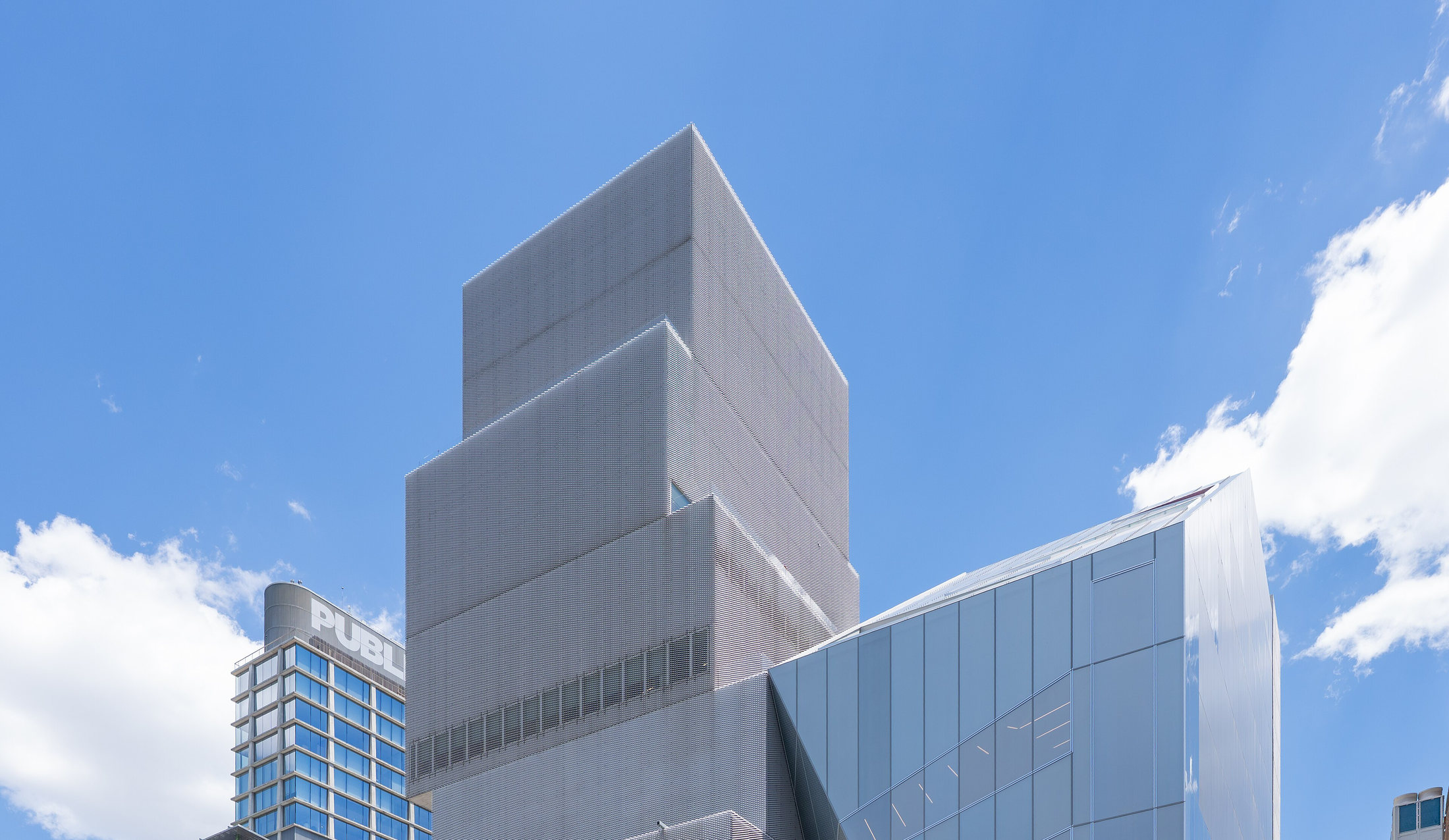
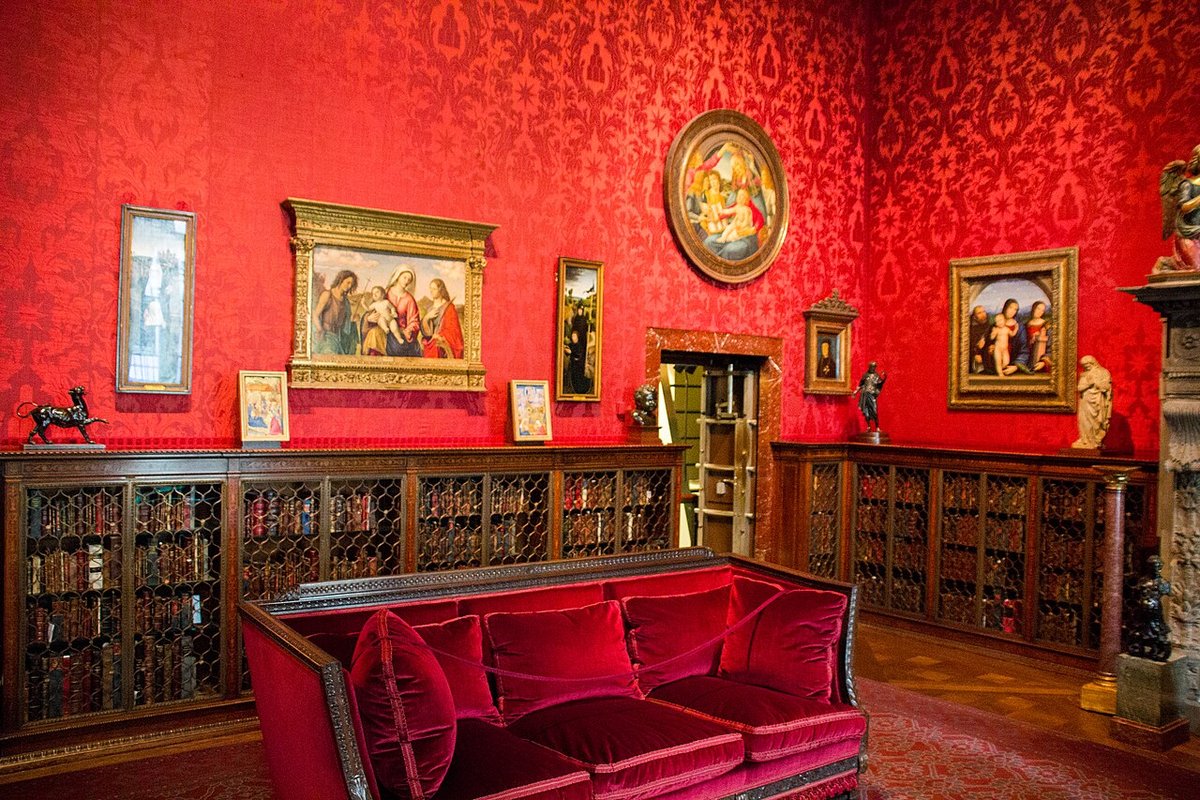
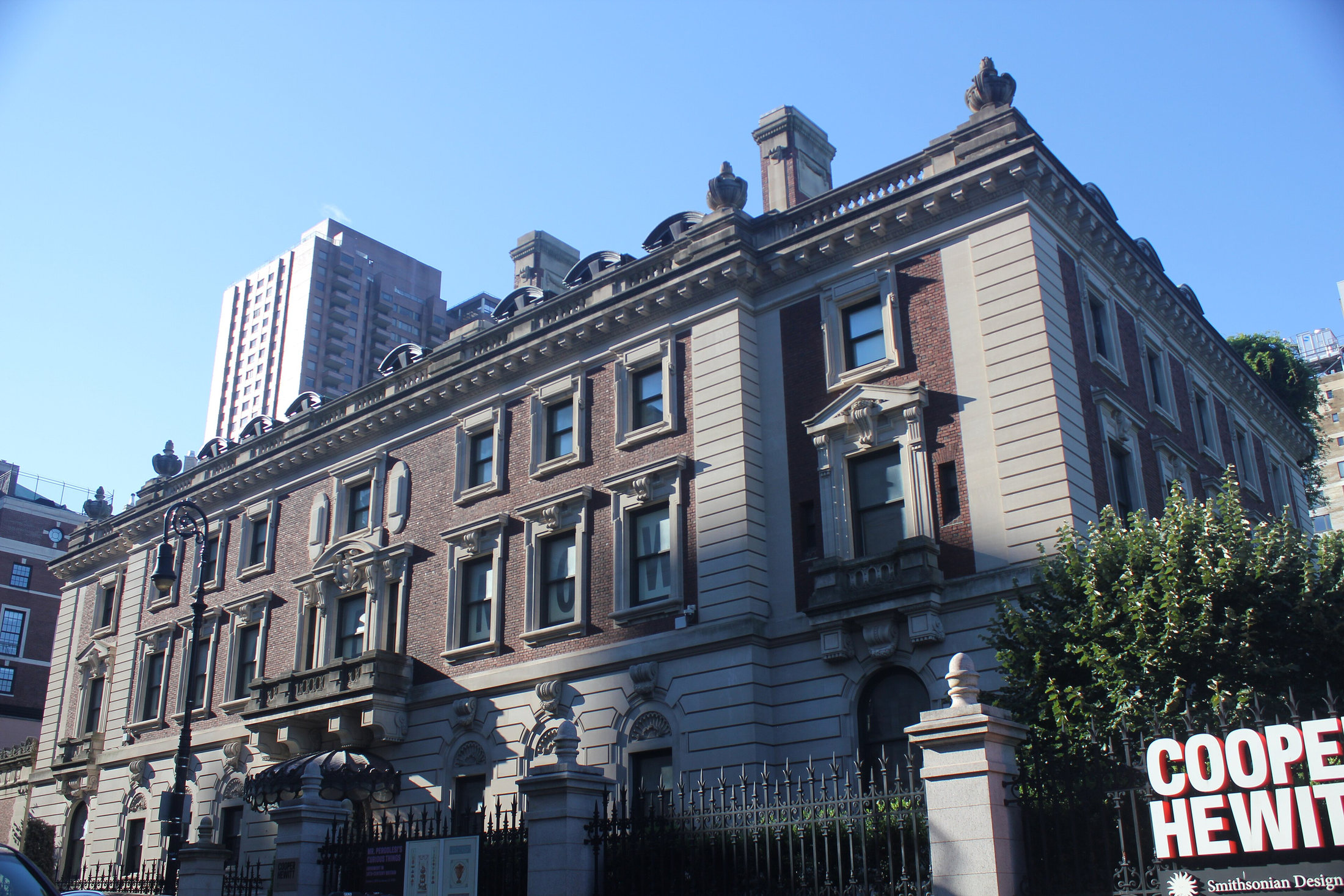
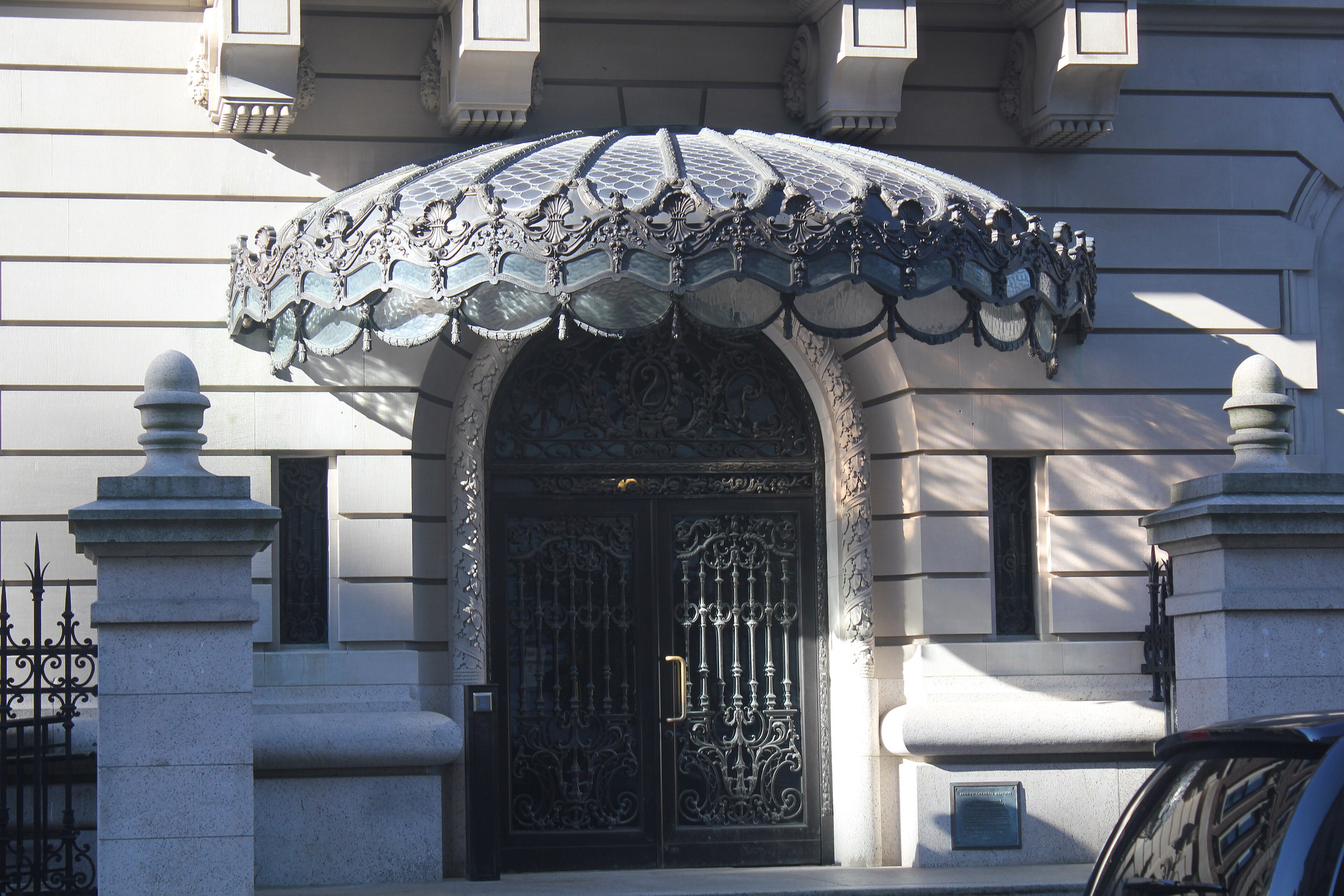
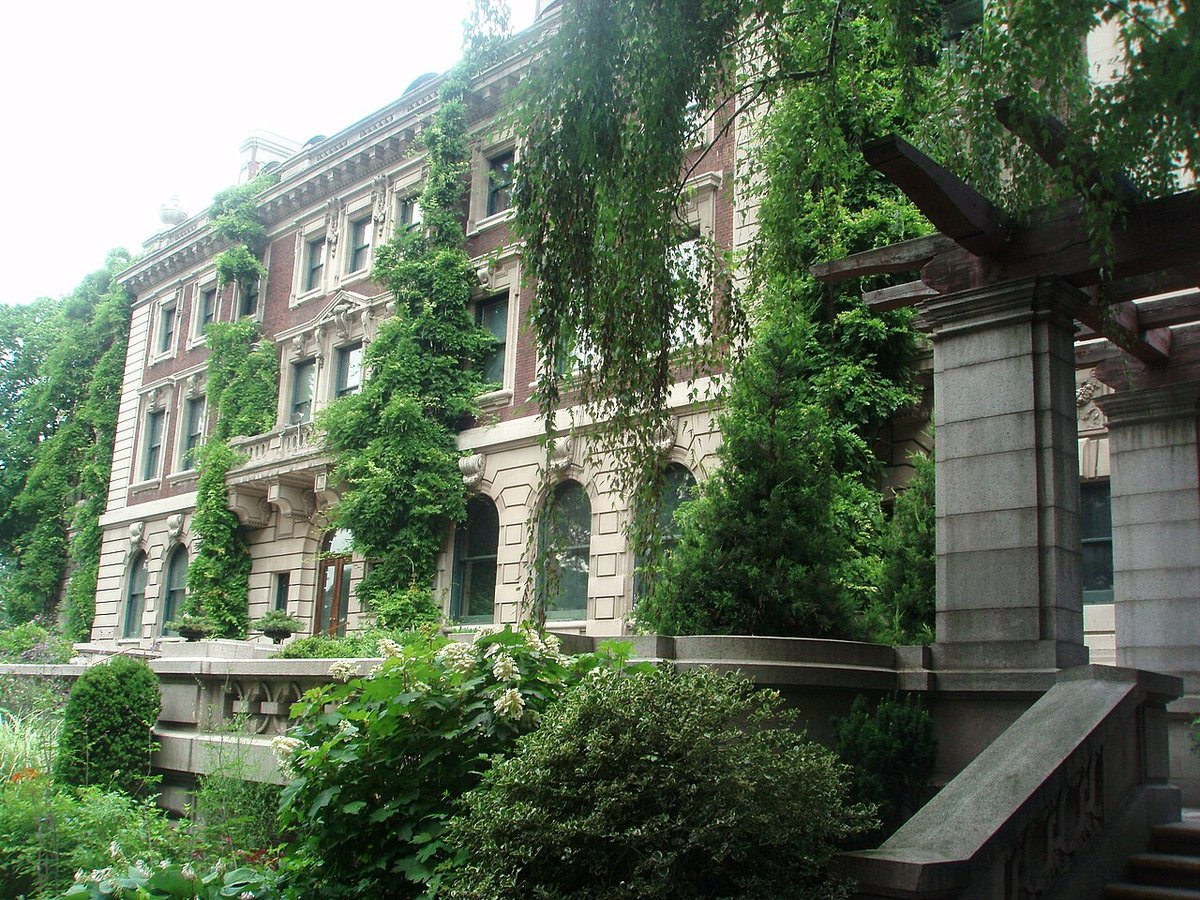
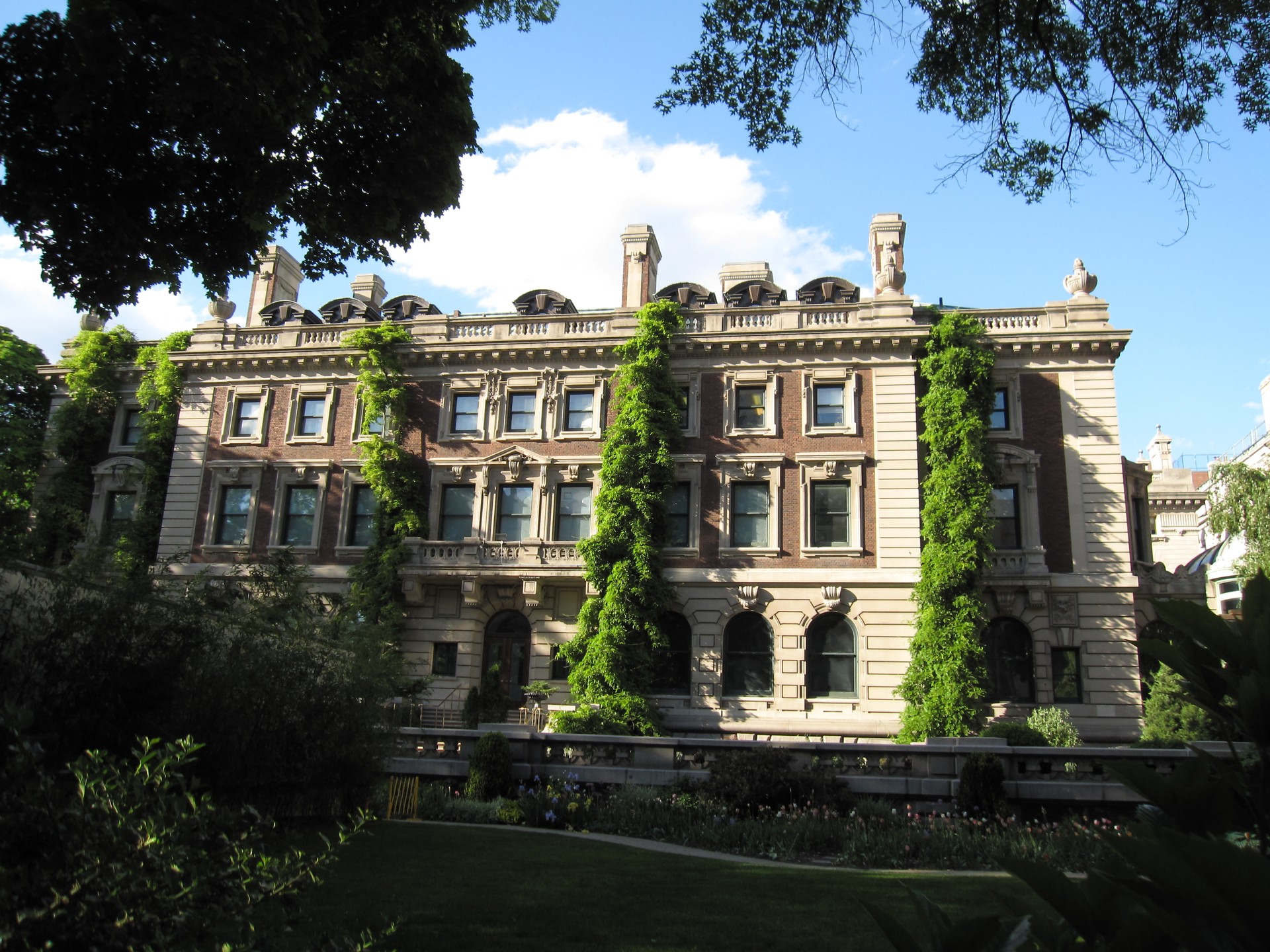
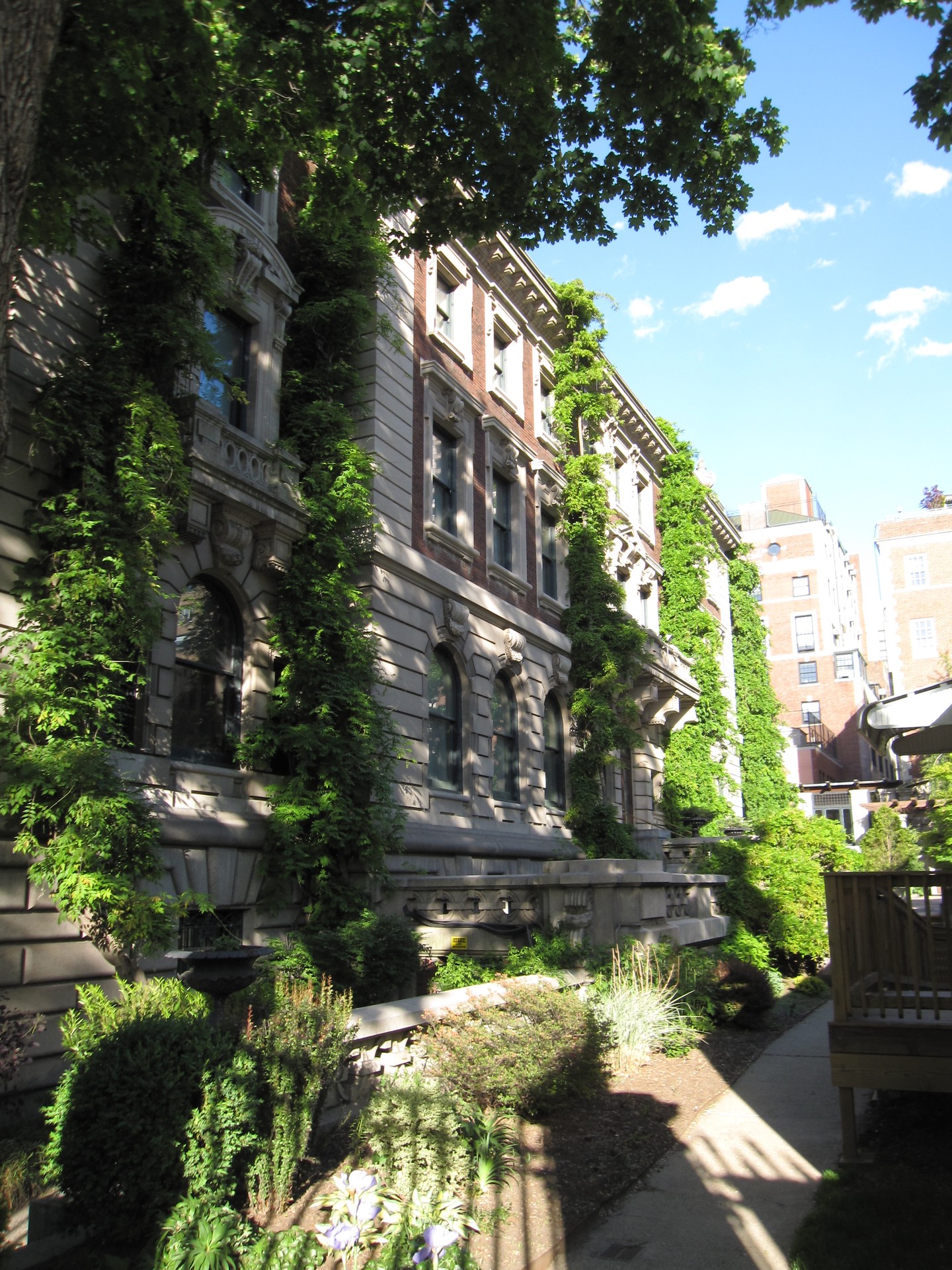
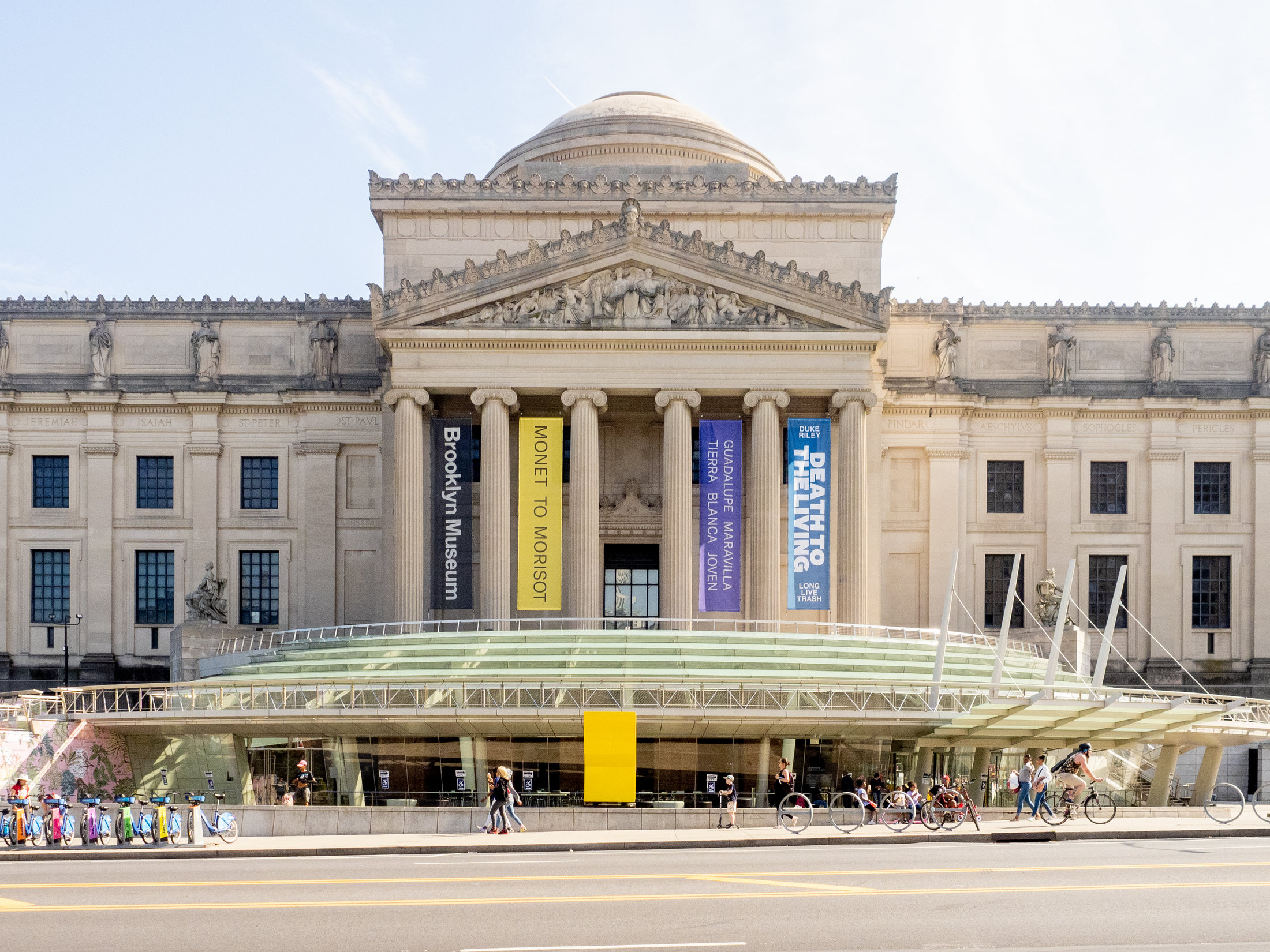
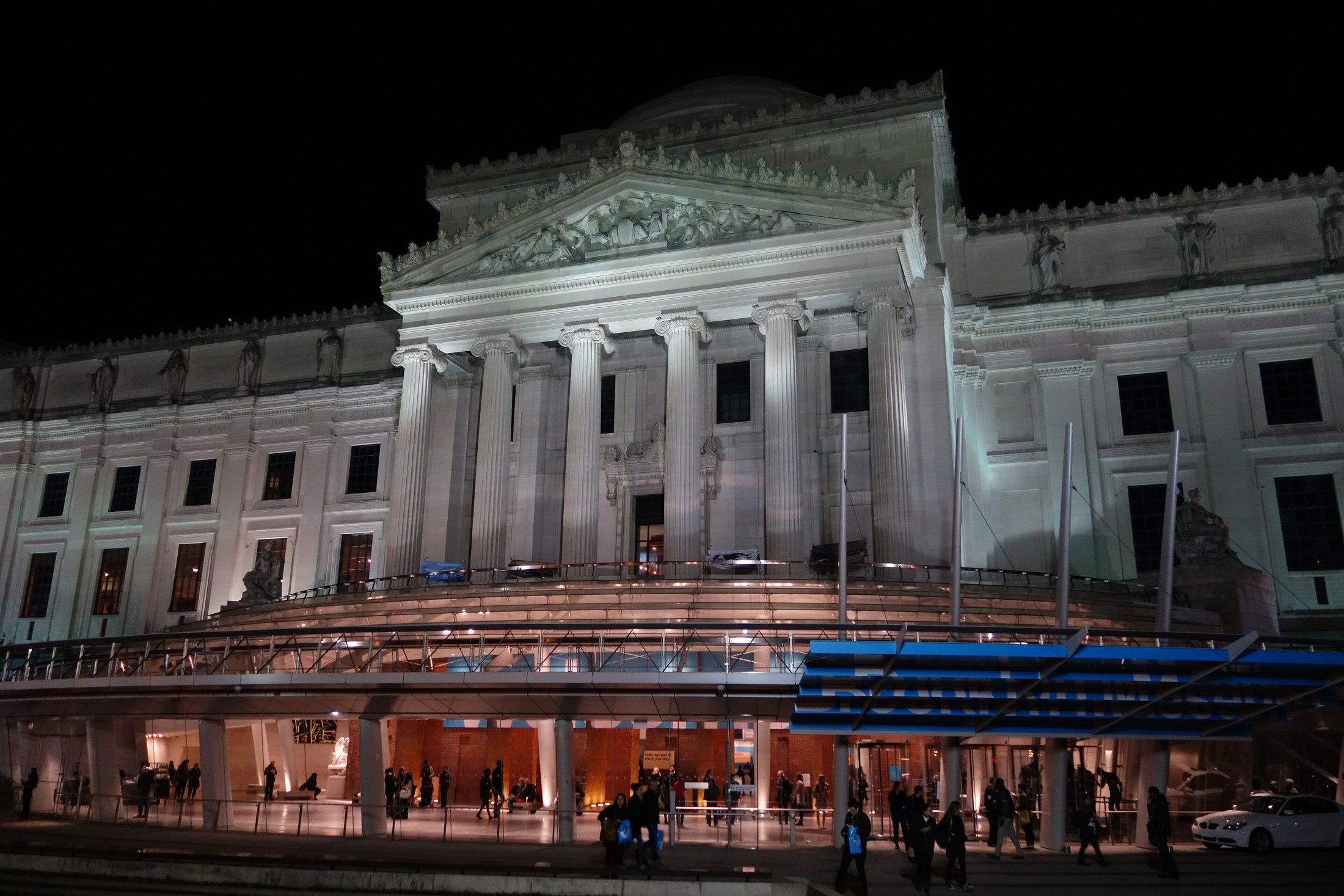
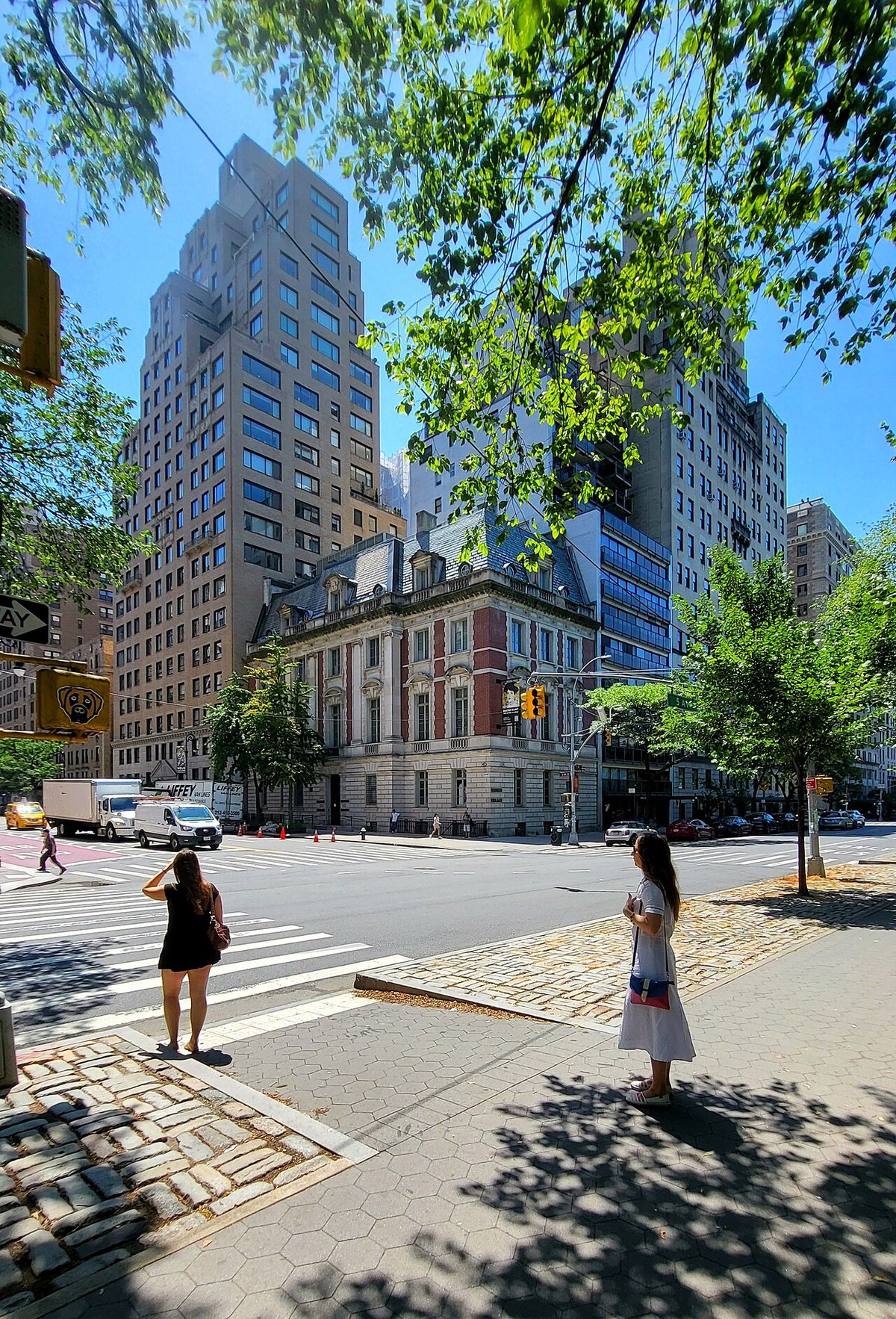
The Mark is on the Upper East Side. The other four stays are Midtown alternatives; plan an onward trip to the museum.

Upper East Side
Guest score 9.1/10 · Booking.com
On Madison Avenue at 77th Street.
Madison Avenue at 77th Street, New York, NY 10075, United States
Official hotel website
Midtown
Guest score 9.4/10 · Booking.com
A Midtown alternative at 18 West 56th Street.
18 West 56th Street, New York, NY 10019, USA
Official hotel website
Midtown / West 57th Street
Guest score 9.0/10 · Booking.com
A Midtown alternative at 101 West 57th Street.
101 West 57th Street, New York, NY 10019, USA
Official hotel website
Midtown East
Guest score 9.1/10 · Booking.com
A Midtown alternative at 150 East 50th Street.
150 East 50th Street, New York, NY 10022, USA
Official hotel website
Midtown East / Fifth Avenue
Guest score 9.3/10 · Booking.com
A Midtown alternative at 12 East 48th Street.
12 East 48th Street, New York, NY 10017, USA
Official hotel website