1 / 5
06 / CONTEMPORARY ART
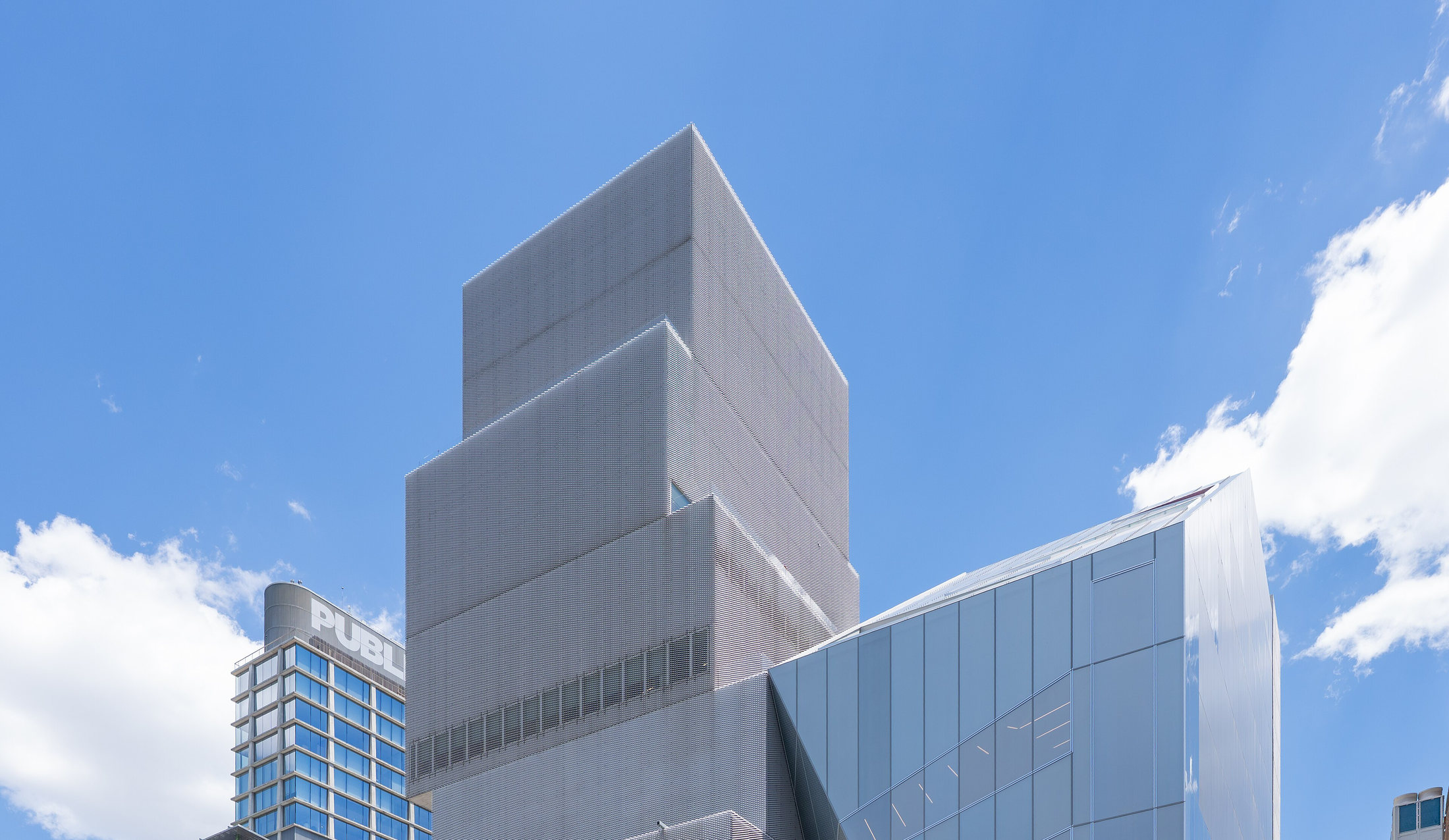
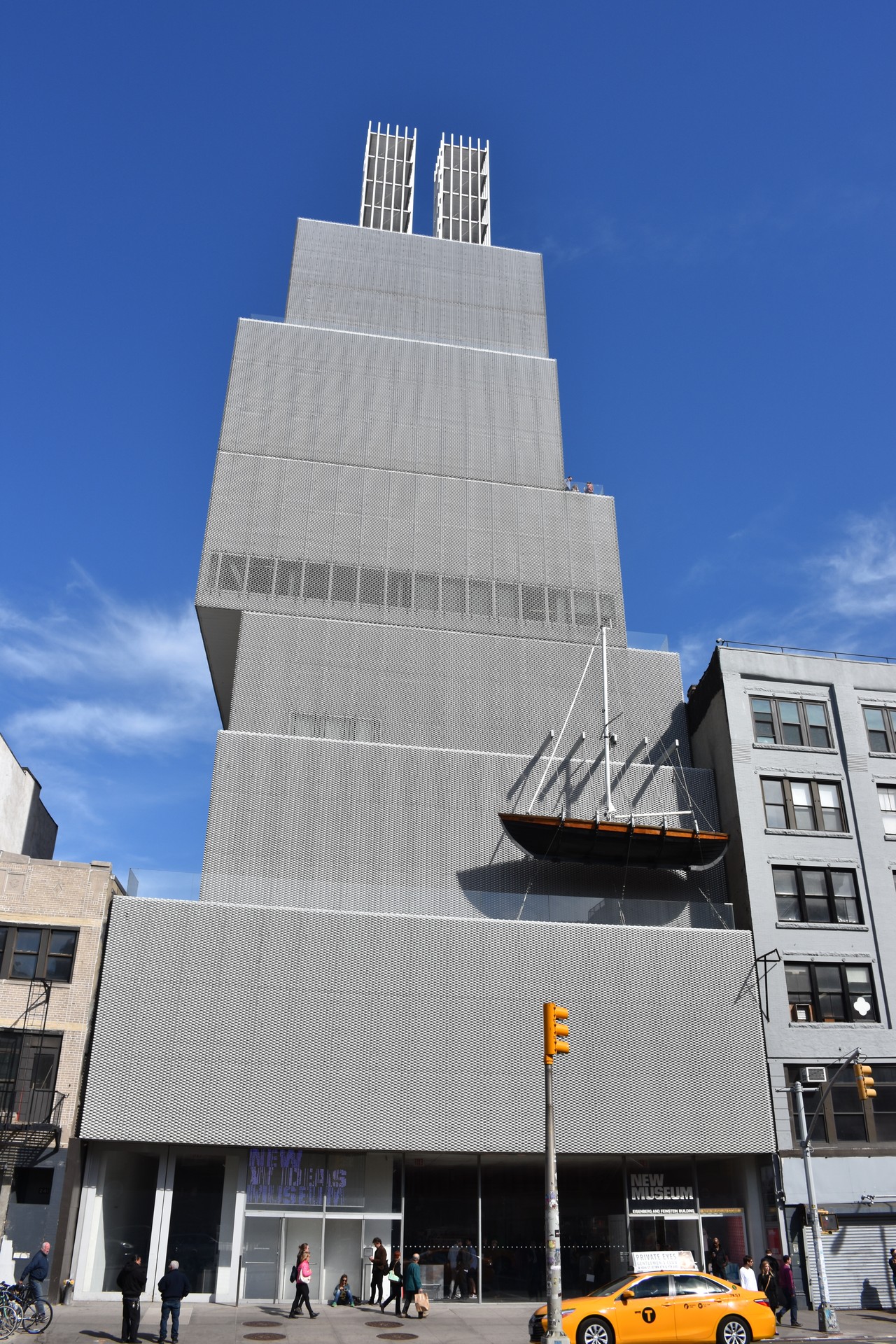
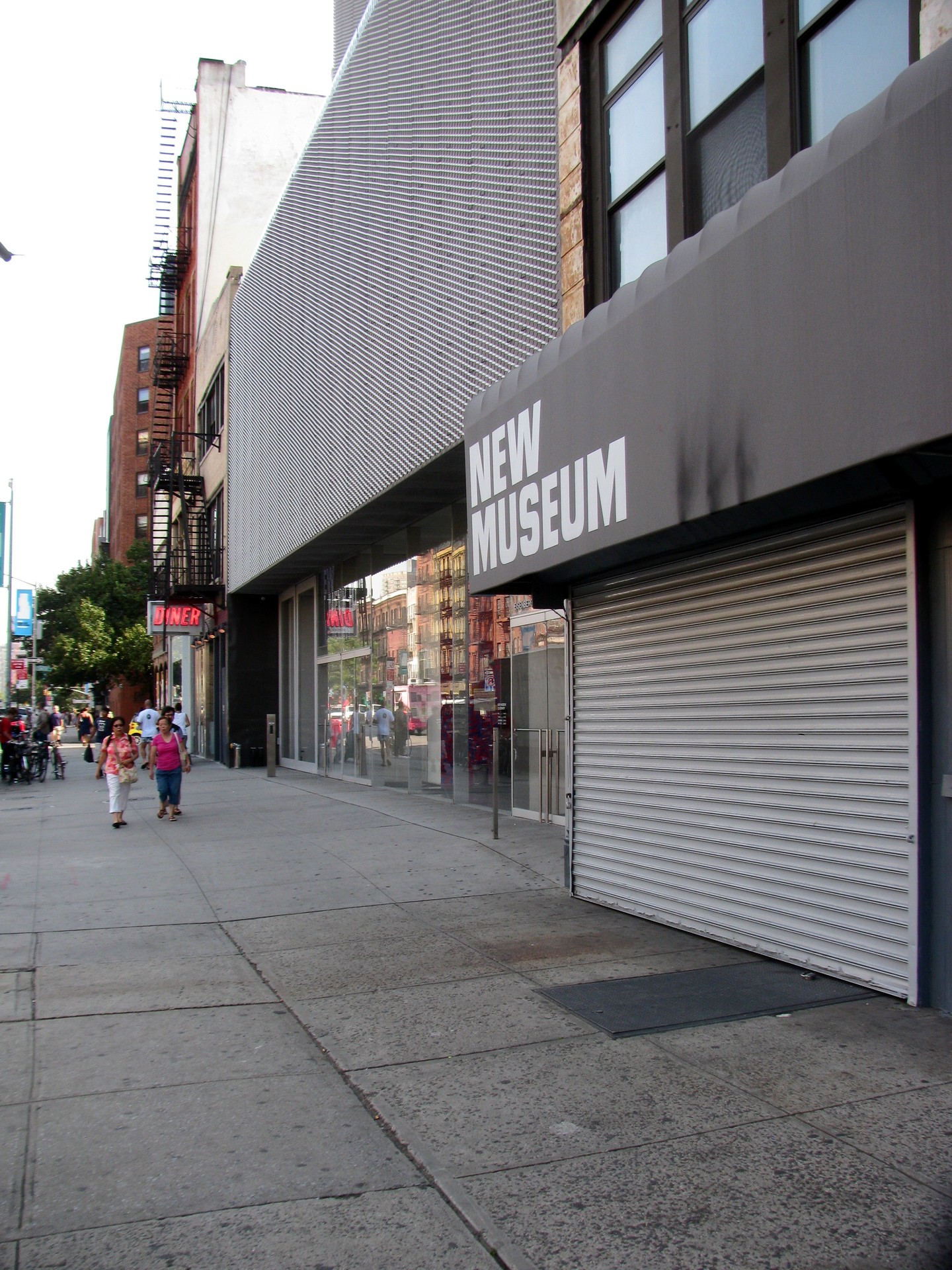
Contemporary art on the Bowery, in the SANAA building and OMA-designed expansion opened in March 2026.
A distorted figure or an awkward-looking combination of images might be a reason to stop here. In 1978, the New Museum gave fourteen artists an exhibition with the mischievous title “Bad” Painting.
Founding director Marcia Tucker wanted to question the standards used to judge paintings, making room for personal, unruly ways of working.
That is an inviting thought to bring to the Bowery. A first response of ‘I’m not sure about this’ gives you something to explore.
A material, an image or an odd detail can hold your attention before you decide whether you like the work.
Tucker founded the museum in 1977 to support living artists whose work had received too little attention. Painting and sculpture soon shared the programme with film, video, television and performance.
Even the living-artists-only policy changed: in the 1990s, the museum began including recently deceased artists, particularly in response to the AIDS crisis. Remembering artists became part of attending to the present.
The museum now describes itself as non-collecting. Its exhibitions and relationships with artists give it its character.
The interesting question for a visit is which ideas and artists it has chosen to bring together this time.
From the street, SANAA's building is easy to enjoy at two scales. Its seven boxes sit slightly out of line with one another; up close, an aluminium-mesh skin gives the solid stack a finer texture.
Kazuyo Sejima and Ryue Nishizawa's building opened in 2007, with its different volumes making space for galleries of different heights and atmospheres.
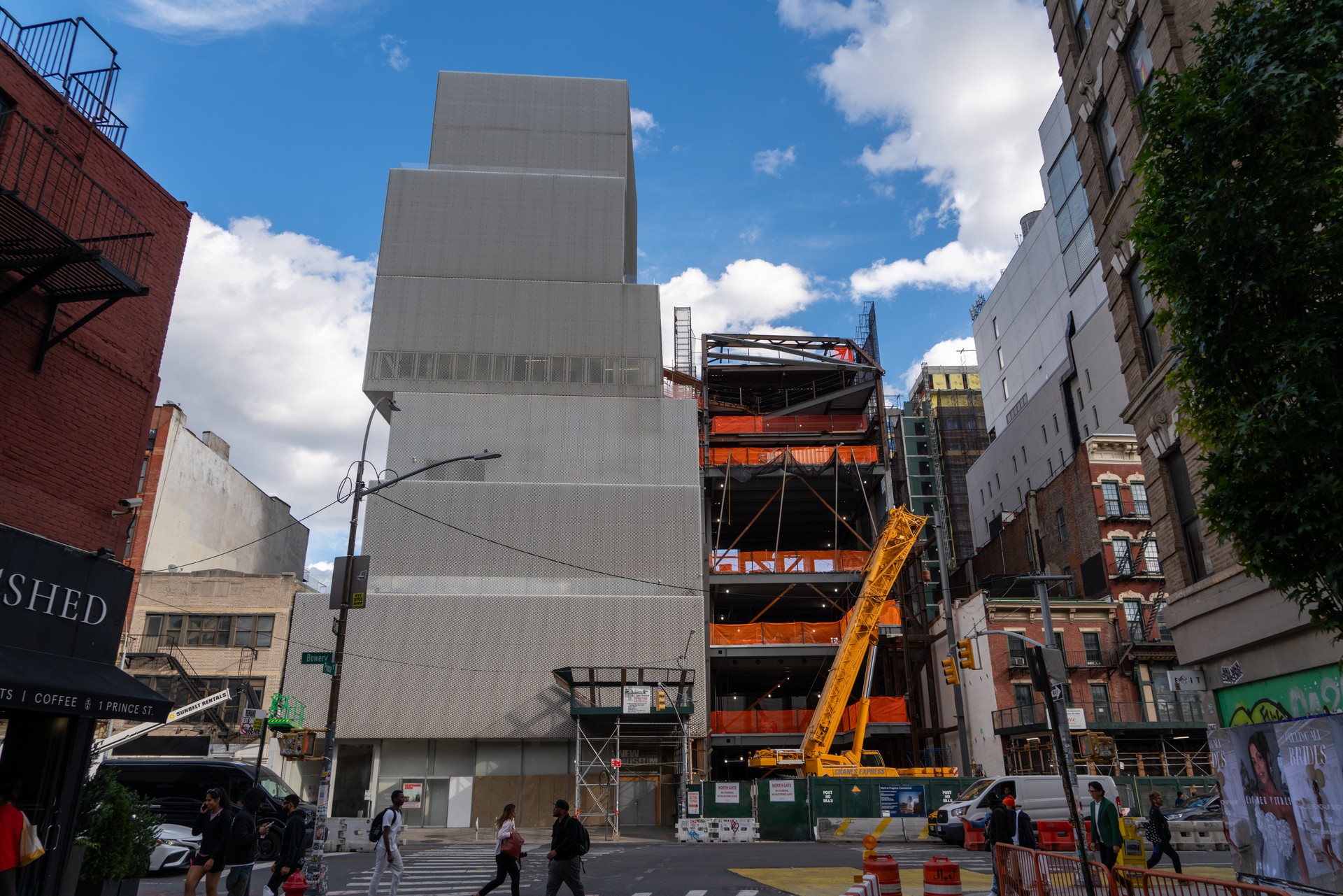
The adjoining expansion, by OMA's Shohei Shigematsu and Rem Koolhaas, opened when the museum reopened on 21 March 2026. Galleries on the second, third and fourth floors connect across the old and new buildings, giving exhibitions room to extend between them.
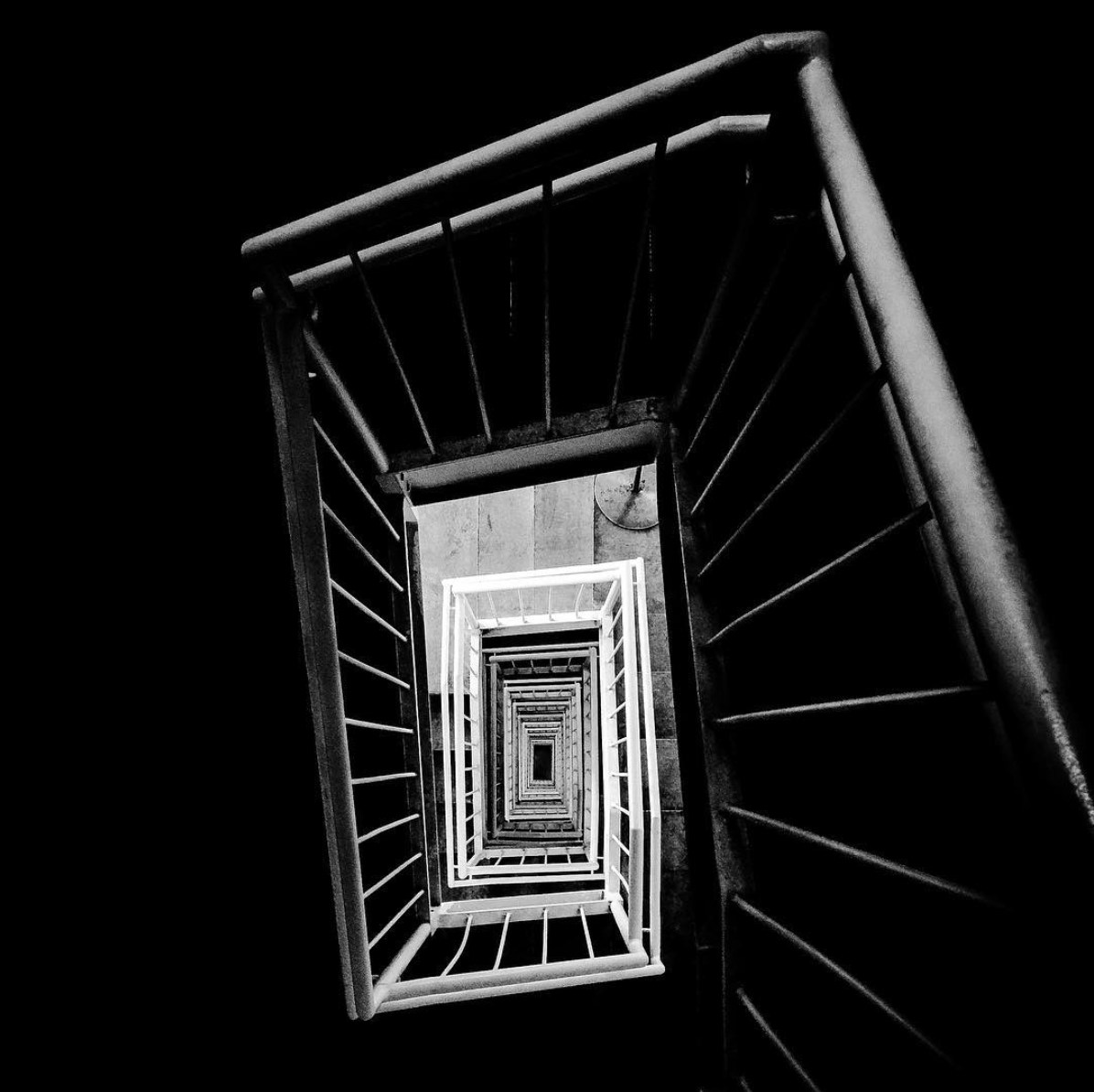
Glass with integrated metal mesh makes the addition a more transparent relative of SANAA's facade. From the atrium stair, the surrounding neighbourhood comes into view.
These moments between artworks can be enjoyable in their own right: a glimpse of the city, a landing, then another gallery.
The 2007 building opened with Unmonumental: The Object in the 21st Century, an exhibition of assembled sculpture that continued into 2008. Disparate things came together without having their awkward joins or temporary-looking arrangements smoothed away.
The project grew in stages, adding images, sound and internet-based work.
Its installation photographs give you a useful way to get acquainted with that earlier show. A join between two materials, or a trace of an object's former use, may be more absorbing than trying to sum up a whole sculpture at once.
That attention to how something is put together can accompany a visit to later exhibitions, too, while leaving each artist's intentions open.
Nari Ward's work offers a particularly moving history of ordinary materials. The museum presented his first institutional solo exhibition in 1993, including Carpet Angel (1992), and returned to his career with the 2019 survey We the People.
That survey included Amazing Grace (1993).
Ward gathered 365 discarded baby strollers in Harlem while developing Amazing Grace. The museum's audio account explains that some had been used by people experiencing homelessness to carry their belongings and collect bottles and cans.
He cleaned and repaired the abandoned strollers, eventually arranging them in a former firehouse with salvaged fire hoses and a recording of Mahalia Jackson singing the hymn that gives the work its name.
In the archive's installation images, one stroller remains a recognisable everyday object, even within the mass of hundreds. Care, reuse and abandonment meet in the same shape.
The museum's essay on Ward helps connect his handling of these materials with individual lives and the history of the neighbourhood.
New Humans: Memories of the Future inaugurated the expanded museum in 2026. Artists appeared alongside writers, scientists, architects and filmmakers in an examination of changing ideas of being human.
Its historical reach placed technological questions on a longer timescale than a new invention or a headline.
The exhibition's accounts and photographs remain a way to explore that conversation. The opening programme is another chapter in a museum whose earlier exhibitions are often worth getting to know alongside whatever brings you through its doors now.
Roughly ninety minutes to two hours is a starting estimate, with more time for substantial films or reading. A film's running time and scheduled start can help you choose the rest of your stops.
One work that holds your attention is a good reason to let the plan stretch a little.
The current programme is the place to plan: there is no permanent-collection circuit. The Ward works and Unmonumental discussed here belong to exhibition history, and New Humans has ended.
After choosing an exhibition, you can leave room for a repeated image, a shift in sound or a small detail to become more interesting than it seemed at first. Its interpretation may then add something to what you have noticed.
Luggage of any size must stay elsewhere. Large bags and backpacks must be checked.
Arriving without a suitcase leaves one less thing to arrange before the galleries.
Ticket sales are final. Public programmes may require separate tickets.
Thursday evening admission runs 19:00–21:00. Reserve online; only limited additional tickets may be available onsite.
Seating is limited; the ground-floor Visitor Desk can advise on free portable gallery stools.
Seniors 65+ pay US$24, students US$19, and visitors with disabilities US$22, with free care-partner entry. Ages 18 and under enter free.
Last reviewed: . Check the museum’s website for current hours and ticket prices.
Bookable options on GetYourGuide. Check what is included, the entry time and the final price before you book.
Tours and tickets · compare options
New Museum tickets are sold by the museum. Compare other New York tours and tickets on GetYourGuide.
Affiliate link. We may earn a commission.Use two fingers to move or pinch the map on a touch screen; one finger scrolls the page. In full screen, drag to move. Use plus and minus to zoom. Arrow keys move the map; zero fits all stops. Escape closes the preview or full screen.
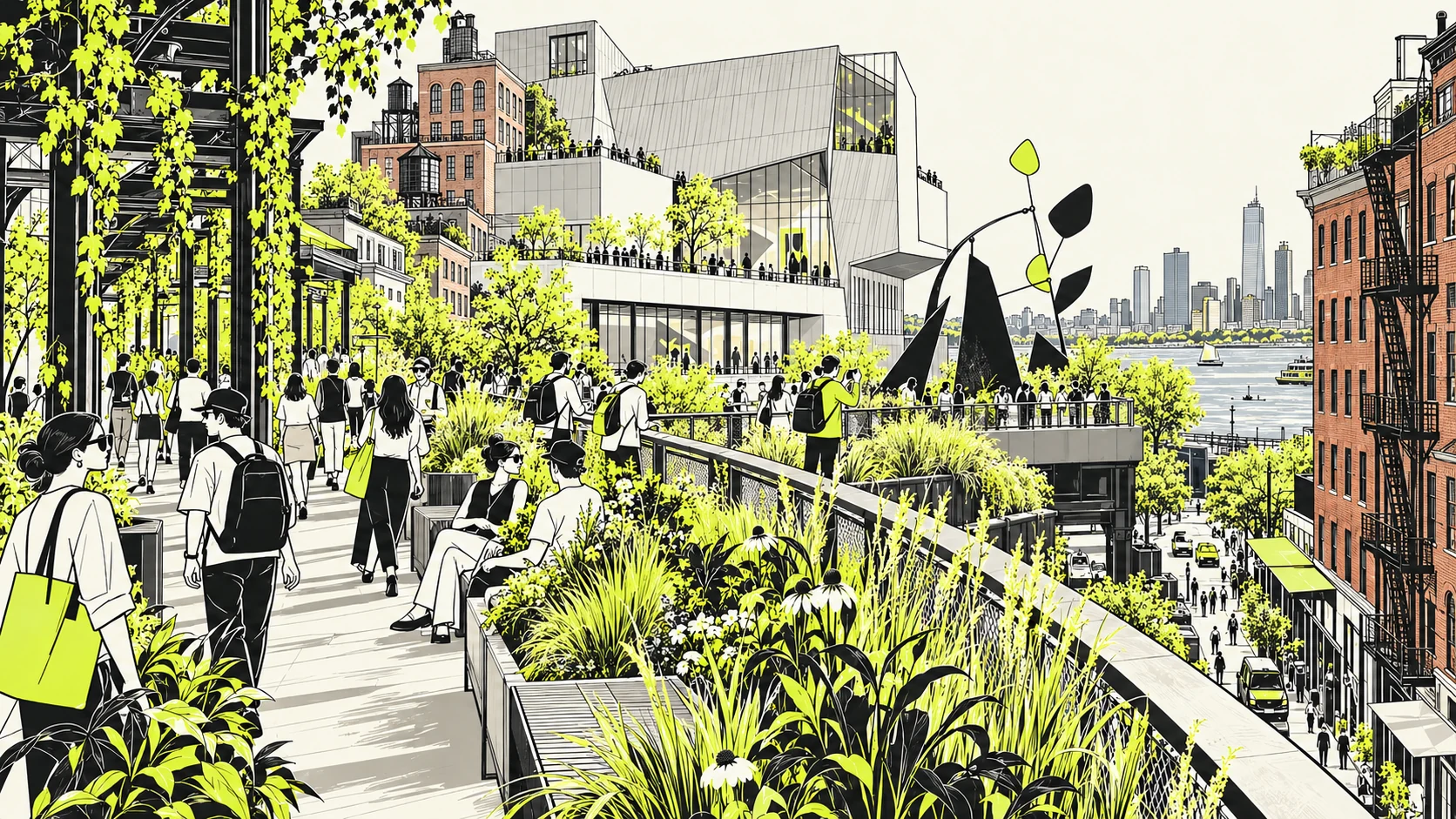
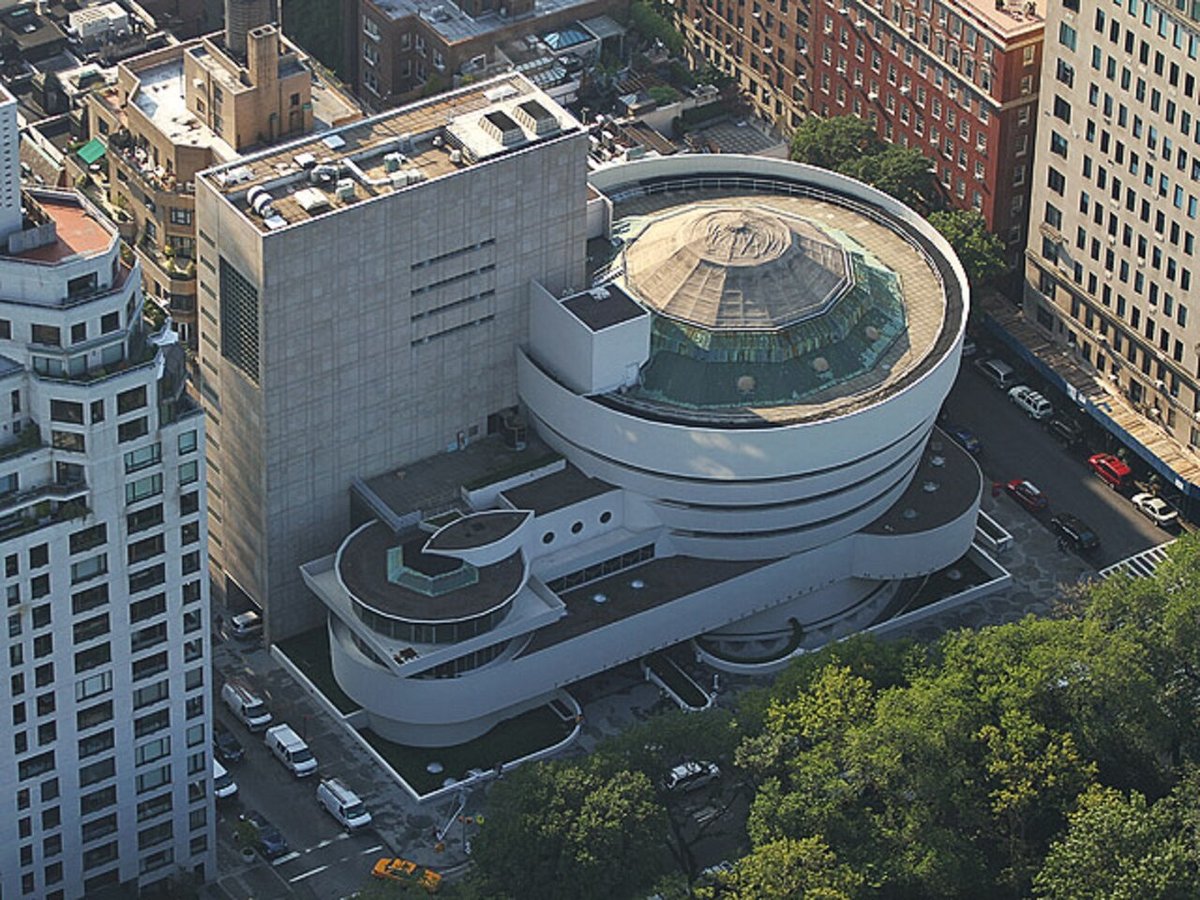
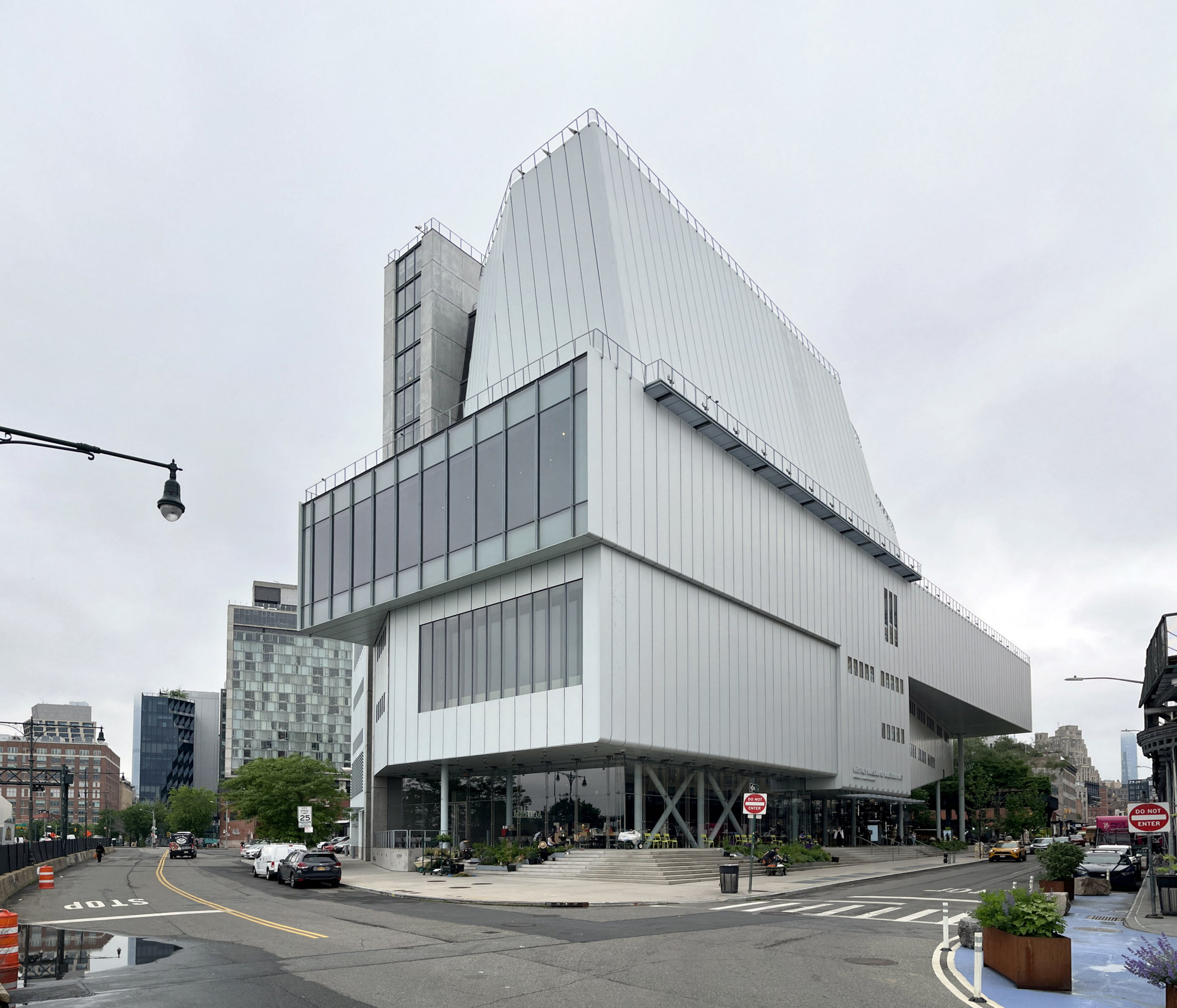
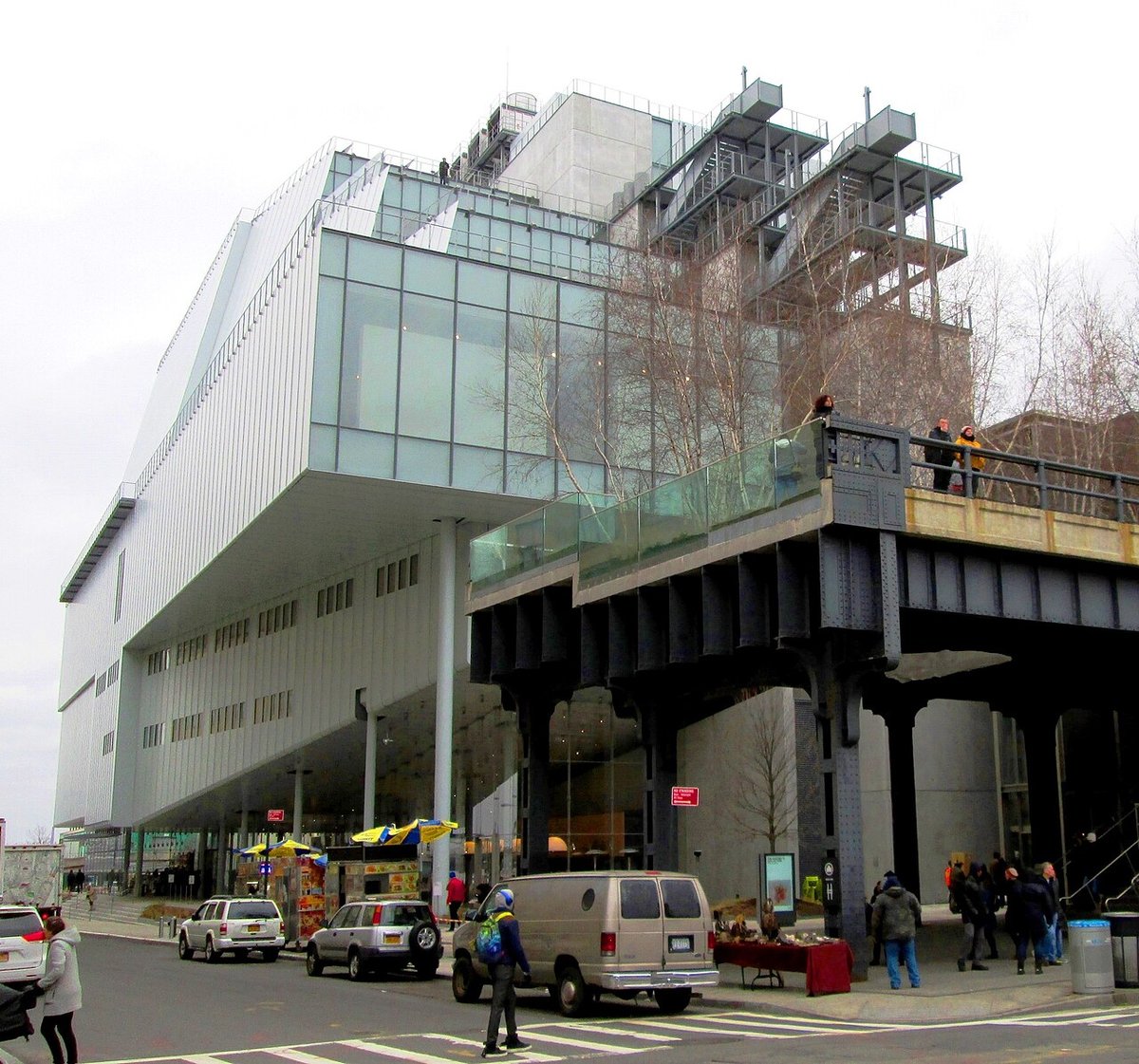
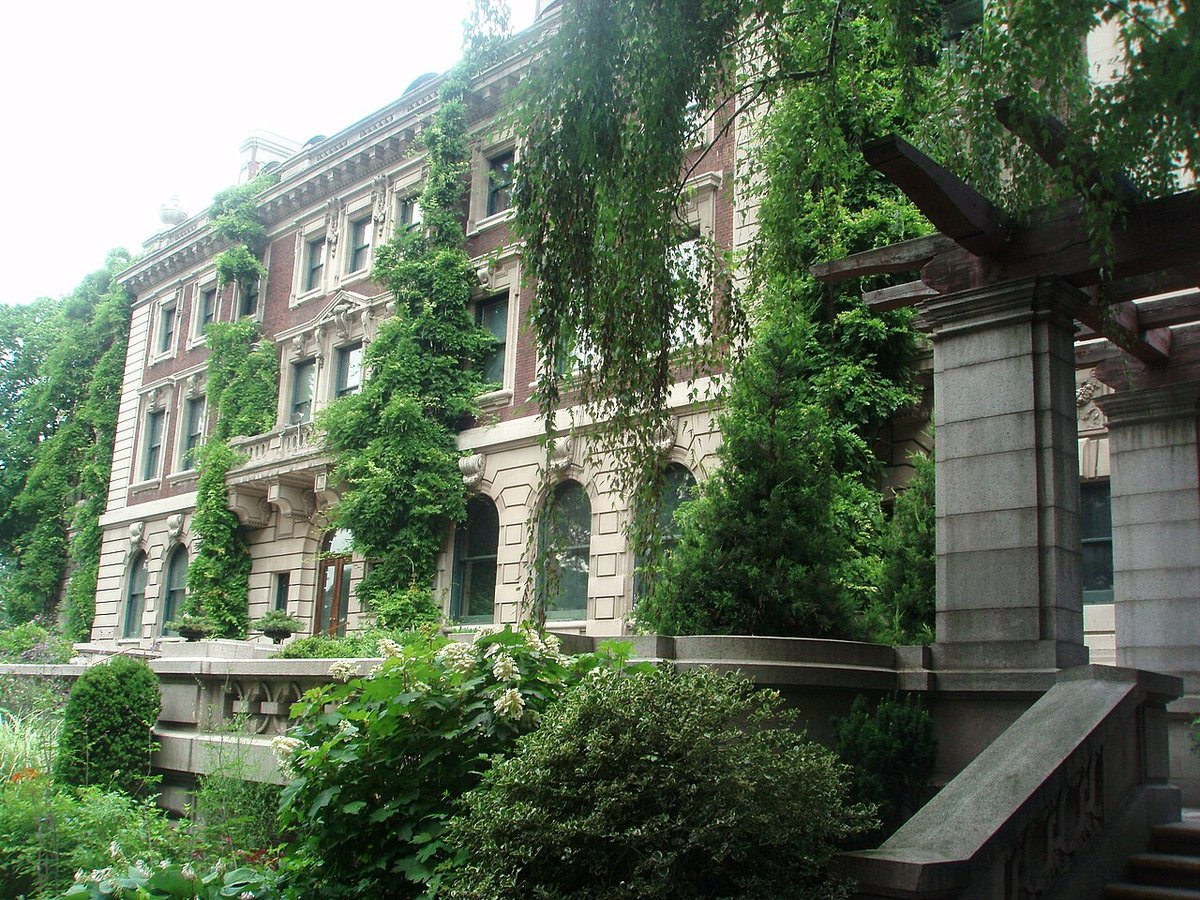
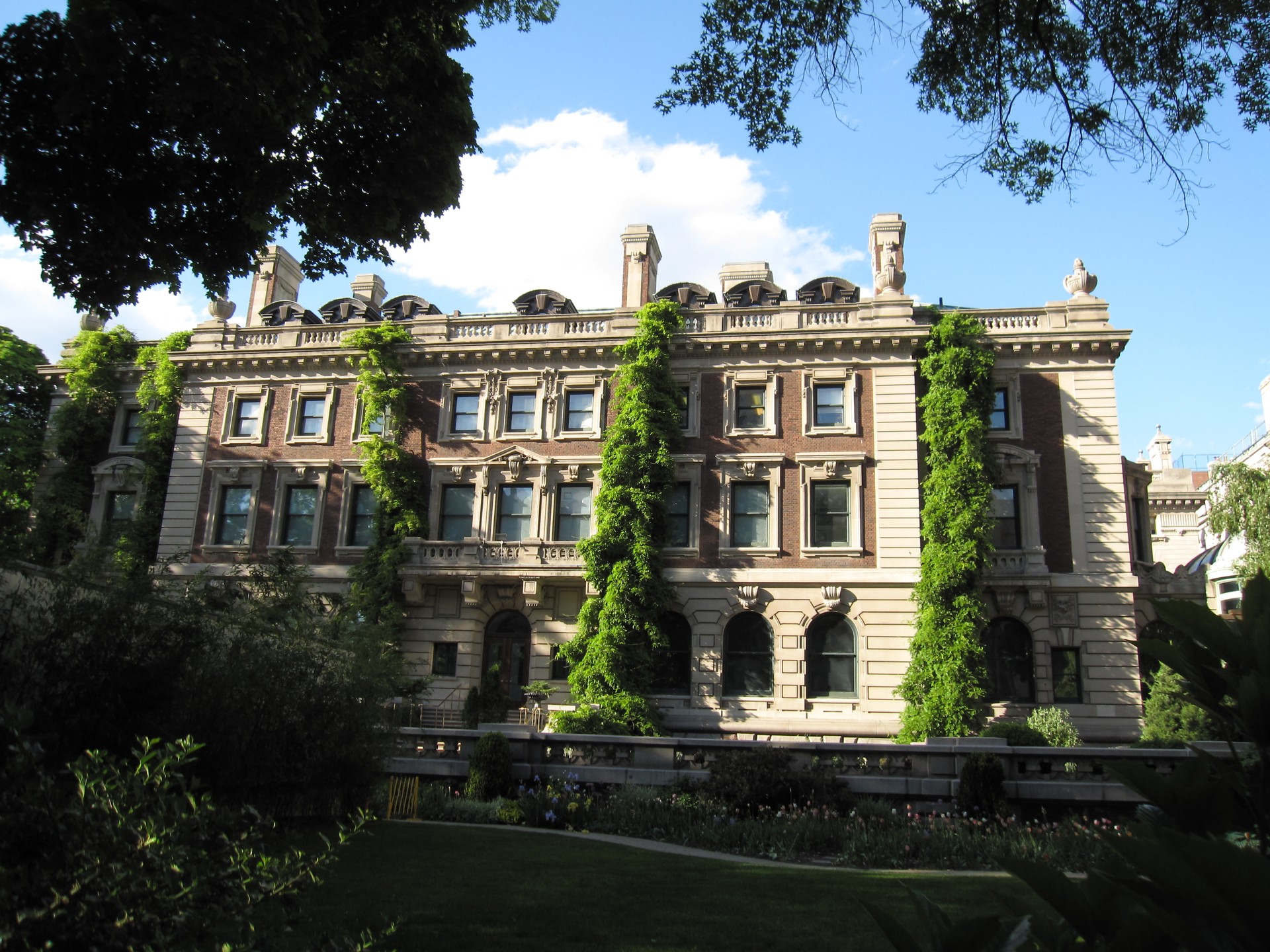
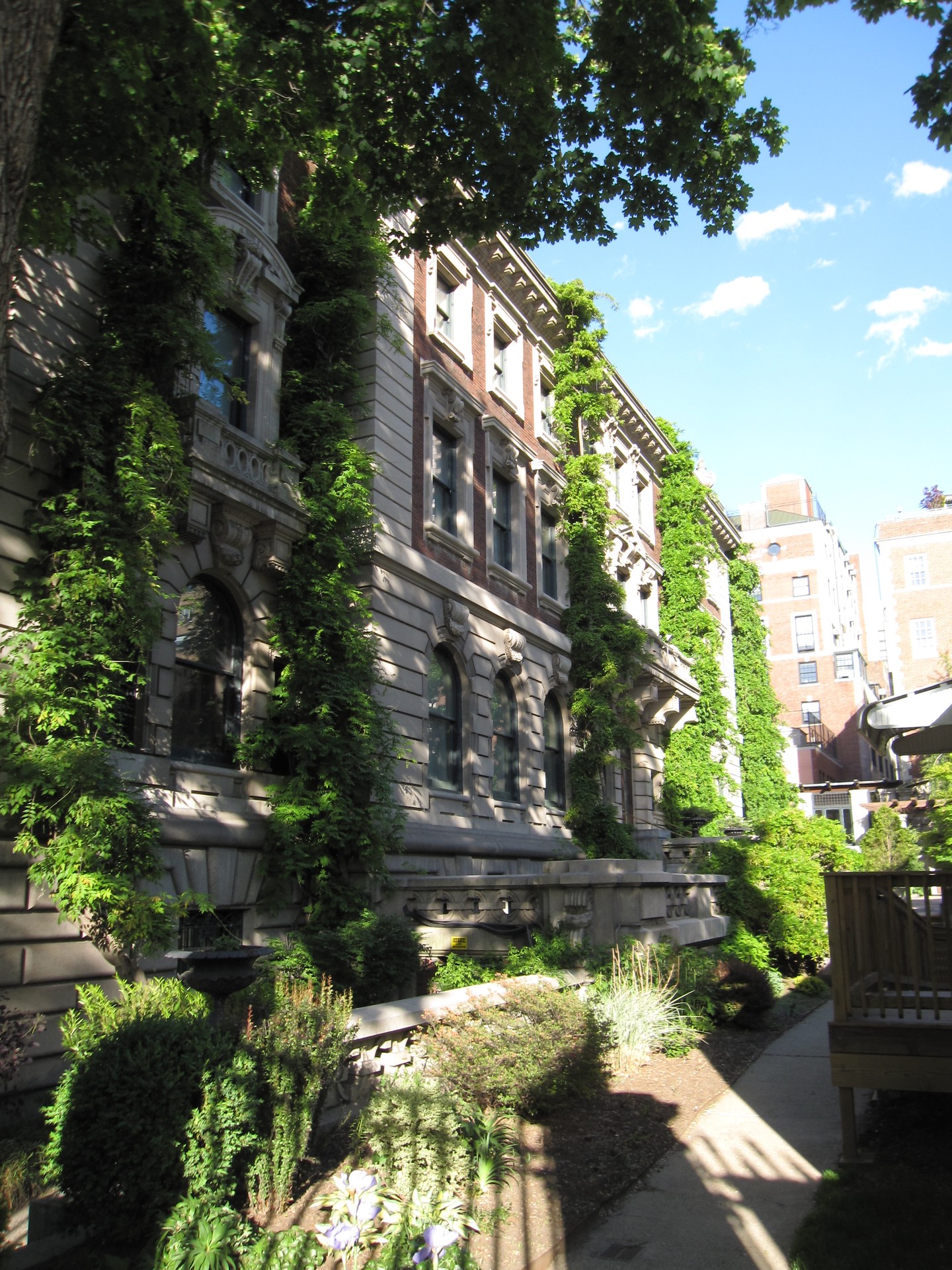
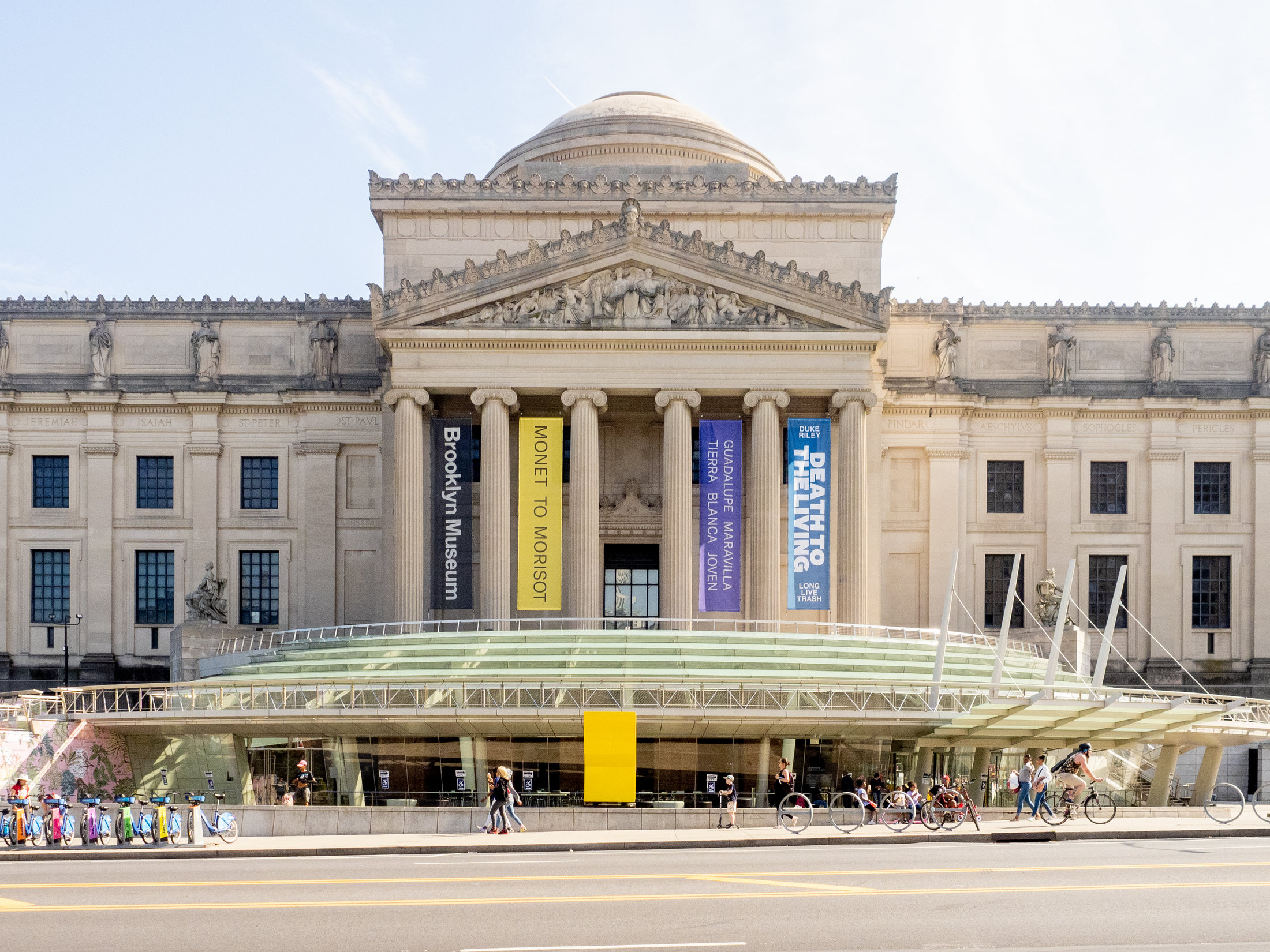
An illustrated introduction to a related guide, not a depiction of this museum.
Five stays across SoHo, the Lower East Side and Tribeca. The Tribeca choices are farther south, so allow for onward travel to the museum.

SoHo
Guest score 9.3/10 · Booking.com
At 79 Crosby Street in SoHo.
79 Crosby Street, New York, NY 10012, USA
Official hotel website
SoHo
Guest score 9.1/10 · Booking.com
At 58 Thompson Street in SoHo. Guests must be 16 or over; the person checking in must be at least 21.
58 Thompson Street, New York, NY 10012, USA
Official hotel website
Lower East Side / Chinatown edge
Guest score 9.0/10 · Booking.com
At 9 Orchard Street in Lower East Side / Chinatown edge.
9 Orchard Street, New York, NY 10002, USA
Official hotel website
Tribeca
Guest score 9.6/10 · Booking.com
At 86 Warren Street in Tribeca.
86 Warren Street, New York, NY 10007, USA
Official hotel website
Tribeca / Barclay Street
Guest score 9.1/10 · Booking.com
At 27 Barclay Street in Tribeca / Barclay Street.
27 Barclay Street, New York, NY 10007, USA
Official hotel website