In this guide
A station with plenty to stay for
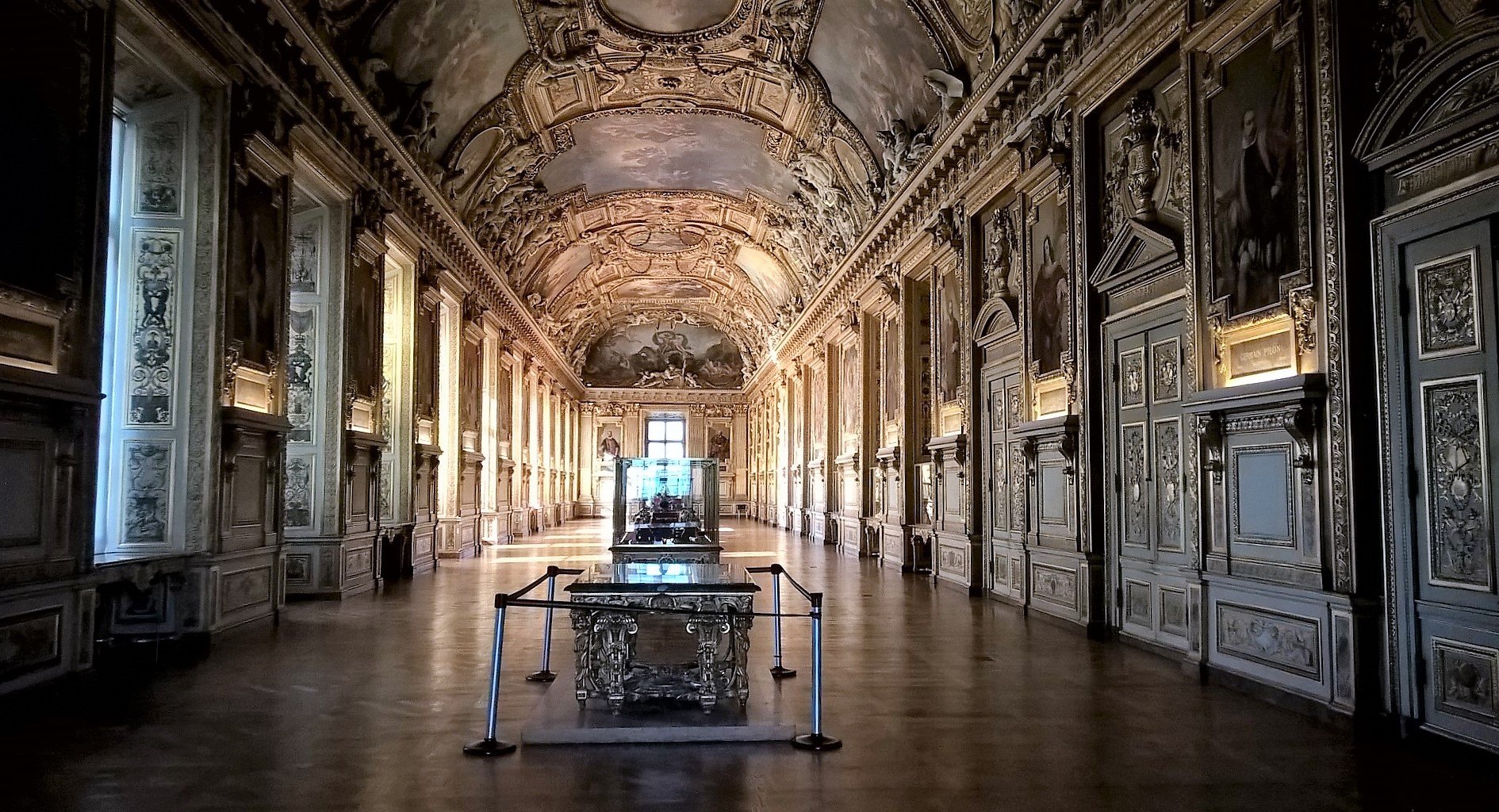
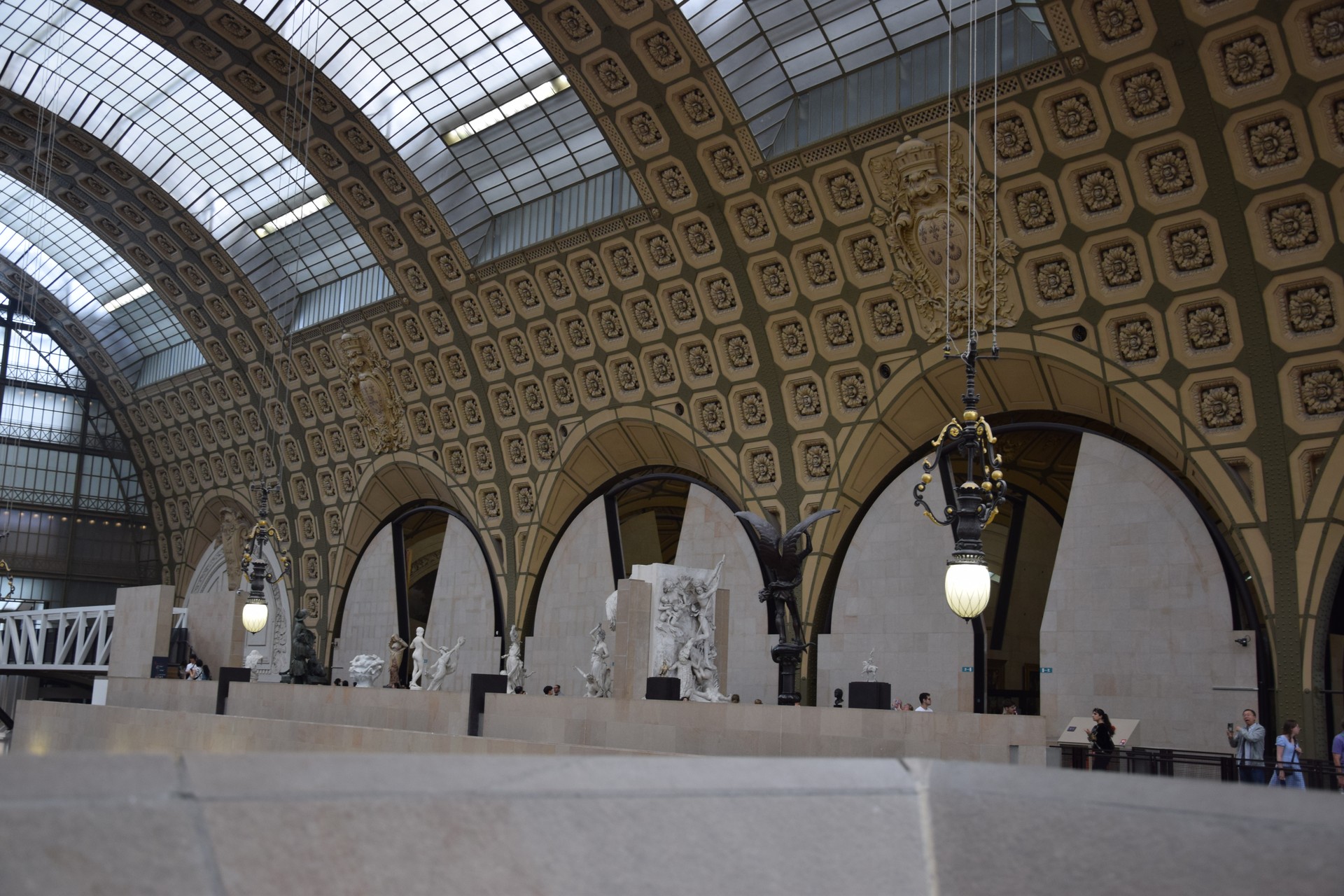
There is a lot to enjoy at Orsay before you settle in front of a favourite painting. The old station's great vault gives sculpture a remarkable setting.
Elsewhere, a village funeral fills a monumental canvas, a bronze dancer wears actual fabric, and a bench's woodwork seems to branch as it rises.
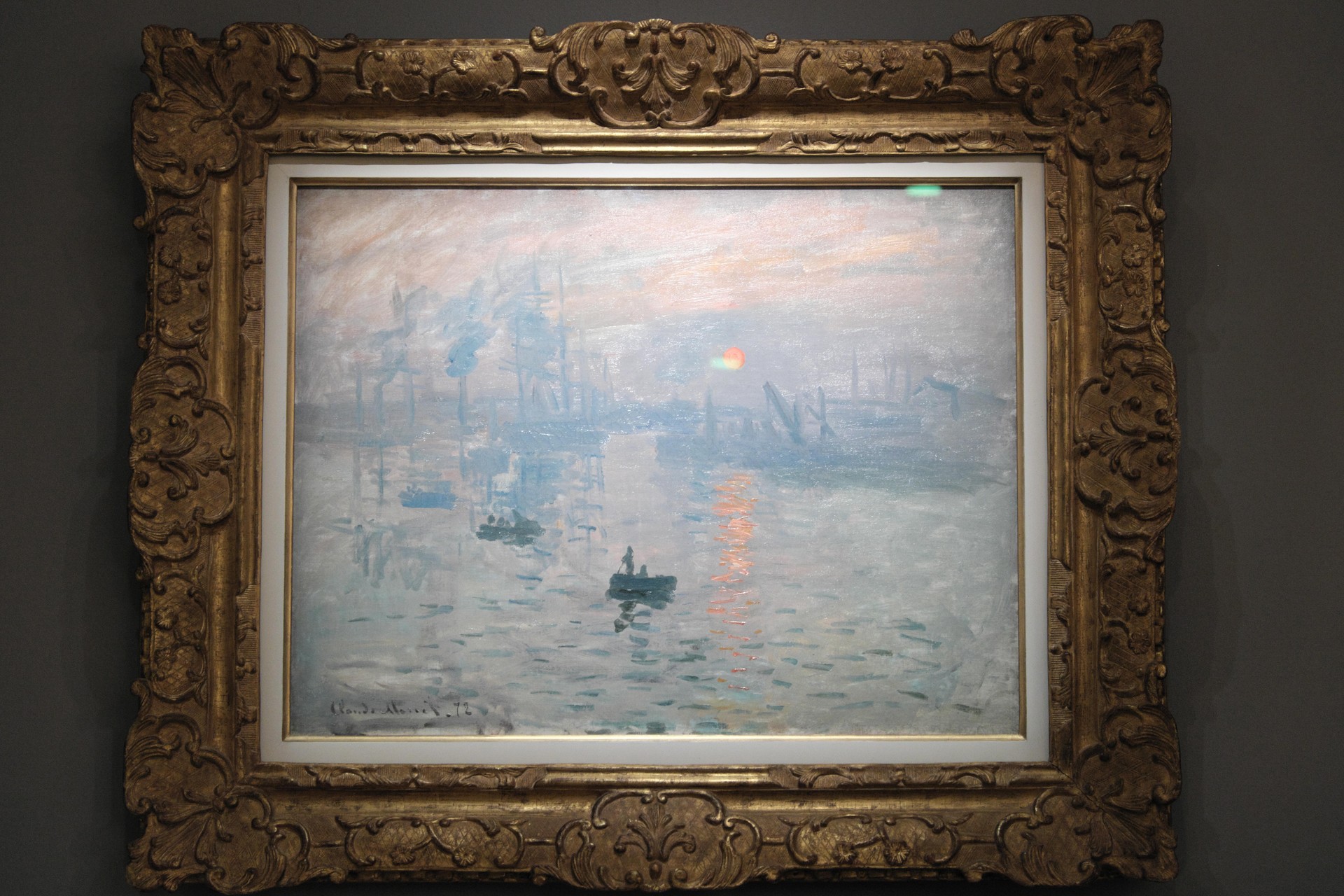
The collection's main span, 1848–1914, covers a period when modern life was changing the subjects and materials of art. Manet and Monet have a place in that story, alongside furniture, sculpture and the building itself.
A change of material or scale can be a very good reason to pause.
The station around the collection
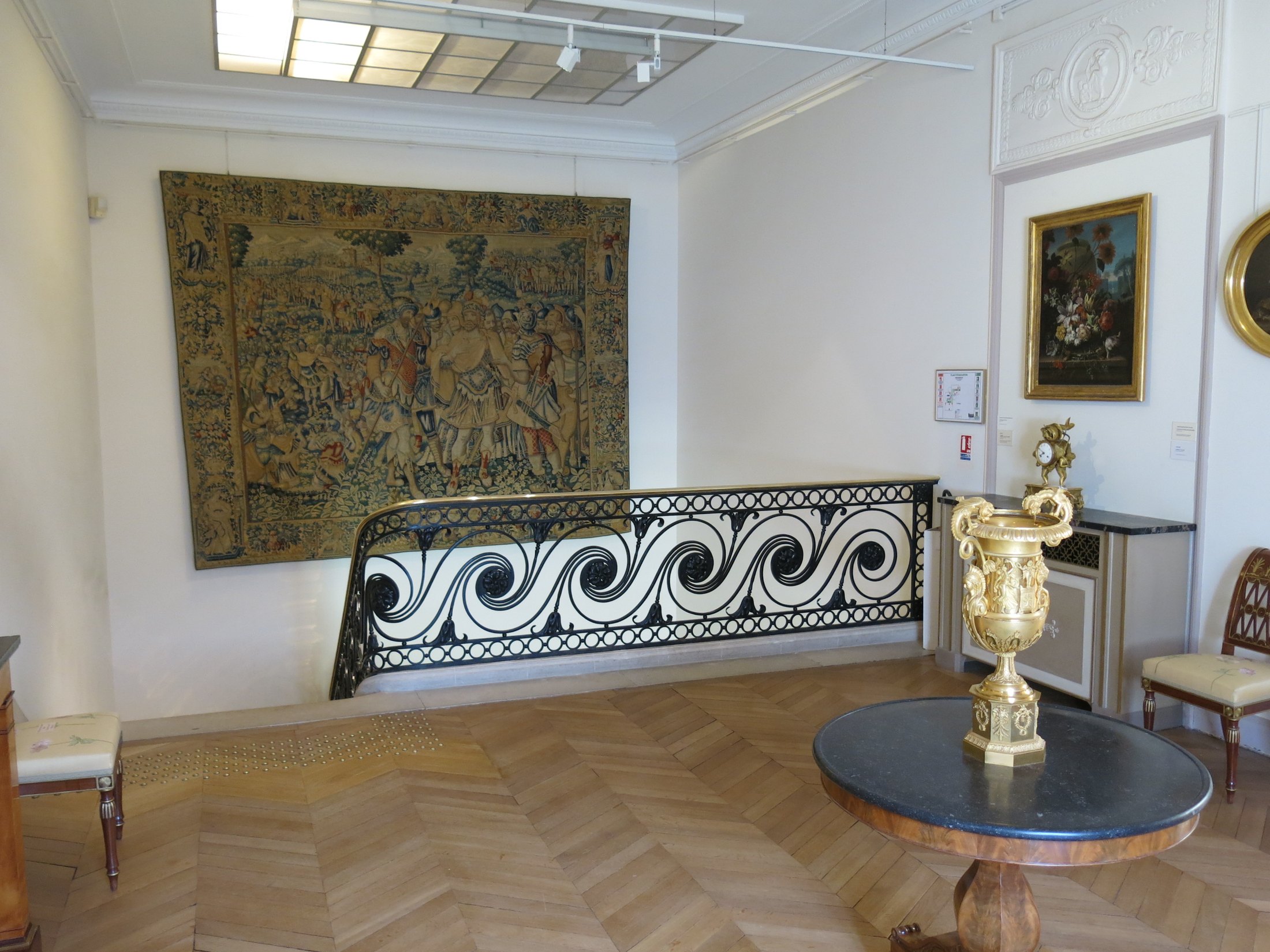
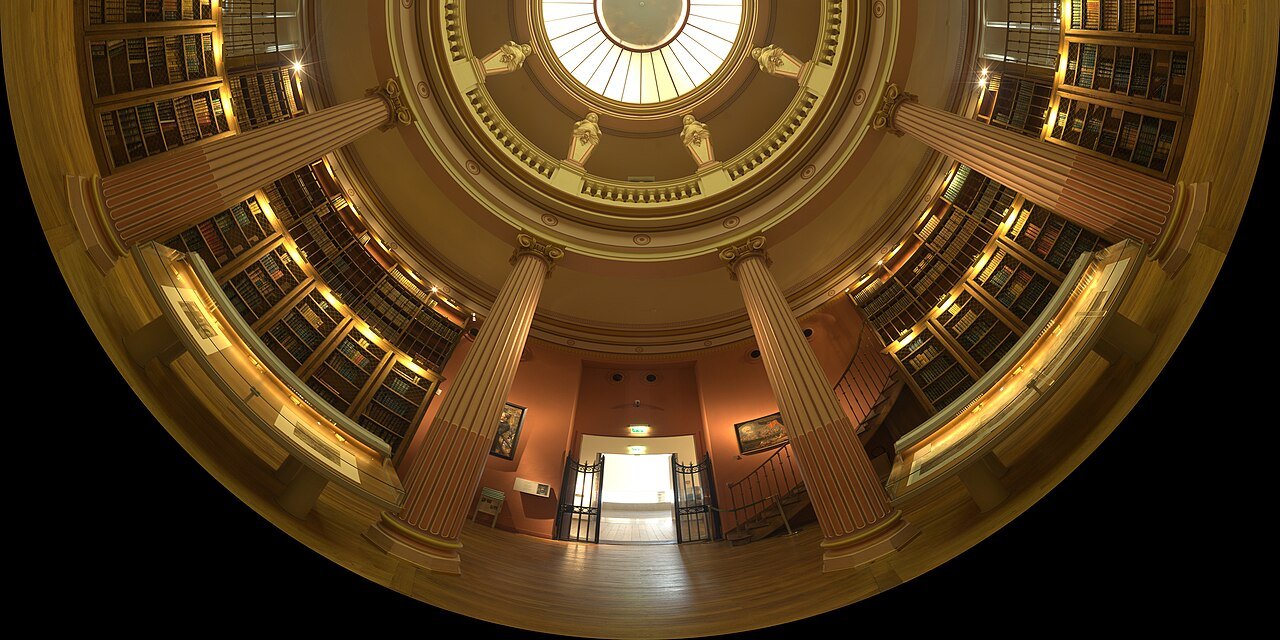
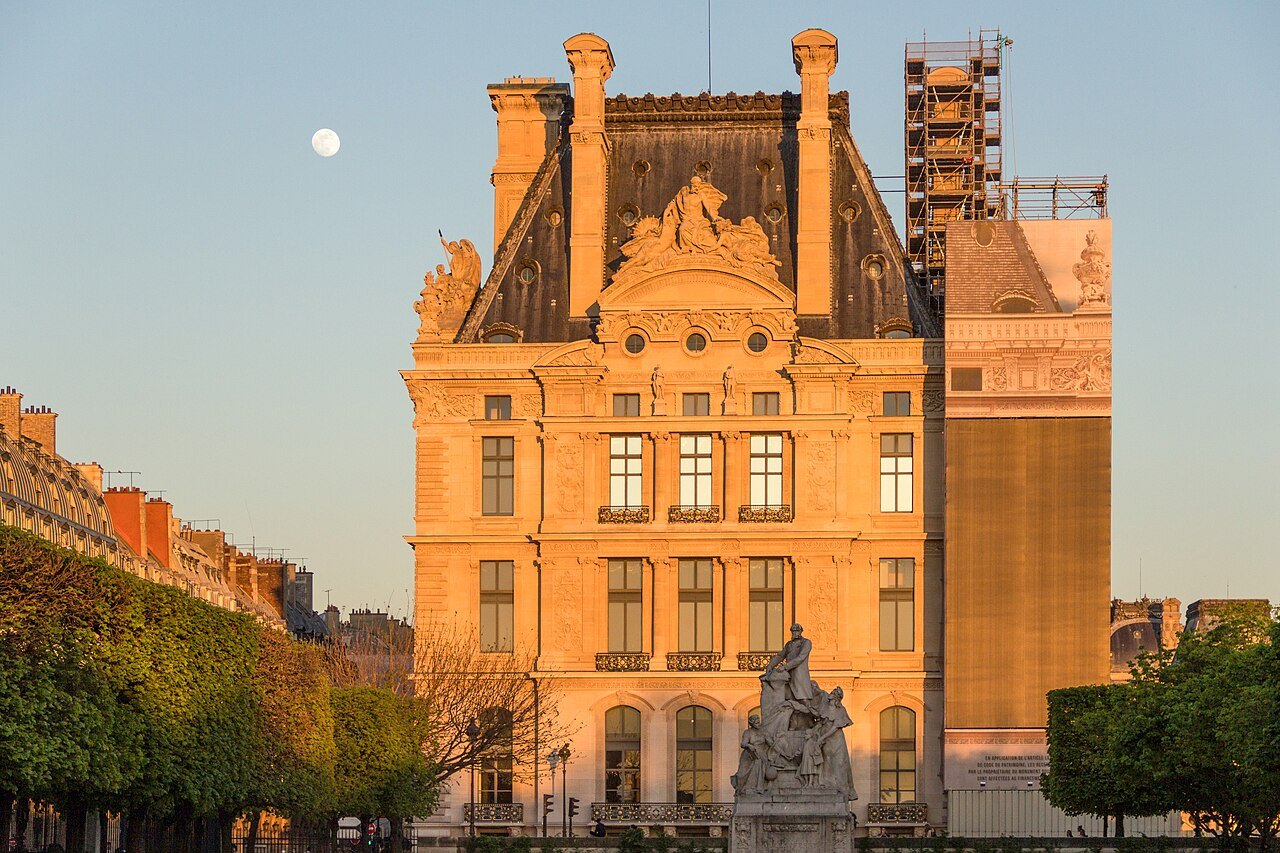
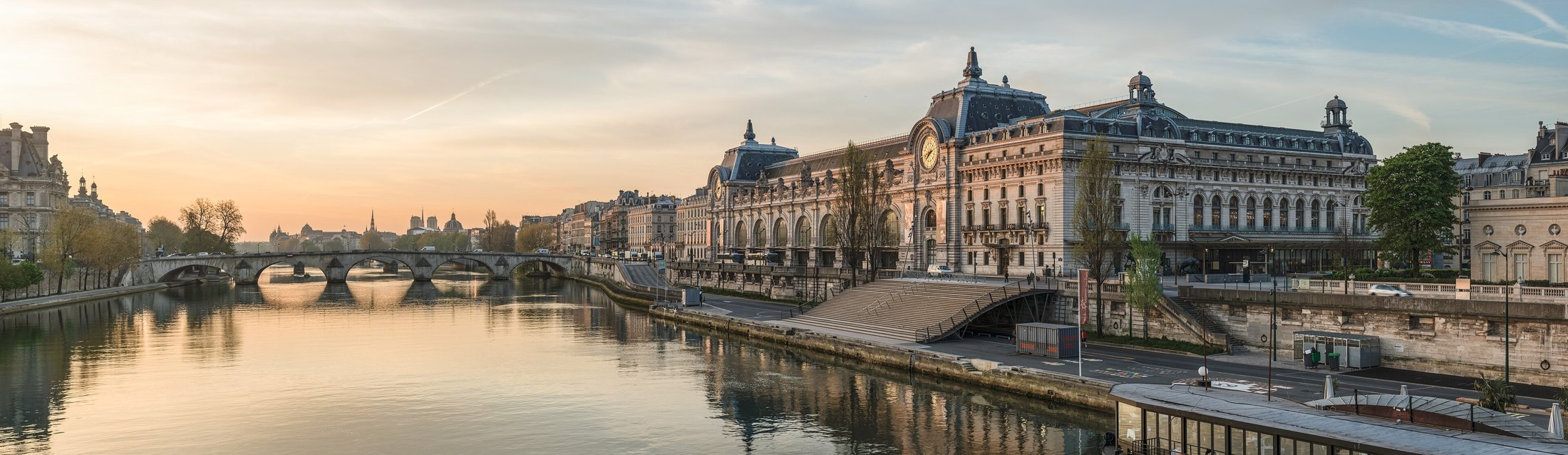
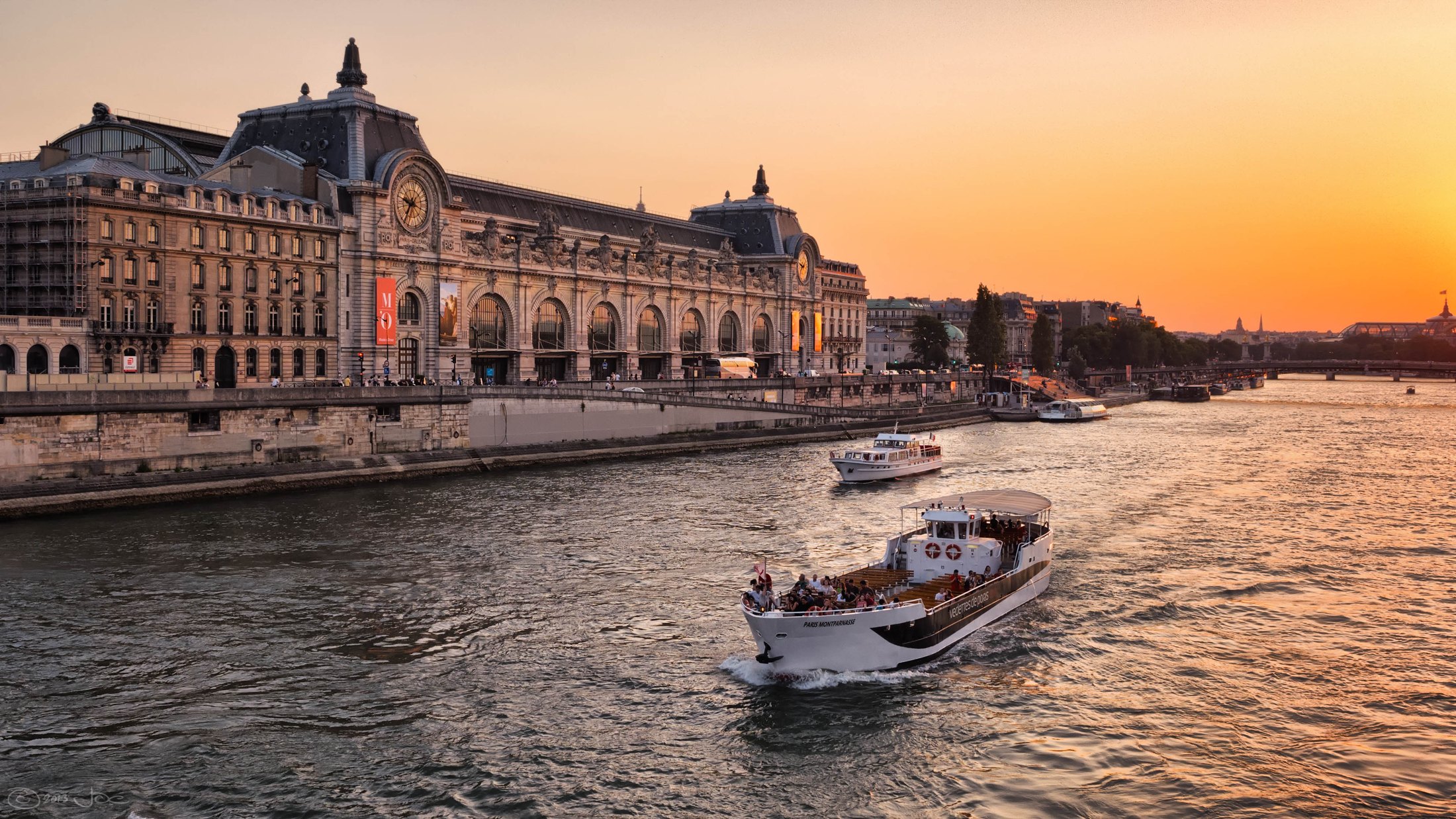
Victor Laloux designed the station for the 1900 World's Fair. Behind the appearance of a grand civic palace were a metal structure and electric trains.
Classical decoration and modern transport belonged to the same project.
The huge coffered vault over the central hall draws on Rome's ancient Baths of Caracalla. Its deeply divided surface is worth a moment of attention alongside the sculptures beneath it.
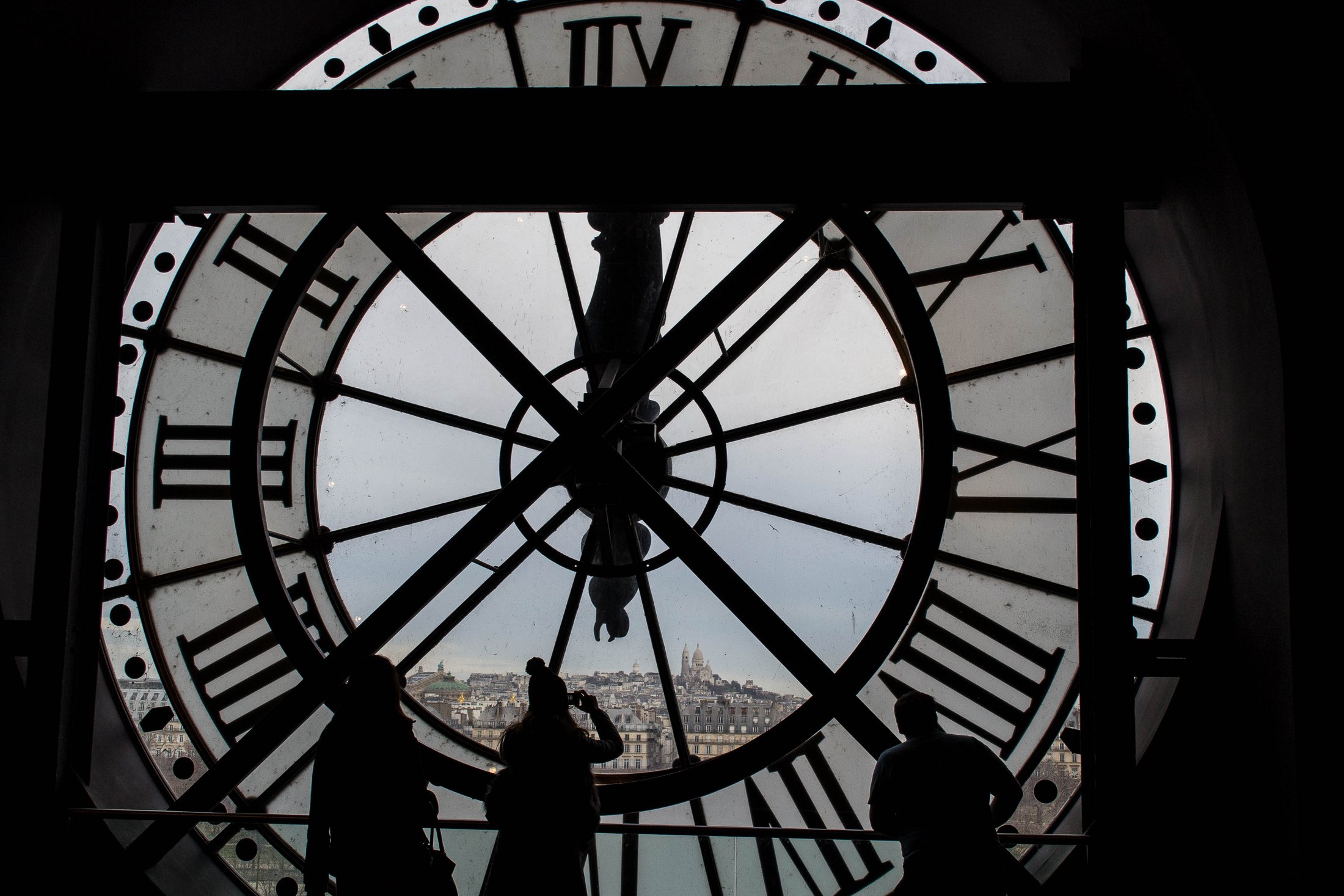
Historic clocks remain above the hall and on the facade. The long view from the upper level brings the central space and sculpture displays back together, making the building part of what you have come to see.
When the main-line trains moved on
From 1939, the platforms were too short for the longer main-line trains, although suburban services continued. The station found other uses: a film location for Orson Welles's The Trial, a home for a theatre company, and space for auctioneers.
A modern hotel once threatened to replace it.
The museum opened to the public in December 1986. When you look around the hall, try picturing the trains, theatre company and auctions that came before the art.
Two different kinds of surprise: Manet and Monet
The woman in Manet's 
A recognisably contemporary woman had taken a pose associated with idealised classical beauty, and the picture caused a scandal.
Monet's The Magpie appears quieter: a bird on a gate in a snow-covered landscape near Étretat. Pale sunlight and coloured shadows give the snow more to look at than a field of white.
The Salon rejected it in 1869, when that light palette and attention to fleeting visual effects were unconventional. A painting that now seems familiar once offered a different surprise.
Where the bronze meets the skirt
In Degas's Little Dancer Aged Fourteen, the meeting of materials is part of the pleasure. A tulle skirt and satin ribbon accompany the bronze figure; the clothing is not all cast metal.
The point where fabric meets the body gives you a small detail to stay with.
The Orsay work is a bronze cast made after Degas died. The version he exhibited in 1881 was wax with real accessories, unsettling viewers used to more traditional sculpture.
Another familiar work rewards a small detail near its lower edge. In Van Gogh's 
A small couple near the bottom of the canvas gives you another detail to find. This is the 1888 Arles river scene.
The later painting with the swirling sky is at MoMA in New York.
A few centimetres at the edge of Courbet’s canvas
A Burial at Ornans gives a village funeral the scale usually reserved for biblical, mythological or historical subjects. The canvas is more than six metres wide.
Within that gathering, individual faces offer smaller things to take in: ordinary people occupying the scale of public history.
In a September 2026 restoration report, Orsay describes painted canvas that had been folded out of sight around the edges. Restorers recovered a narrow strip along the bottom, revealing part of the gravedigger's tool handle and changing how deep the open grave appears.
The lower edge has a story of its own beside the crowd above. A few centimetres can matter even to a picture of this size.
A bench with branching woodwork
Hector Guimard's Banquette de fumoir (1897) was designed for a corner. Its asymmetrical wooden frame brings a seat, shelf and small display cabinet together.
From the leg upwards, branching forms make the outline interesting to follow.
Guimard also designed entrances to the Paris Métro. The bench offers another scale for the Art Nouveau ambition to consider architecture, furniture and decoration together.
It may leave you with something more to notice at a Métro entrance later in the day.
The bear’s continuous outline
François Pompon carved for other sculptors, including Rodin and Camille Claudel, before Polar Bear brought recognition at the 1922 Salon d'Automne. He was sixty-seven.
His close observation of the animal survives in rounded volumes and a continuous outline, with incidental details pared away.
Look at the bear's outline and the light across its pale surface. Pompon leaves out small details, yet the animal and its movement are still easy to recognise.
Orsay dates this stone version to 1923–1933. It is one of the works made after 1848–1914, the period the museum mainly covers.
A visit with a little room to change direction
If Impressionism is the main draw, build your plan around the upper painting galleries, and leave time for Manet and the sculpture hall too. The station and Guimard's bench make another pairing; Degas's dancer and Pompon's bear offer different ways of thinking about material and form.
These are thematic choices rather than a fixed room-by-room circuit. Use the current map and collection records to plan around anything essential.
There is room for an unplanned stop, too: a colour, a surface or an unfamiliar object can be enough to make you want to stay a little longer.
Before you go
The museum remains open during renovation work scheduled through summer 2028. Check the official entrance instructions before arriving; Paris Museum Pass holders also need a reserved time slot.
Check the collection record for any work you especially want to see. On 11 October 2026, Orsay listed Renoir’s 
Last reviewed: . Check the museum’s website for current hours and ticket prices.
Compare a guided visit or ticket
Some links below are affiliate links. We may earn commission when you book.
A guided visit with admission included; confirm the current group size and meeting point.
Key facts
- Hours
- Tuesday to Sunday, 09:30–18:00. Thursday until 21:45. Closed Monday.
- Also closed
- 1 May and 25 December.
- Full price
- €16 online, €14 at the museum.
- Other rates
- Reduced €11, sold at the museum. Enfant & Cie €13 online and €11 at the museum. Night rate €12 online and €10 at the museum.
- Free
- Under 18, and EEA residents under 26.
- Timed ticket
- Entrance 1, on the quay.
- No ticket yet
- Entrance 2, on the forecourt.
- Building work
- Reception areas, from 10 March 2026 through summer 2028. Check the entrance on the day.
The full rate is €16 online and €14 at the museum. A reduced rate of €11 is sold at the museum. The Enfant & Cie rate is €13 online and €11 at the museum. The night rate is €12 online and €10 at the museum. The night ticket is valid from 18:00 on Thursday. Who can use the reduced rate, and who can use Enfant & Cie, is set out on the museum visit page .
Under 18s enter free, and so do EEA residents under 26. From 10 March 2026 through summer 2028 the museum is rebuilding its reception. The collections stay open. The doors can move while that work moves, so the entrance you used last year may not be the entrance today. Check the museum website on the morning you go.
How long you have
There is no official one-hour, two-hour or half-day route. The three plans below follow the museum’s own layout. They are a way to spend the time, not a fixed room-by-room circuit. Confirm any single painting on the collection record before you book the date around it. On 11 October 2026 the museum listed Bal du moulin de la Galette as off view.
One hour
Go up to the Impressionist gallery on level 5. Café Campana is at the exit of that gallery. Spend the hour there, then leave. The clock and the nave can be a glance on the way down, not a second museum.
Paintings people cross Paris to see include 

Two hours
Keep the level 5 gallery, then come down through the nave. The sculpture hall is the second half of the visit, and Olympia belongs with the time you give to Manet on the way. The clocks and the coffered vault are part of that walk. You are still in one building, and the architecture is the route between the pictures.
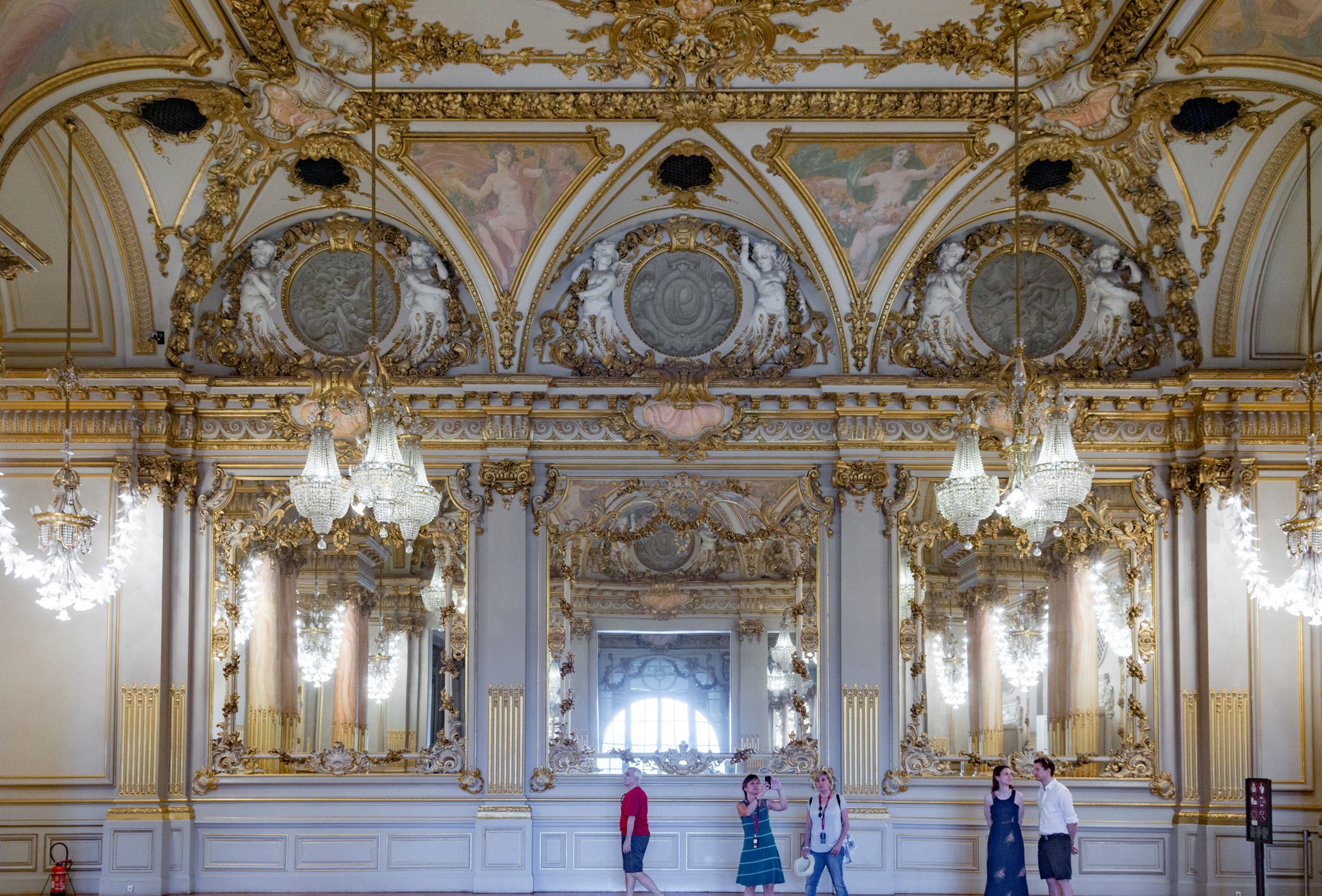
If you want a short stop, Café de la Gare is under the nave, in the middle of the museum. You need a museum ticket to sit there. The restaurants page lists it as open Tuesday to Sunday from 09:30 to 17:30, with a later Thursday time on the same page. Two hours is enough for the upper gallery, the nave, and that pause, if you are not also trying to see every floor.

Half a day
Thursday is the long day. The building is open until 21:45, and the night rate of €12 online or €10 at the museum applies from 18:00. A half day can start in the afternoon and still have the evening, or it can use a normal day from 09:30 and stop when you are done. Monday is closed, so a half day does not start then.
Use the first part for level 5 and the nave, as in the two-hour plan. Then give the extra time to works you still want to find, including 

Eat before you are ready to leave. Café Campana is the break at the end of the Impressionist gallery on level 5. The Restaurant is the sit-down room, a meal in a historic room. Current hours for the Restaurant are on the restaurants page, separate from the Café de la Gare hours above. Older floor plans give different times. Use the current restaurants page.
Tuesday is the first open day of the week, 09:30–18:00. A one-hour visit that day goes to Entrance 1 if the ticket already has a time, straight up to level 5, and out. Monday is closed, so do not arrive from a weekend plan and expect the doors to be open.
A two-hour visit on a normal day still has to finish by 18:00. Level 5 first, then the nave and Olympia, with Café de la Gare only if you are there before 17:30, which is when the restaurants page stops the café on Tuesday, Wednesday, Friday, Saturday and Sunday. Thursday is the day that café runs later.
A Thursday half day can use the night rate from 18:00 and the building until 21:45. Arrive at Entrance 1 with a timed ticket, or at Entrance 2 if you still need one. See level 5, eat at Café Campana or the Restaurant, then use the evening for the nave. The reception work does not change those hours. It changes which queue you join, so check the entrance page that morning.
Which entrance to use
With a timed ticket, use Entrance 1 on the quay. That line is for timed tickets to the permanent collection, timed tickets to a temporary exhibition, and a Paris Museum Pass that already has a reserved time. Book the pass time on the Paris Museum Pass site. The card on its own does not choose the slot. Pass holders need a reserved time. The quay door is where that time is used.
Entrance 2 is on the forecourt. It is the line for priority visitors, for visitors holding a reseller ticket with a time-stamped voucher, and for visitors who do not yet have a ticket. If you still need to buy or collect a ticket, this is the door for buying or collecting a ticket. The enter the museum page is the short version of the same split.
From 6 October 2026 to 31 January 2027 the museum meets every group at Entrance 2.4 on the forecourt. The public ticket page is for individual visitors. A group of seven or more books its time on the group page. If you are seven friends with seven separate tickets, you are still individual visitors and you use the door that matches those tickets. The group door is for a group booking.
The reception work runs from 10 March 2026 through summer 2028. The museum says the doors can change while that work is underway, and that the change should not stop you seeing the collections and the exhibitions. The address is unchanged: Esplanade Valéry Giscard d’Estaing, 75007 Paris. What changes is which queue on that forecourt is yours. Check it on the day, before you cross the quay and join the wrong line.
Where to eat
Three places inside the museum. Café de la Gare is under the nave, in the heart of the museum, and it asks for a museum ticket. Tuesday to Sunday it is listed from 09:30 to 17:30, and Thursday continues later. That later Thursday hour is printed on the same restaurants page. Check the restaurants page for the Thursday close.
Café Campana is at the exit of the Impressionist gallery on level 5. The museum describes it as a break during the visit, which is why it suits the one-hour and two-hour plans as well as a longer day. The Restaurant is the sit-down meal in a historic room. Keep its hours on the restaurants page , apart from the café hours above. Folding an old floor plan into today’s timetable would give you a kitchen that may already have changed.
The museum faces the Seine from the Esplanade Valéry Giscard d’Estaing. A walk on the quay is a good way to arrive, and a good way to leave. It is a different plan from eating between galleries. If you are booking a luxury hotel nearby, the separate notes cover Palace and five-star hotels near the Musée d’Orsay.