In this guide
A reason to go
Carnavalet makes Paris itself the subject of a museum visit. Its permanent route brings together paintings, shop signs, photographs, models, furniture and architectural decoration to tell the city’s history from prehistory onward. That variety is its strength. A visitor who feels tired of famous paintings can begin with something apparently ordinary and discover how it connects to commerce, political change or daily life. Free permanent-collection entry also makes a short, deliberate visit a sensible choice.
Start with the streets
The shop-sign galleries offer an approachable opening. Look at how an image had to attract attention and communicate a business before a customer entered the door. The museum’s collection highlights include the Chat Noir cabaret sign. Follow that looking exercise outside afterwards: notice which shops still use a figure, colour or distinctive silhouette to announce themselves. Check current displays rather than assuming every object listed online will be visible.
Let the houses tell part of the story
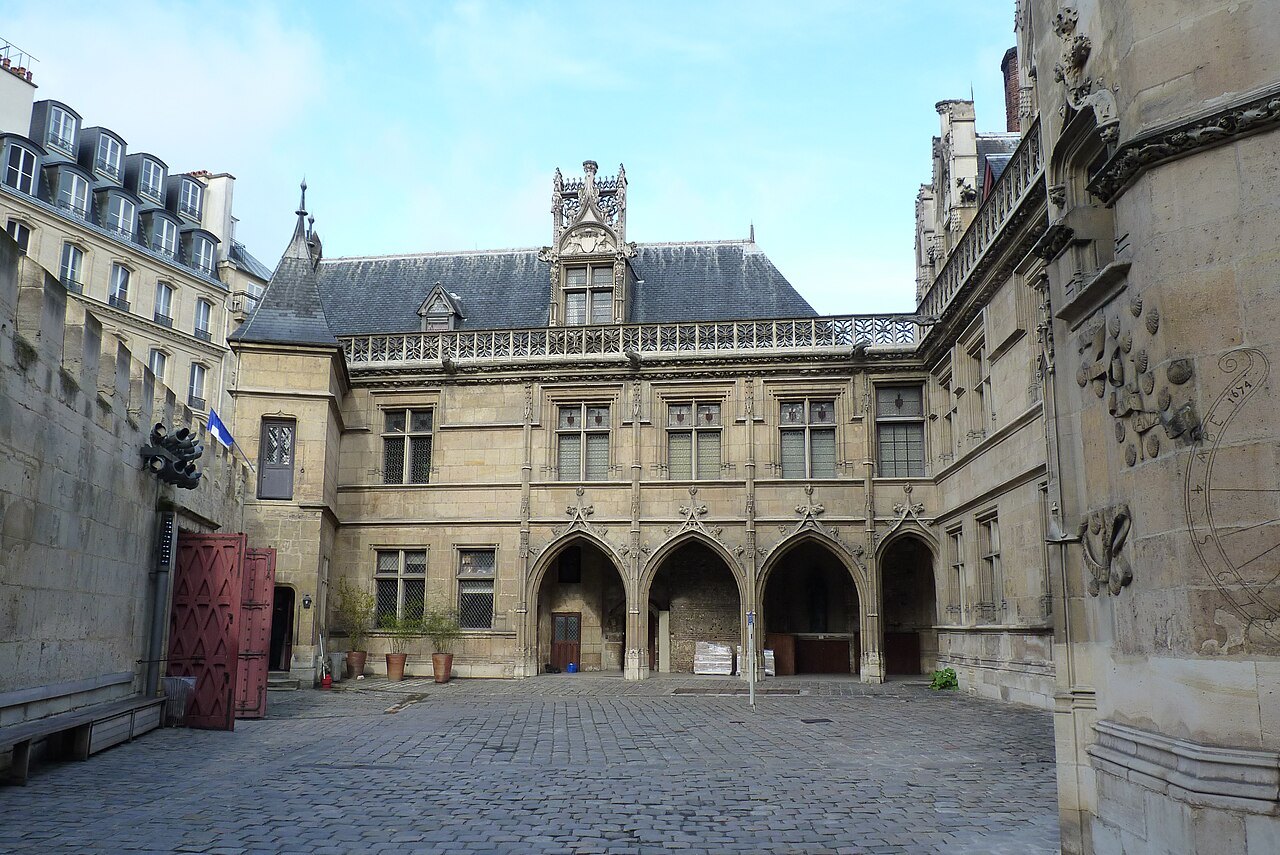
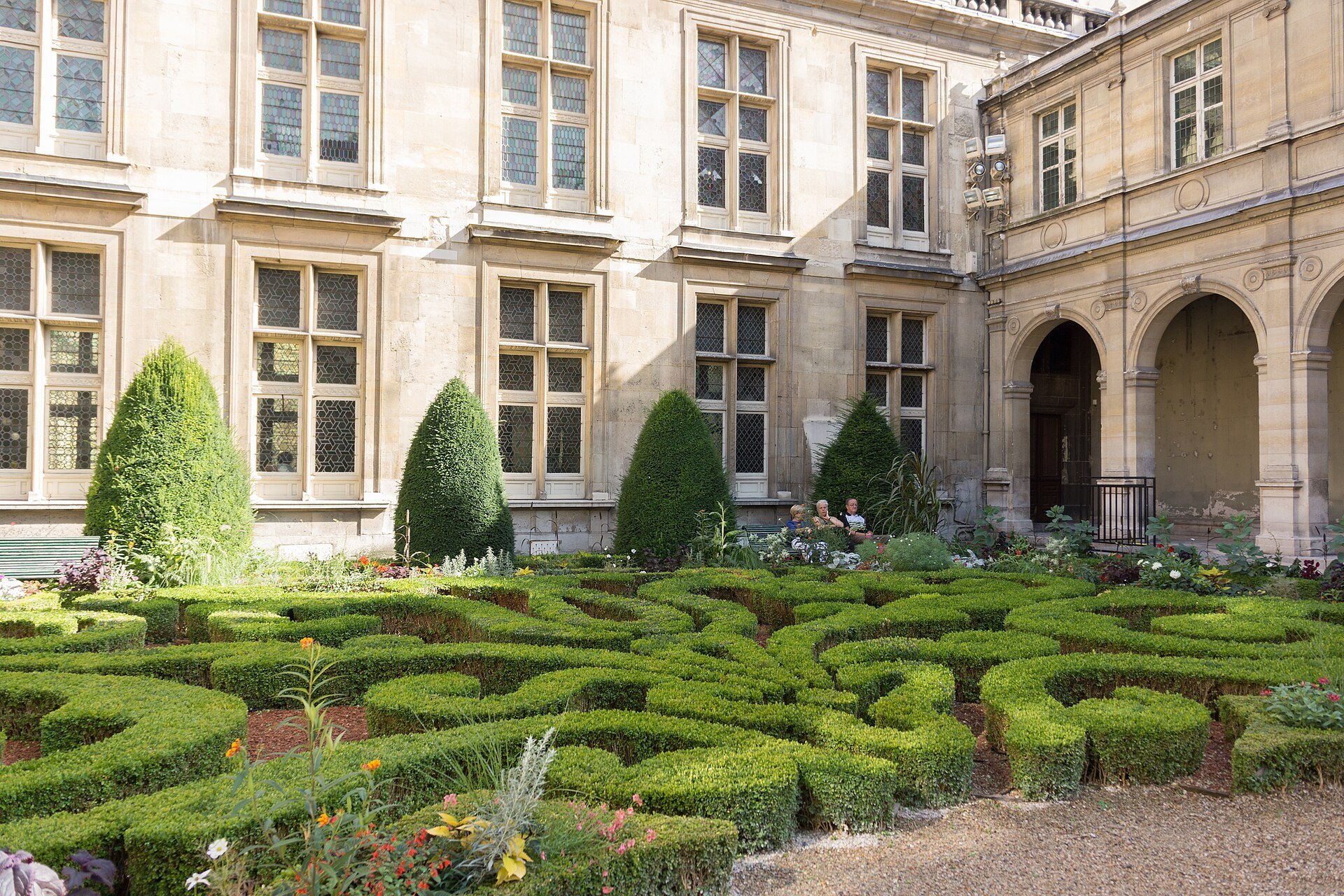
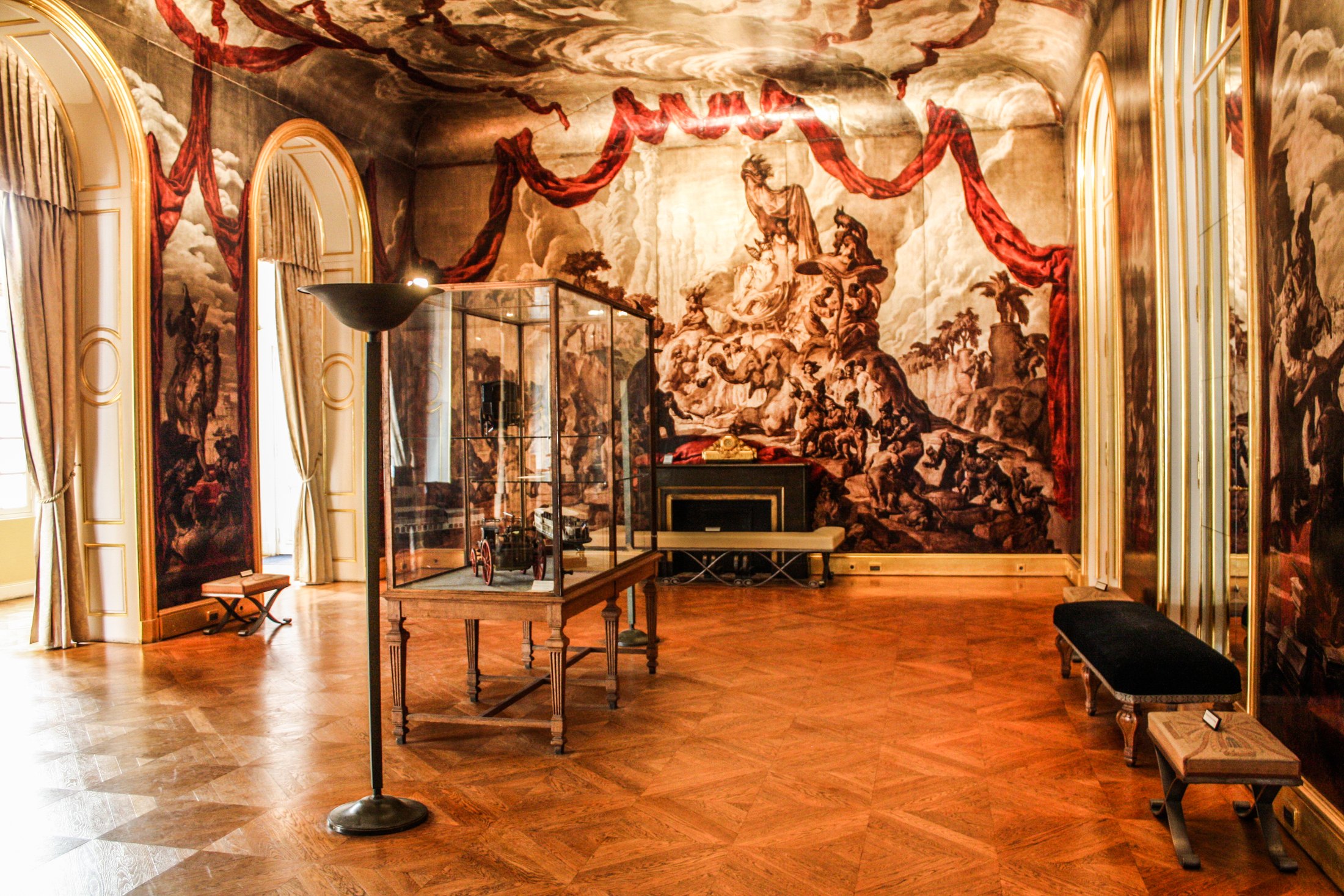
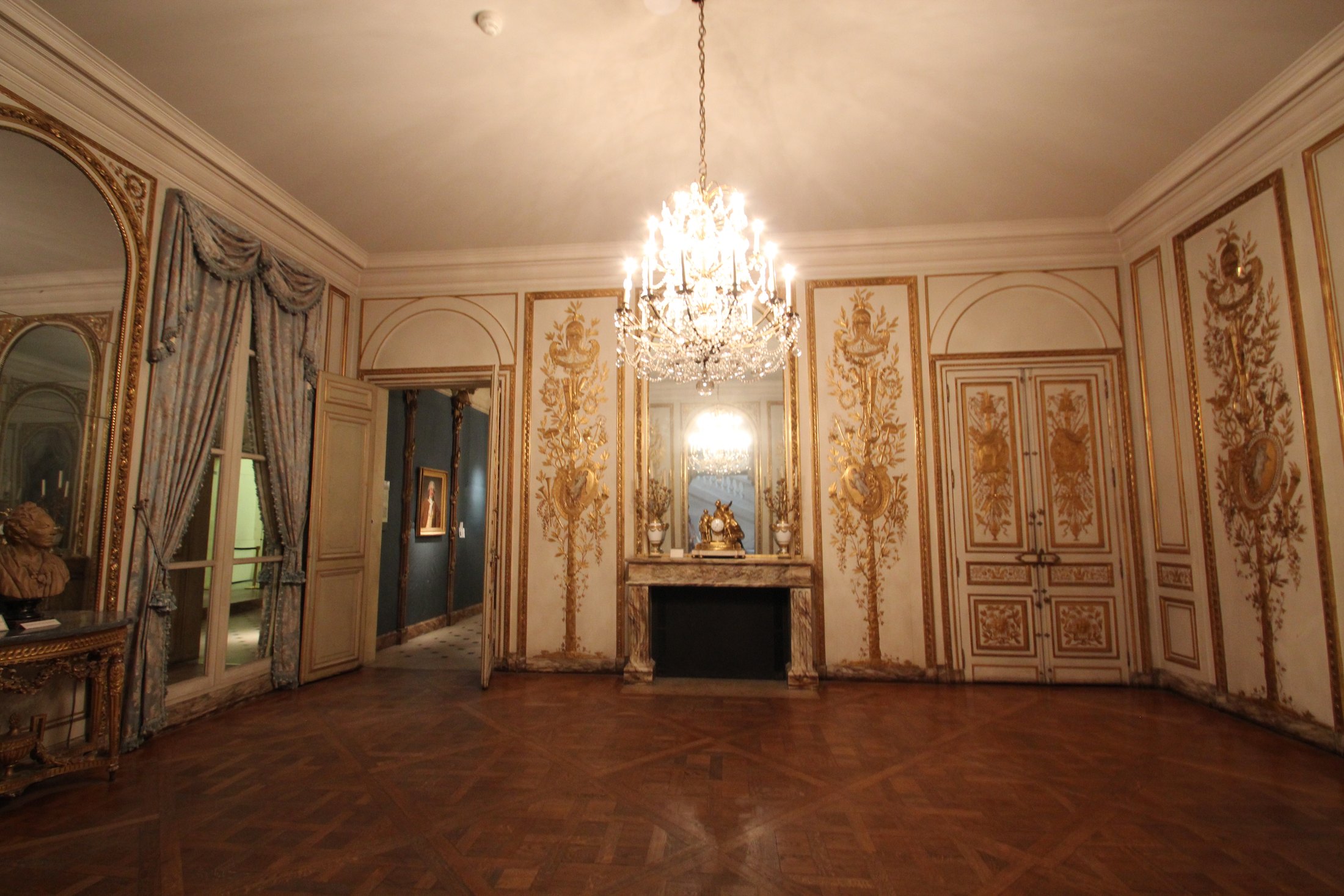
The museum occupies the Hôtel Carnavalet and Hôtel Le Peletier de Saint-Fargeau. Their architecture adds another timescale to the collection. Pause between objects to consider the size and decoration of the rooms, then ask whose lives such spaces represent. Beautiful interiors are evidence of particular ways of living, rather than a complete picture of everyone who lived in Paris.
Swipe or scroll to see more.
Who this museum suits
Choose Carnavalet for an introduction to the city, a history-focused Marais day or a visit that can remain flexible. It particularly rewards curiosity about places you have already walked through. Someone seeking a concentrated survey of painting may prefer Orsay; here, objects and urban history share the attention. Read the room introductions before deciding which period deserves your time.
Shape your visit
Begin with the introductory route, then choose one theme: the changing street, domestic interiors or political upheaval. Spend longer with a few objects whose original use you can imagine. Keep a neighbourhood walk afterwards optional, and finish the historical section that matters most before wandering into another period.
How much time to allow
Allow around 1½–2½ hours for a selective permanent-collection visit. This is an editorial estimate, excluding a paid exhibition or activity. Covering the full historical sweep carefully requires considerably more attention.
Practical limits to keep in mind
Free entry does not mean an uninterrupted route through every room. Leave time to orient yourself between the linked buildings, travel light and ask staff about any spaces that are unavailable that day.
Upcoming exhibition
Paris à l’arraché. Jacques Villeglé et l’art urbain is scheduled for 14 October 2026–14 February 2027. It has not opened at our 11 October review. Its full adult exhibition ticket is listed at €15; the permanent collection remains free.
Questions before you go
Do I need a ticket for the permanent collection?
Individual visitors enter free without a reservation. Paid exhibitions and activities have separate booking arrangements, and groups must reserve. Free entry still involves security checks.
When should I arrive?
Normal opening is Tuesday–Sunday, 10:00–18:00. Last permanent-collection admission is 17:15; rooms clear at 17:45. A final-entry arrival leaves little time for a substantial visit.
Is the museum wheelchair accessible?
The museum reports ramps and lifts throughout, with three small rooms inaccessible. Consult its access information and ask at reception for the appropriate route.
Last editorial review: . Opening patterns and prices are a dated snapshot. Check the official venue for your exact date.