A waterfront museum for cinema and moving-image art. Plan the exhibition and any film screening separately.
Opening details
Published date exception: 2026-11-07, special hours; check official details. Confirm the museum calendar before visiting.
Published date exception: 2027-04-27, closed. Confirm the museum calendar before visiting.
Opening status unconfirmed 2026-12-31–2027-01-01: Year-end special hours not yet announced in inspected official source. Check the museum before visiting.
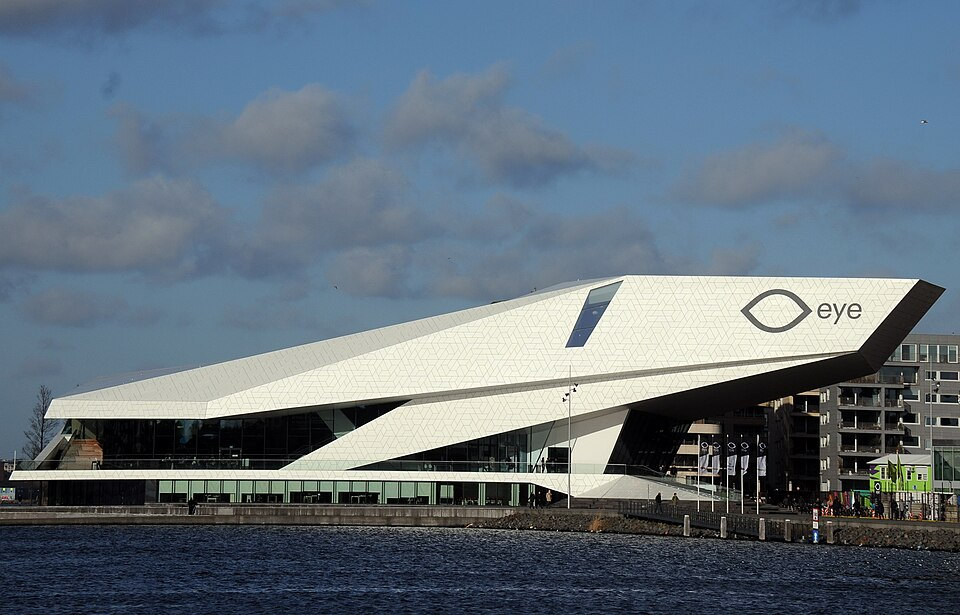
Eye Filmmuseum beside the IJ, photographed in January 2016.
Resized without upscaling and encoded as optimized progressive JPEG plus responsive JPEG/WebP files. No retouching. Website display crops may vary. Adapted share-alike photographs retain their source license. Additional AVIF and small WebP derivatives use lossy compression without retouching or upscaling. Fixed display frames crop the composition. Supplied JPEG/WebP bytes remain unchanged; adaptations retain the original compatible license.
In this guide ShowHide
A museum for thinking about film
Eye suits visitors who are curious about how moving images are made, preserved and watched. Its work includes caring for the Netherlands' film heritage as well as presenting contemporary cinema and visual art. You do not need an encyclopaedic knowledge of directors to enjoy that combination. Arrive with one simple question, such as how an image guides your attention, and try it against a device, a short clip and a larger installation. The differences can become the most memorable part of the visit.
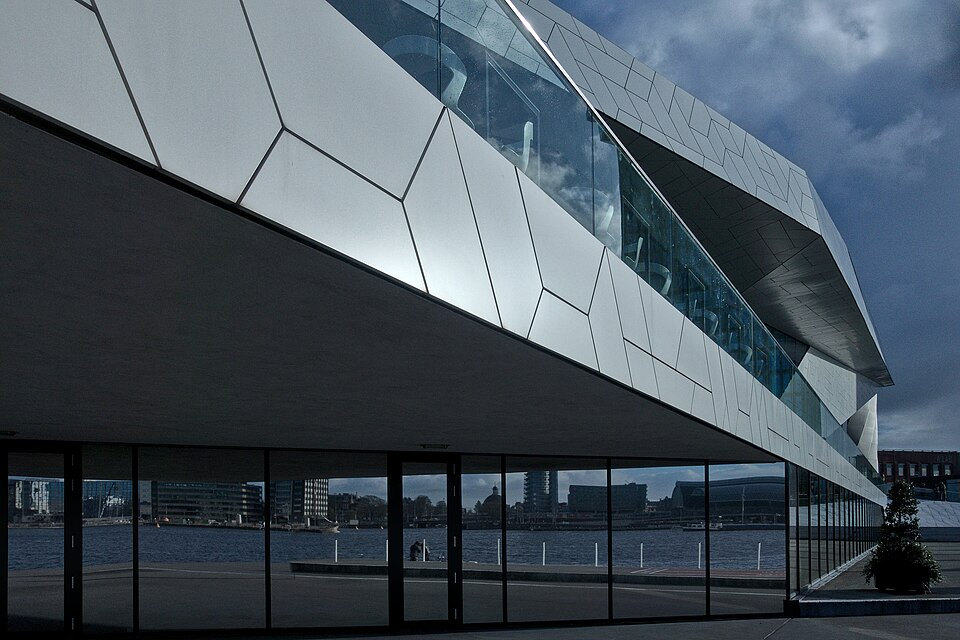
Eye Filmmuseum’s architectural detail, photographed in October 2017.Rob Oo from NL, CC BY 2.0; Commons source; Resized and encoded; display crops vary.
Let the architecture slow you down
The IJ-side building opened in 2012 and was designed by Delugan Meissl Associated Architects. Its changing angles and the transition between the open Arena and enclosed screening spaces are part of the experience. Give yourself a moment to look back toward the water before entering a gallery. An architectural visit works best when you notice changes in light, scale and direction rather than treating the exterior as the only view worth remembering.
Begin with a manageable experiment
The permanent presentation, What is Film?, includes early film equipment, clips and interactive activities such as animation and a green screen. Choose one device and ask what has to happen for a still image to seem alive. Then try a practical activity or watch a short sequence with that process in mind. This can make a satisfying introduction for a mixed-interest group, without requiring everyone to commit to the same feature-length film.
Check the temporary exhibition first
The exhibition current at review is Ulrich Seidl: Über das Leben, die Liebe und den Tod, scheduled from 19 September 2026 to 31 January 2027. Eye publishes an explicit-content advisory. Read the exhibition description before deciding whether it suits you or your companions; admission for younger visitors does not establish that every display is suitable for them. For time-based work, allow a sequence to develop before moving on. Constantly arriving and leaving after a few seconds can conceal the artist's central decision.
Buy for the experience you want
Adult exhibition admission is € 16.50; ordinary cinema admission is separate. A film ticket also admits the permanent presentation during its opening hours, but do not assume it includes the temporary exhibition. If a screening is central to your plan, check its language, subtitles and running time before arranging the rest of the day. A museum visit followed by a film can be rewarding, but it asks for more concentrated viewing than either alone.
Plan around exhibition hours
Use the exhibition schedule when planning this museum stop: Tuesday to Sunday, 10:00–19:00, with Monday opening only during official school holidays. The later cinema schedule is a different timetable. From Centraal, the free F 3 ferry goes to Buiksloterweg; follow it with the short walk to Eye. Aim for about ninety minutes to two hours for an exploratory museum visit as an editorial estimate, then add any screening or meal separately.
Make room for individual needs
Eye states that all floors are accessible by lift, with an entrance lift beside the main staircase. A qualifying museum companion can enter free, while cinema companion tickets follow a different rule. Consult the access page if seating, hearing support or assistance will shape your visit. End with a pause rather than another compulsory activity: the building and waterside setting give you somewhere to let the images settle before returning across the IJ.
Questions before you go
Who can visit the exhibition free?
Ages 0–17, Museumkaart holders and I amsterdam City Card holders qualify; City Card tickets are obtained at the box office. Check other passes on the official price list.
Does a film ticket include What is Film?
Yes, during the permanent exhibition’s opening hours. An exhibition ticket also covers this presentation. This does not make the temporary exhibition part of every cinema ticket.
Is a companion free?
For visitors who cannot navigate the museum independently, the museum companion is free; the visitor needs a valid admission ticket. Film screenings require tickets for both people.
Is the current temporary exhibition suitable for children?
Eye carries an explicit-content advisory for the Ulrich Seidl exhibition. Read its description and choose according to your group; the permanent presentation offers a different route.
Last editorial review: . Opening patterns and prices are a dated snapshot. Check the official venue for your exact date.
Read a product comparison
Compare the researched inclusions and cancellation rules with museum eligibility before choosing a seller or guided visit.
Converted to sRGB, resized without upscaling and re-encoded as JPEG/WebP/AVIF. No retouching, object removal or synthetic content. CSS display crops may vary. Adapted images retain CC BY-SA 4.0.
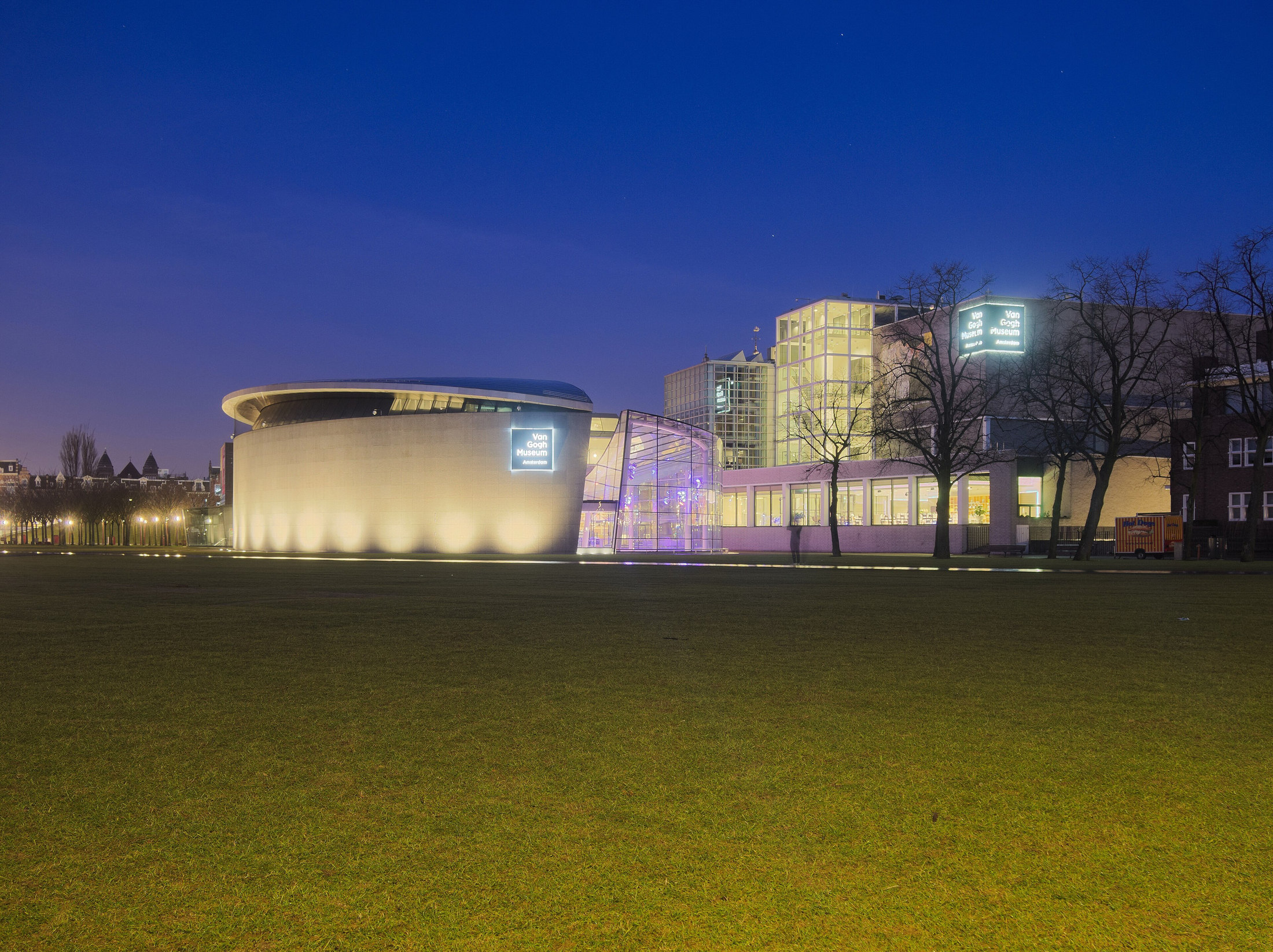
Van Gogh Museum’s exterior at night, photographed in February 2017.
Resized without upscaling and encoded as optimized progressive JPEG plus responsive JPEG/WebP files. No retouching. Website display crops may vary. Adapted share-alike photographs retain their source license. Additional AVIF and small WebP derivatives use lossy compression without retouching or upscaling. Fixed display frames crop the composition. Supplied JPEG/WebP bytes remain unchanged; adaptations retain the original compatible license.
Published date exception: 2026-10-13, 09:00–17:00. Confirm the museum calendar before visiting.
Published date exception: 2026-10-15, 09:00–17:00. Confirm the museum calendar before visiting.
Published date exception: 2026-12-24, 09:00–17:00. Confirm the museum calendar before visiting.
Published date exception: 2026-12-25, 09:00–17:00. Confirm the museum calendar before visiting.
Published date exception: 2026-12-26, 09:00–17:00. Confirm the museum calendar before visiting.
Published date exception: 2026-12-31, 09:00–17:00. Confirm the museum calendar before visiting.
Opening status unconfirmed 2026-11-27–2026-11-27: Special Vincent on Friday event: verify separate programme and exact gallery access. Check the museum before visiting.
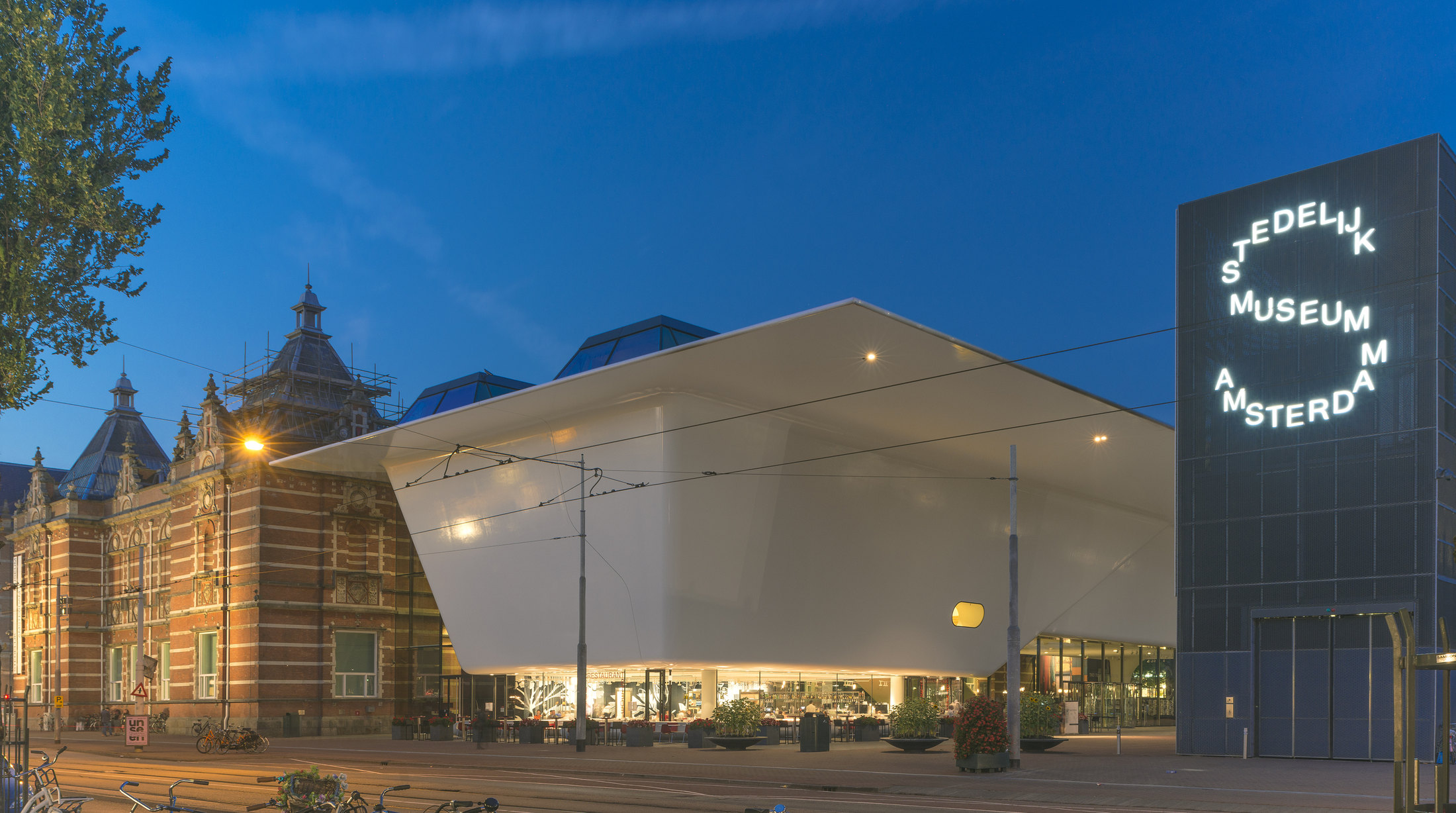
The Stedelijk Museum’s new wing at dusk, photographed in September 2013.
Resized without upscaling and encoded as optimized progressive JPEG plus responsive JPEG/WebP files. No retouching. Website display crops may vary. Adapted share-alike photographs retain their source license. Additional AVIF and small WebP derivatives use lossy compression without retouching or upscaling. Fixed display frames crop the composition. Supplied JPEG/WebP bytes remain unchanged; adaptations retain the original compatible license.
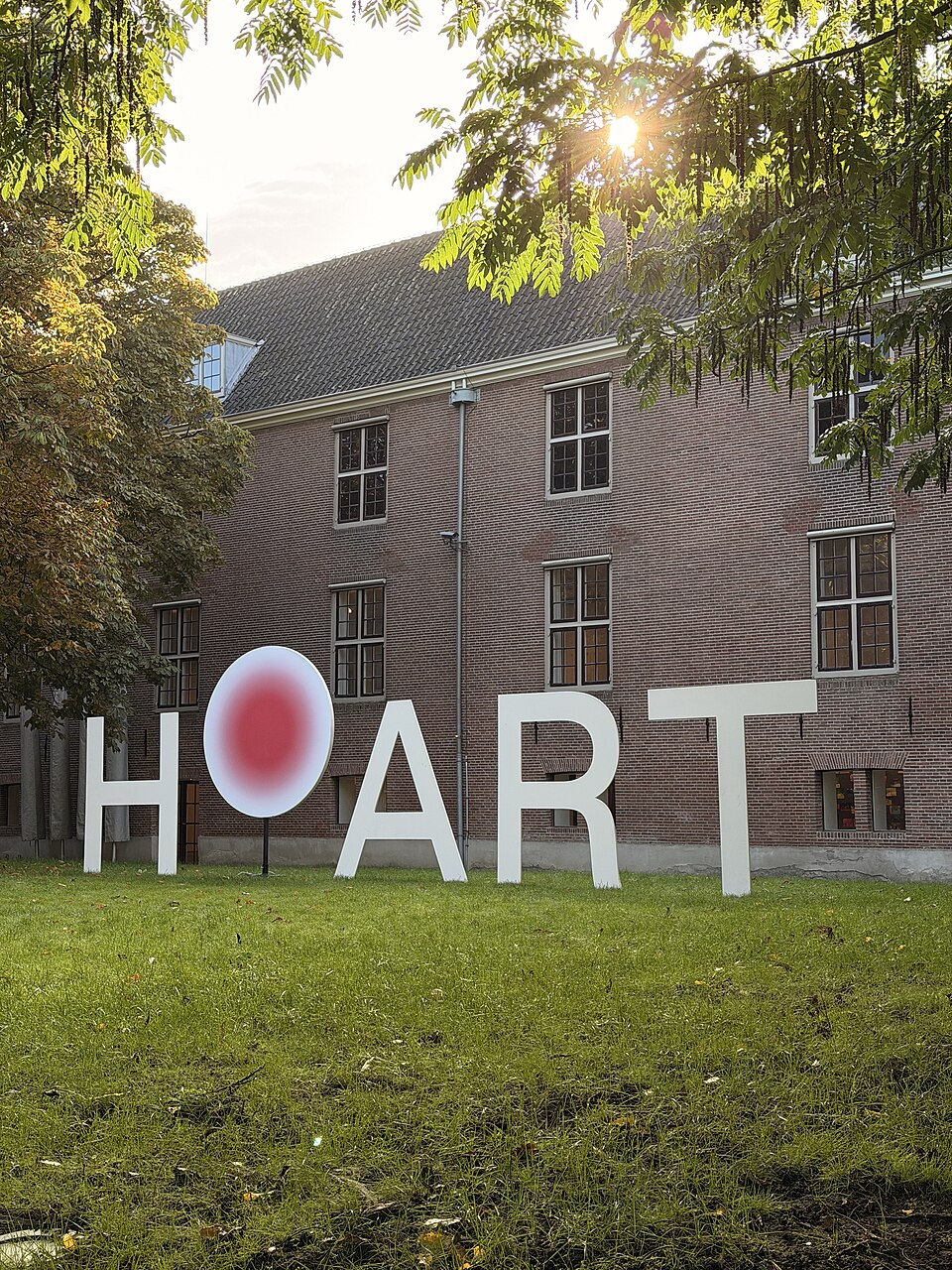
H’ART Museum’s courtyard sign, photographed in October 2026.
Resized without upscaling and encoded as optimized progressive JPEG plus responsive JPEG/WebP files. No retouching. Website display crops may vary. Adapted share-alike photographs retain their source license. Additional AVIF and small WebP derivatives use lossy compression without retouching or upscaling. Fixed display frames crop the composition. Supplied JPEG/WebP bytes remain unchanged; adaptations retain the original compatible license.
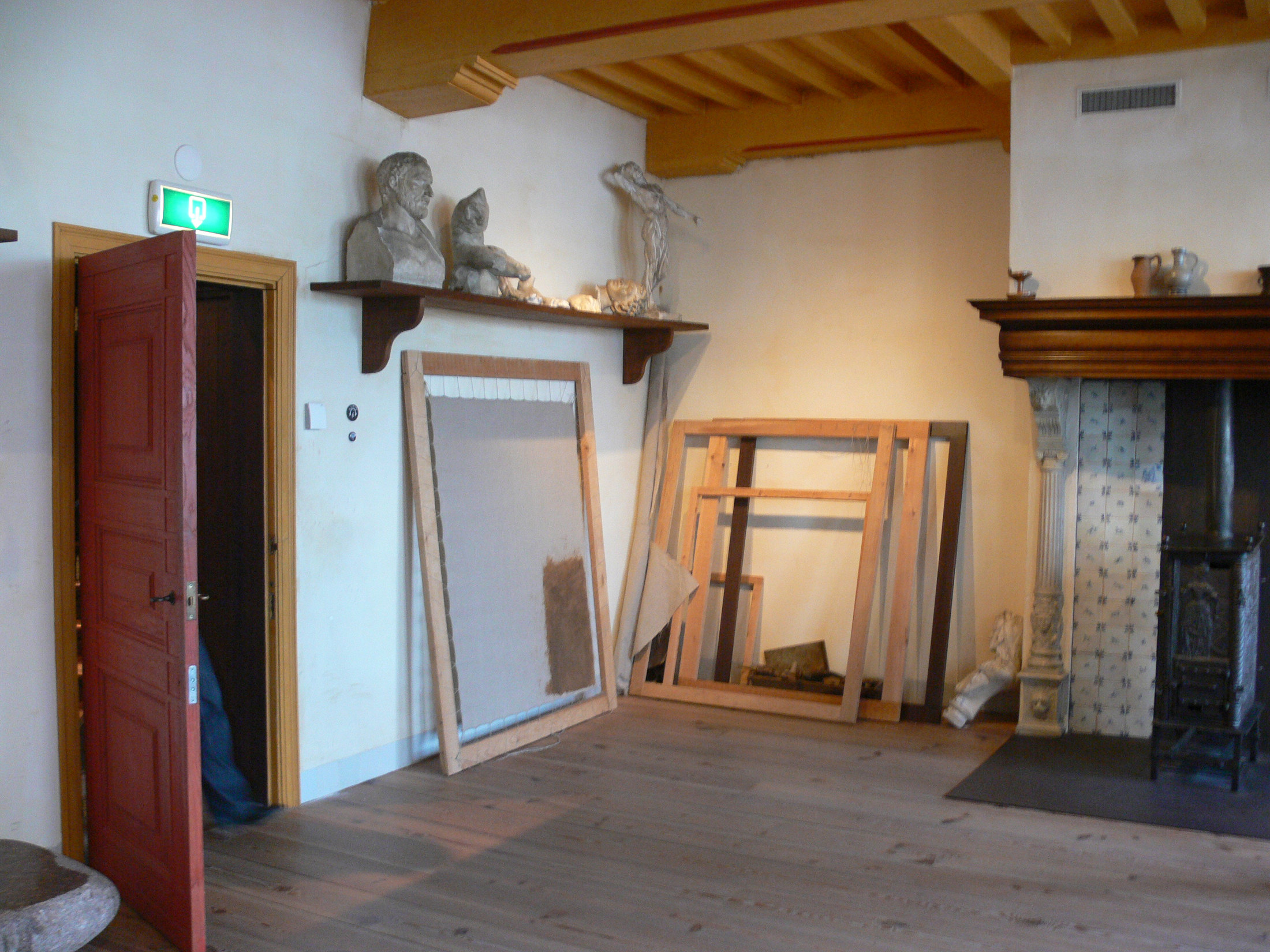
Rembrandt House Museum’s reconstructed painting studio, photographed in May 2012. Archival view.
Resized without upscaling and encoded as optimized progressive JPEG plus responsive JPEG/WebP files. No retouching. Website display crops may vary. Adapted share-alike photographs retain their source license. Additional AVIF and small WebP derivatives use lossy compression without retouching or upscaling. Fixed display frames crop the composition. Supplied JPEG/WebP bytes remain unchanged; adaptations retain the original compatible license.
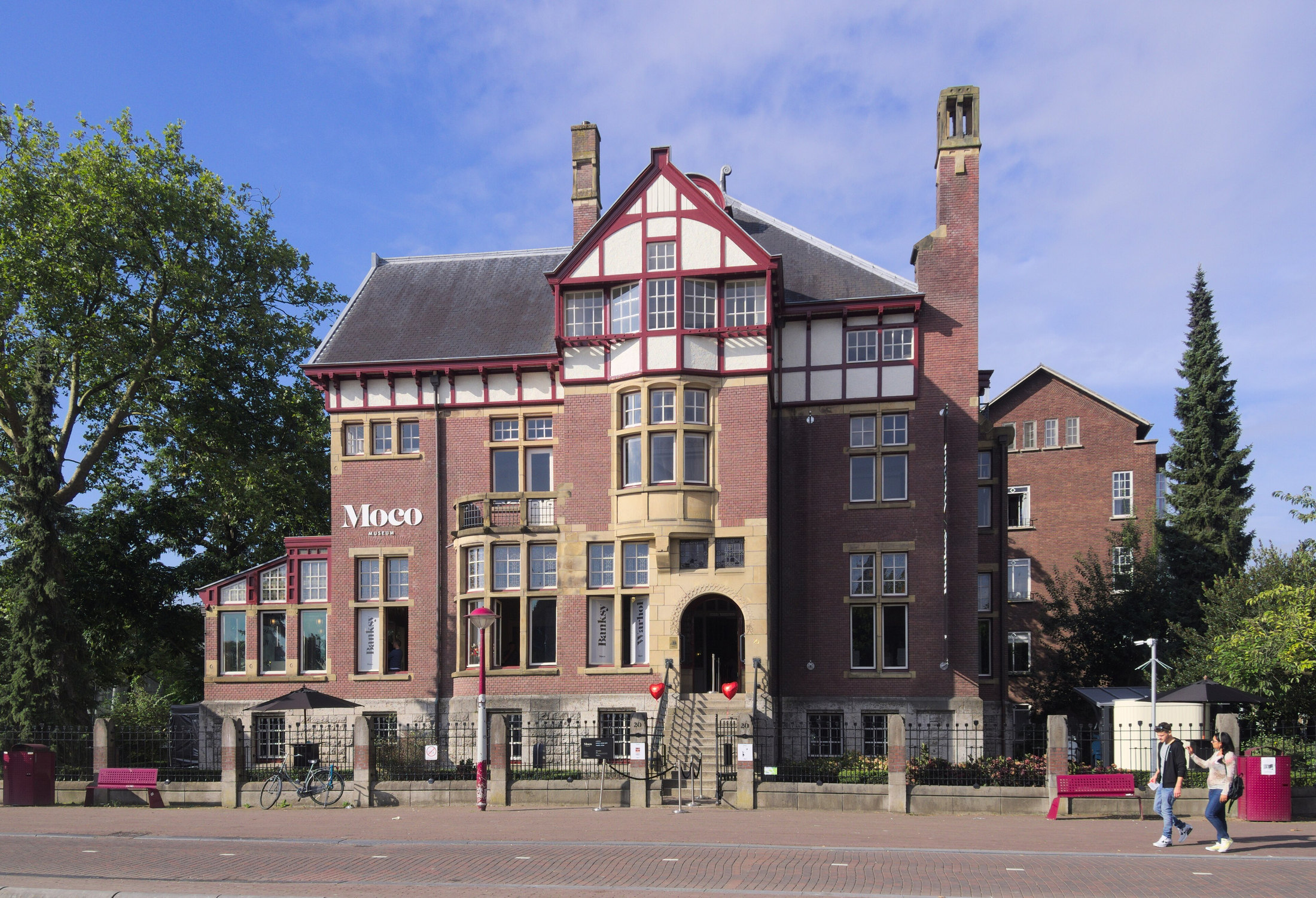
Moco Museum’s Villa Alsberg exterior, photographed in September 2016. Archival view.
Resized without upscaling and encoded as optimized progressive JPEG plus responsive JPEG/WebP files. No retouching. Website display crops may vary. Adapted share-alike photographs retain their source license. Additional AVIF and small WebP derivatives use lossy compression without retouching or upscaling. Fixed display frames crop the composition. Supplied JPEG/WebP bytes remain unchanged; adaptations retain the original compatible license.
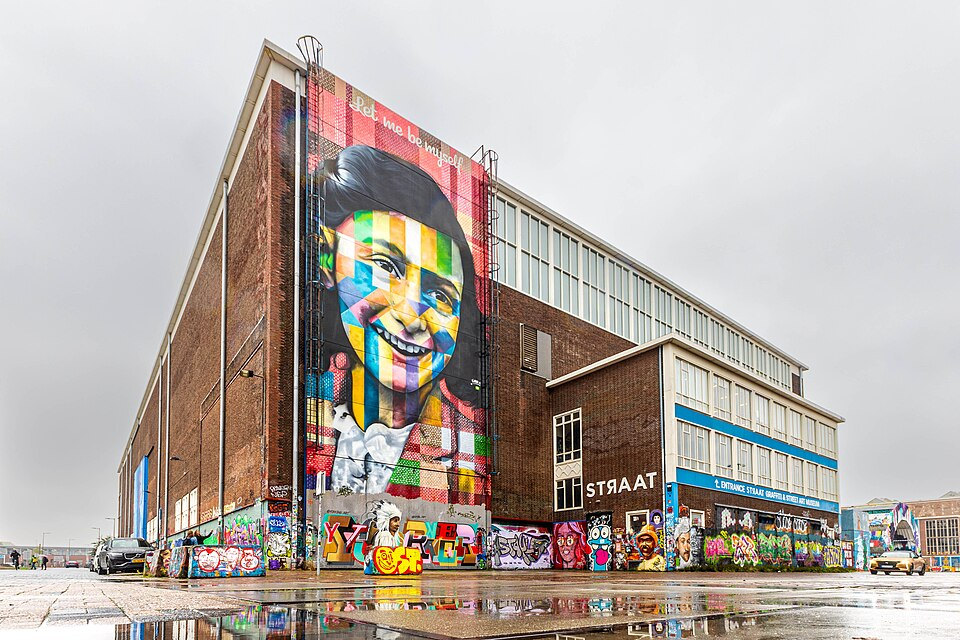
STRAAT Museum’s exterior with Eduardo Kobra’s Let Me Be Myself (2016), photographed in October 2022. Other street art may have changed.
Resized without upscaling and encoded as optimized progressive JPEG plus responsive JPEG/WebP files. No retouching. Website display crops may vary. Adapted share-alike photographs retain their source license. Additional AVIF and small WebP derivatives use lossy compression without retouching or upscaling. Fixed display frames crop the composition. Supplied JPEG/WebP bytes remain unchanged; adaptations retain the original compatible license.
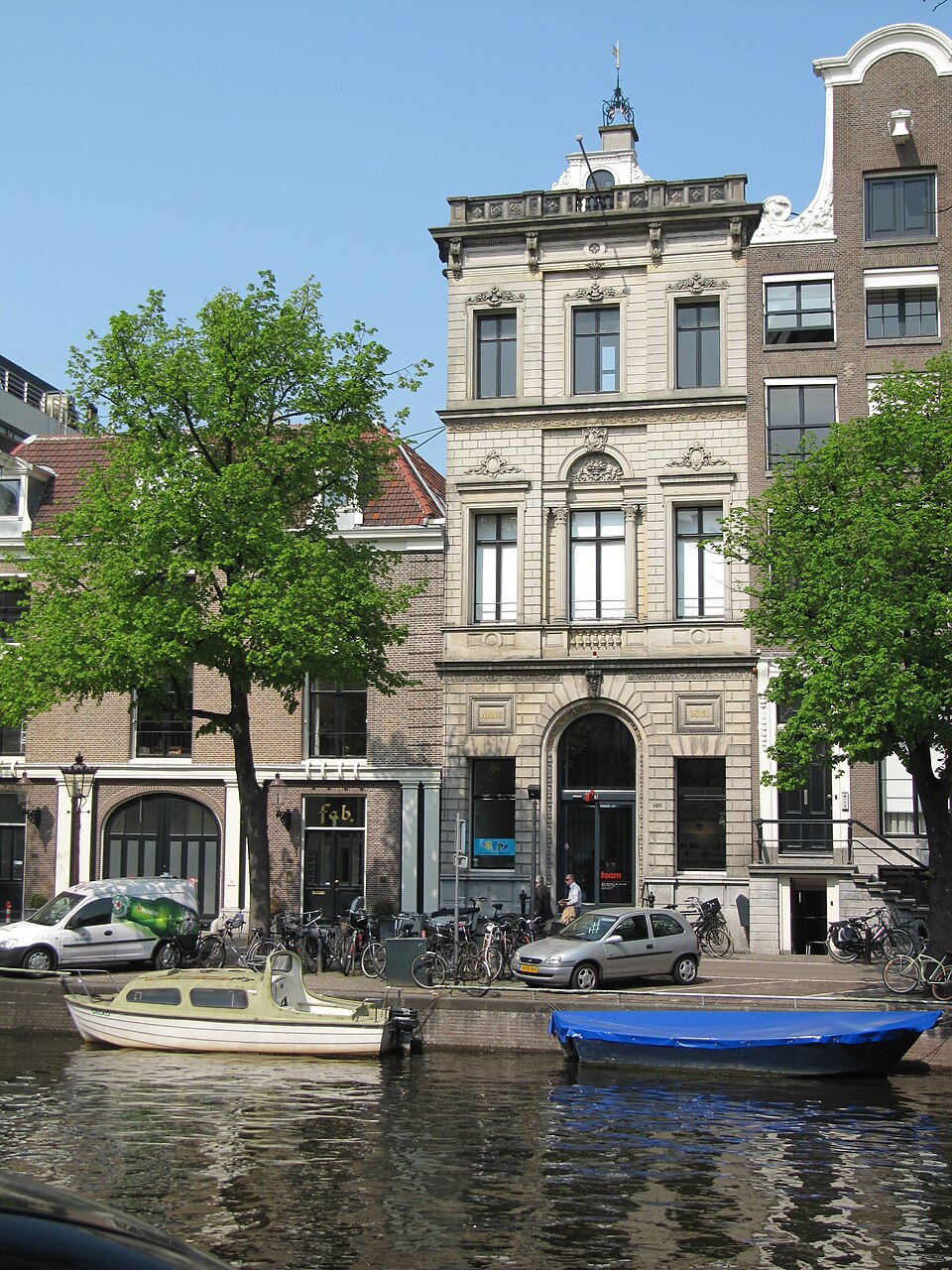
Foam’s Keizersgracht façade, photographed in April 2011. Archival exterior view.
Resized without upscaling and encoded as optimized progressive JPEG plus responsive JPEG/WebP files. No retouching. Website display crops may vary. Adapted share-alike photographs retain their source license. Additional AVIF and small WebP derivatives use lossy compression without retouching or upscaling. Fixed display frames crop the composition. Supplied JPEG/WebP bytes remain unchanged; adaptations retain the original compatible license.
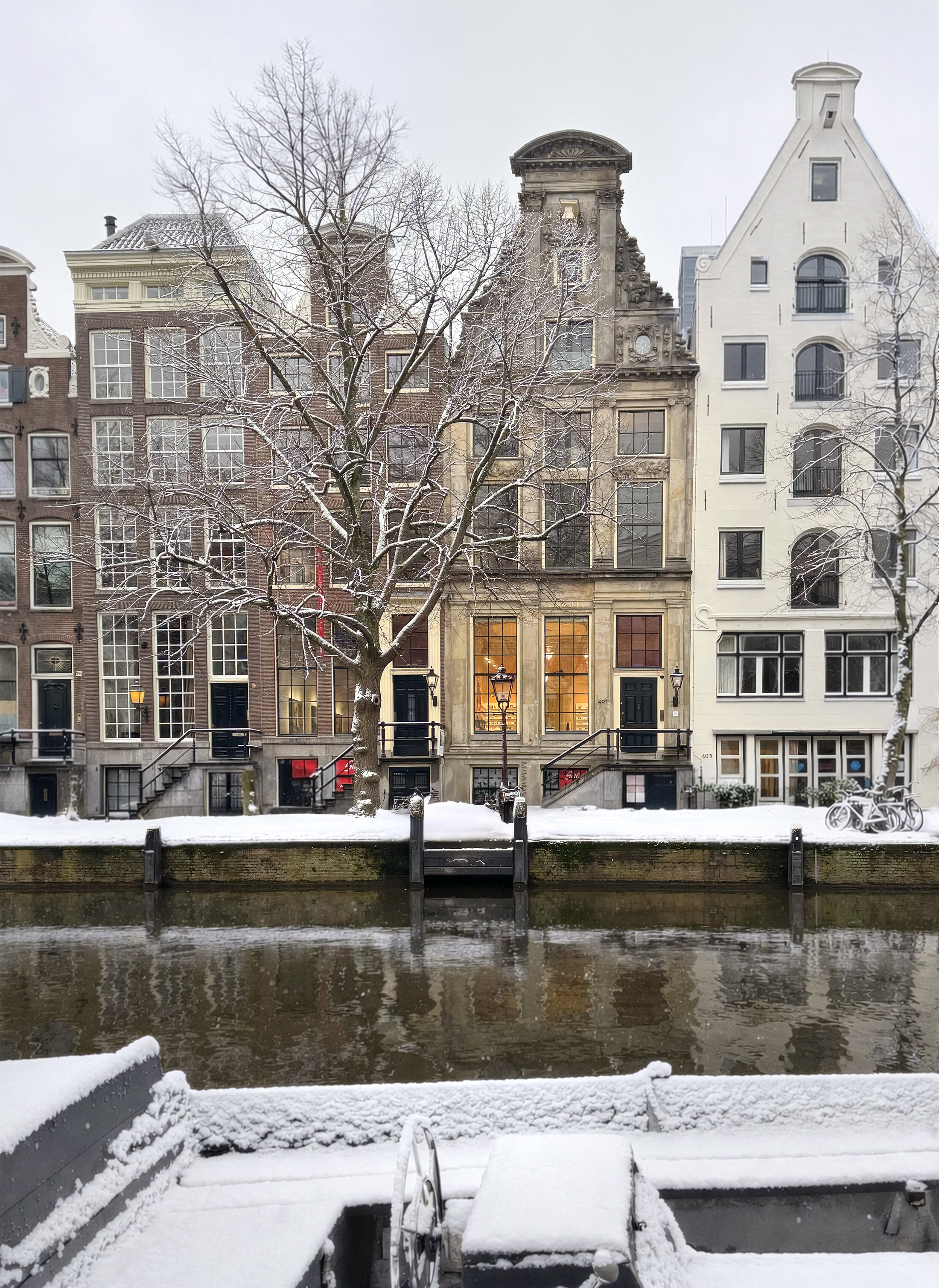
Huis Marseille’s canal-side façades, photographed in December 2025.
Resized without upscaling and encoded as optimized progressive JPEG plus responsive JPEG/WebP files. No retouching. Website display crops may vary. Adapted share-alike photographs retain their source license. Additional AVIF and small WebP derivatives use lossy compression without retouching or upscaling. Fixed display frames crop the composition. Supplied JPEG/WebP bytes remain unchanged; adaptations retain the original compatible license.
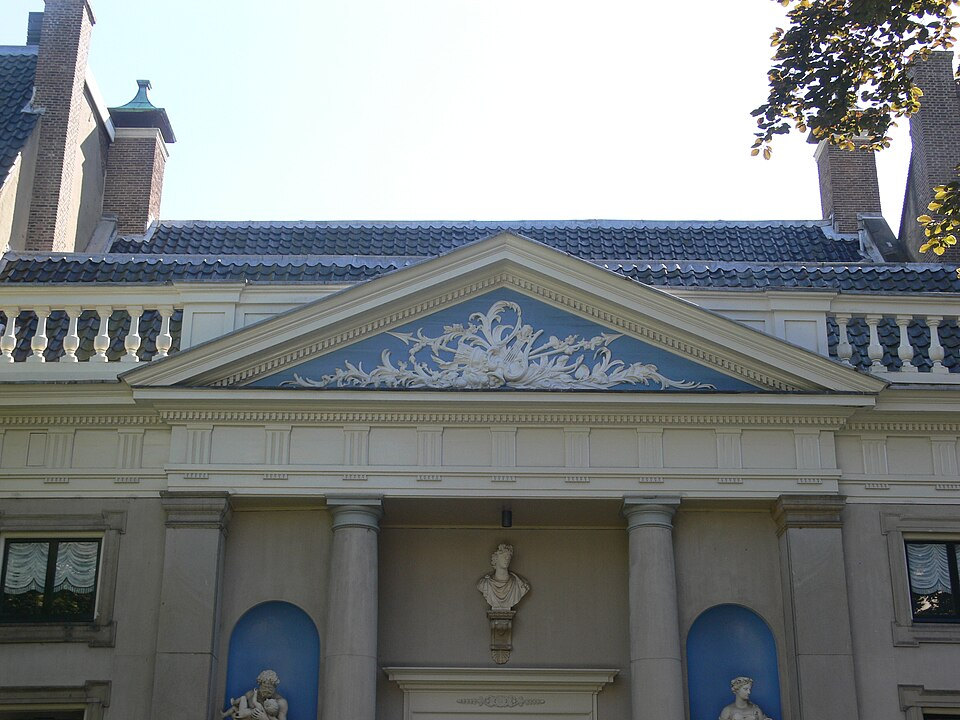
Museum Van Loon’s coach-house garden façade, photographed in August 2012.
Resized without upscaling and encoded as optimized progressive JPEG plus responsive JPEG/WebP files. No retouching. Website display crops may vary. Adapted share-alike photographs retain their source license. Additional AVIF and small WebP derivatives use lossy compression without retouching or upscaling. Fixed display frames crop the composition. Supplied JPEG/WebP bytes remain unchanged; adaptations retain the original compatible license.
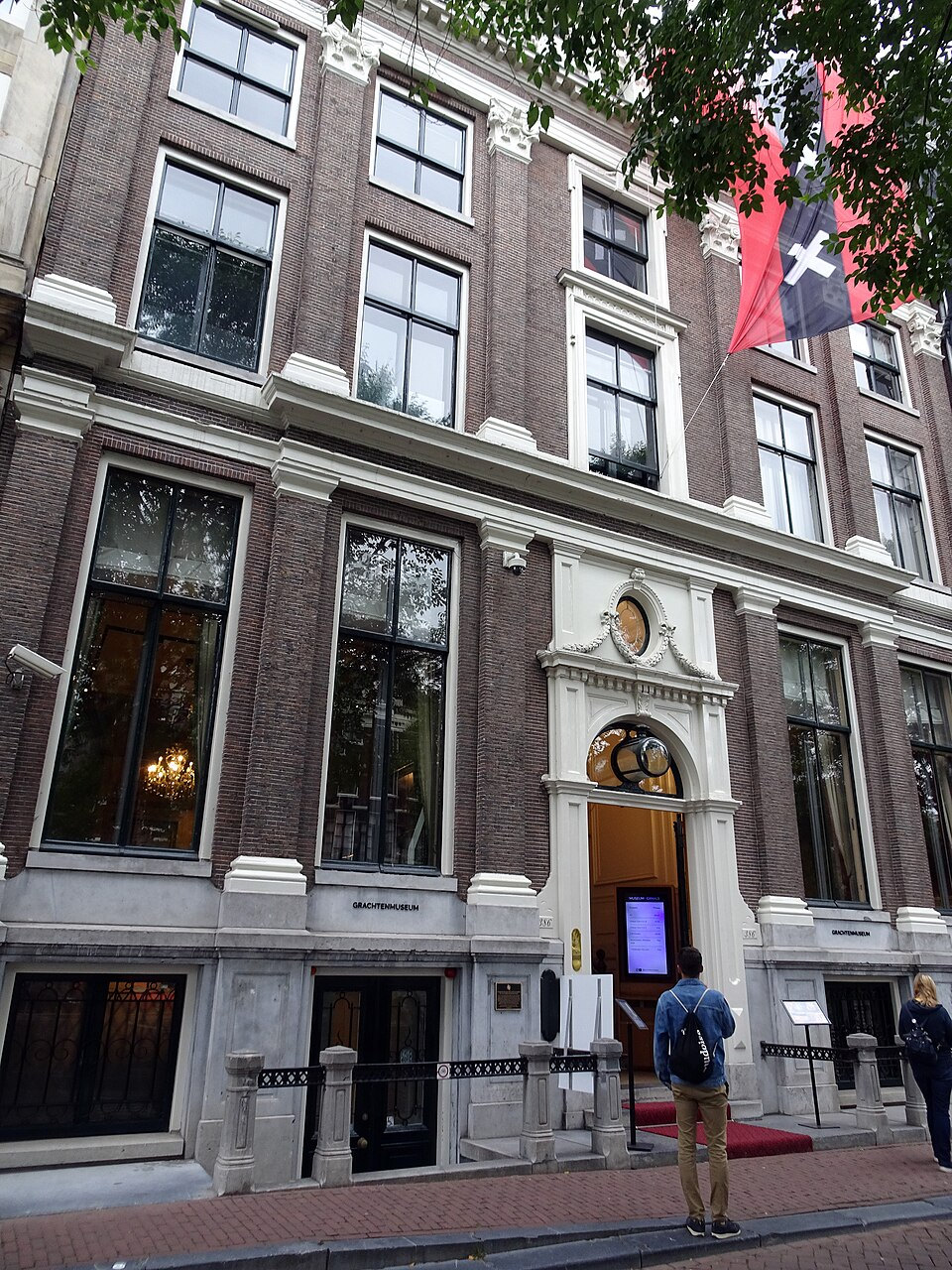
The Museum of the Canals at Herengracht 386, photographed in September 2022.
Resized without upscaling and encoded as optimized progressive JPEG plus responsive JPEG/WebP files. No retouching. Website display crops may vary. Adapted share-alike photographs retain their source license. Additional AVIF and small WebP derivatives use lossy compression without retouching or upscaling. Fixed display frames crop the composition. Supplied JPEG/WebP bytes remain unchanged; adaptations retain the original compatible license.